Bermuda by Sail: St. George’s, Offshore Landfall and Cooper’s Island
From Town Cut to Cooper’s Island, Bermuda rewards offshore sailors with a welcoming harbor, skilled boatwork and turquoise coastal views.
Bermuda’s appeal to offshore sailors doesn’t end at the finish line. The archipelago is a landfall with its own rhythm: a demanding approach, harbors shaped by seafaring life, and the chance to step ashore somewhere that feels a long way from the open Atlantic. For me, its greatest pull has always been St. George’s, where the welcome can be as memorable as the passage.
After the Antigua Bermuda Race aboard the Tayana 52 Moonstone, we entered St. George’s Harbour through Town Cut. Danny Greene was waiting on the northern shore. Years earlier, he had made the same passage in a 26-footer he often sailed alone from New England. On one visit, he met Lisa, a local woman. They married, had a son, Jacob, and made Bermuda home. These days, Danny leaves only when he has a particularly good reason.
A landfall that stays with you
Bermuda comprises more than 180 islands, and arriving by sea gives the place a special shape: water, reef and land come into view together. For many ocean sailors, making that landfall is a rite of passage. The reward is not just reaching shore. It’s the change in scale after days offshore, and the feeling that a familiar destination can still surprise you.
My first Bermuda arrival came about four decades ago. I was sailing a Freedom 44 from Rhode Island toward the Caribbean with my friend Ricky Viggiano, a marine electronics specialist. It was my first offshore trip. I remember the satisfaction of reaching the island, my first Dark ’n’ Stormy, and the intensity of those early nights at sea. The memory has lasted through many subsequent passages. In a sense, I’ve been chasing that first Bermuda feeling ever since.
The route has also brought me to the Newport Bermuda Races, a classic 635-nautical-mile course. The Gulf Stream cuts across it, and how a crew handles that crossing can shape the race. Conditions and routing matter on any offshore passage, and this course makes the Stream impossible to treat as a detail. The finish brings a different kind of transition: boats tie up at the Royal Bermuda Yacht Club in Hamilton, where competitors are often greeted with a tray of Dark ’n’ Stormies.
Hamilton has its own appeal, but I’m drawn to St. George’s. The historic town is quieter and feels closely tied to the working routines of visiting sailors. There’s a customs dock, a good anchorage and pubs that make it easy to settle in after a passage. The town also offers a practical base for the things that come up when boats arrive from offshore: checking gear, making repairs and finding the right local help.
Harbors, clubs and practical help
I got another view of St. George’s while crewing with offshore sailor Steve Pettengill on the doublehanded leg of the Bermuda One-Two short-handed race back to Newport. We were based at the St. George’s Dinghy and Sports Club, near Town Cut. It’s a relaxed spot with a full range of facilities and a welcoming bar. The Royal Bermuda Yacht Club may be more formal, but the Dinghy club suited me better. For a sailor choosing where to spend time ashore, those differences matter: each place offers a distinct feel, and the best fit depends on the kind of stop you want.
Bermuda’s skilled marine trades are another reason the island stands out. Sailmaker Steve Hollis runs Ocean Sails on the harbor. When Moonstone arrived with a puzzling crack in the boom, I called him. He came aboard within five minutes, examined the damage and had stainless-steel plates in his shop that could do the job. A few hours later, the repair was finished. For a boat arriving with a problem, having an experienced tradesperson close at hand can make a short stop far more useful.
That kind of local knowledge complements the experience of arriving under sail. A good landfall takes seamanship; what happens afterward can depend on knowing where to find help and how to give a repair the attention it needs. The boom’s crack was a reminder that offshore plans can meet unexpected equipment trouble. It was also a reminder of the value of asking someone who knows the work and the harbor.
Room to explore ashore
Danny and Lisa now live in the middle of St. George’s. They’ve kept their former home on the north shore, overlooking the outer reef, and I spent a couple of days there. The view helped explain why Danny is so reluctant to leave. From that stretch of coast, the sea is part of everyday life, not simply the next leg of a voyage.
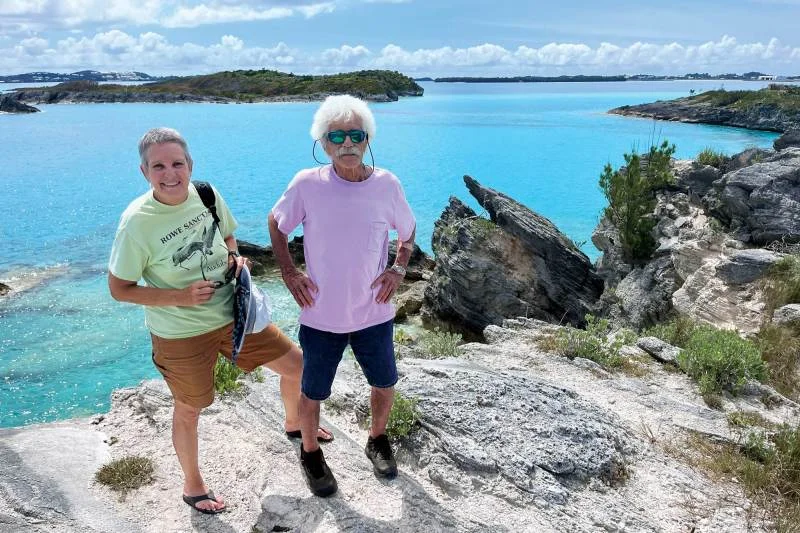
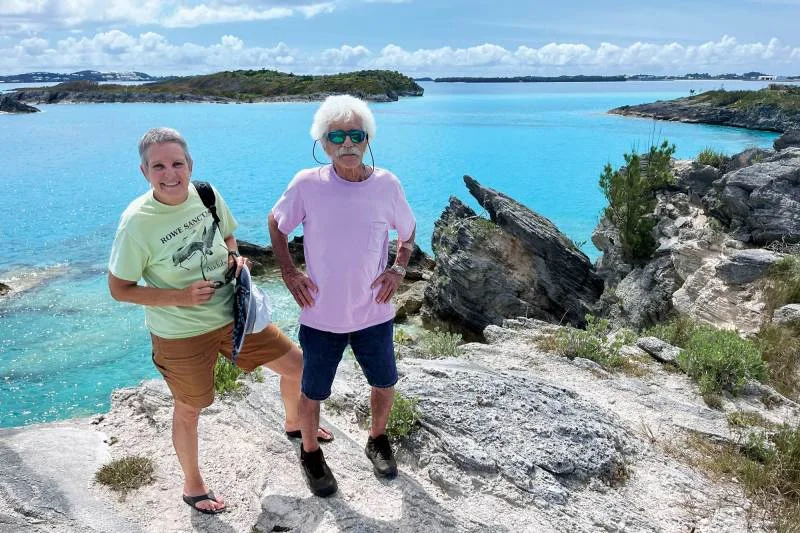
On my last day, the Greenes took me to Cooper’s Island Nature Reserve at the southeastern end of St. David’s Island. The area was closed to the public for many years and is now open as a recreational area. Its rustic trails pass dramatic cliffs and open onto views of neighboring islands and striking turquoise water. It makes a fine place for a hike after time aboard, though visitors should keep to the trails and take care near exposed cliff edges.
The reserve also gives an offshore visit a satisfying counterpoint. The voyage began in Antigua, another island known for extraordinary views; Cooper’s Island offered a final walk through a very different piece of the same broader journey. The next afternoon, Danny drove me to the airport and I returned to ordinary life. I couldn’t stay as he had, but the passage, harbor and coastal trails made the case for coming back by sea.
For sailors planning a Bermuda stop, St. George’s offers more than a place to tie up. It brings together a memorable arrival, useful shore-side services and room to explore on foot. The island’s appeal is strongest when the passage and the time ashore both count as part of the adventure.
The post What the Bermuda High Teaches Every Offshore Sailor appeared first on Cruising World.