RV Furnace Troubleshooting: Power, Propane and Airflow Checks
Trace a cold RV furnace through power, propane and airflow checks, and learn when ignition faults or alarm signals call for a technician.

When an RV furnace stops heating, start with the three systems most likely to explain the problem: 12-volt power, propane supply and airflow. A space heater may warm the living area if it’s used on a suitable circuit, but it won’t heat the underbelly where plumbing is located. Finding the furnace fault matters when cold weather puts those spaces at risk.
These checks apply to travel trailers, fifth wheels and motorhomes, though access and component locations vary by model. Keep the owner’s manual close, and leave gas appliance repairs to a qualified RV technician when the fault points inside the furnace. If you’re unsure about a step, stop and get professional help.
What a normal startup sounds and feels like
Before troubleshooting, make sure propane is available, the container valve is fully open and the thermostat is set above the temperature inside the RV. If the supply has been shut off, light a stovetop burner first to help clear air from the propane line.
A working furnace follows a useful sequence. The blower starts first. About 5 to 10 seconds later, you should hear the igniter click and the burner light. Warm air should reach the vents about 20 to 45 seconds after startup; timing varies by model.
You can also check the exterior termination vent from a safe distance. The source recommends standing back and extending a hand 12 to 18 inches from the opening: you should feel a steady, warm flow of exhaust. In cold weather, water vapor may be visible. Keep clear of the hot outlet and don’t block it.
For model-specific instructions, consult the owner’s manual. The linked guides explain how RV furnaces work and cover RV heating systems.
If nothing happens

First, raise the thermostat above the RV’s current indoor temperature and listen for the blower. If there’s still no response, check the battery connections for corrosion and confirm the battery charge. The source recommends recharging when output is below 12 volts.
A blown 12-volt DC fuse is another possibility. Inspect the RV’s distribution panel, and check the owner’s manual for a separate fuse on the furnace control board. Replace a blown fuse only with one of the same size and type. A fuse that blows again points to an underlying fault; get help diagnosing it before continuing.
A stuck sail switch can also prevent operation. Dust, dirt or pet hair may interfere with it, and the switch can fail mechanically. Access varies by RV. Don’t disconnect or dismantle the furnace to reach a switch unless you’re equipped to do so; a technician can inspect it safely.
When the blower runs but the burner won’t light
If the fan starts but there’s no ignition and it later stops, check the propane supply before suspecting a failed component. Turn the furnace off, check the propane level and make sure the container valve is fully open. Light a stovetop burner and let it run for 20 to 45 seconds to confirm propane is flowing, then turn the furnace back on and retest.
Air in the propane line can interrupt ignition, particularly after the supply has been shut off between trips. With the furnace off, light a stovetop burner and let it run for 20 to 45 seconds, then turn it off and retry the furnace.
If propane is available, inspect the furnace’s exterior air intake for leaves, dirt or other debris and clear any obstruction you can reach without taking the unit apart. A sail switch stuck open can prevent ignition by indicating that airflow is inadequate. Don’t bypass the switch.
Listen for the igniter after the blower has been running for 5 to 10 seconds. A click suggests the igniter is operating, so the cause may still involve propane supply or air in the line. No click could indicate a failed igniter, but other faults can produce the same symptom. A sticking sail switch or an issue in the high-voltage igniter circuit may also be involved.
Potential component faults include a failing sail switch, high-limit switch, gas valve or control board. Diagnosing these can require electrical testing and access to gas components. If the basic supply and airflow checks don’t restore ignition, contact an RV service center or mobile RV mechanic. The source links to RV service and a service center locator.
If the furnace cycles on and off often

Frequent cycling can come from uneven temperatures or restricted airflow. Check for drafts around doors and windows near the thermostat; worn seals can let cool air reach the sensor and prompt repeated heating cycles.
Make sure rugs and blankets aren’t covering floor registers, and that luggage or an ice chest isn’t blocking the return-air vent. Restricted airflow can make the furnace overheat and cycle off. Also check whether a duct is aimed at the thermostat. Warm air reaching the sensor before the rest of the RV heats can shut the furnace down early; realign the duct if needed.
A vent fan or the fan setting on the air conditioner may help circulate warm air more evenly. If the cycling continues, the thermostat may be faulty. The source describes checking for 12-volt power with a multimeter, but wiring colors and connections vary by thermostat. Use the model’s installation instructions and only perform the check if you can identify the correct wires. If you can’t, have a technician test it.
With the thermostat set to HEAT and its temperature raised, a reading of about 12 volts on the furnace connection suggests the thermostat is sending power. If voltage is absent, check for a removable fuse at the thermostat or in the circuit. Replace a blown fuse with the same size and type. If the fuse is intact and the reading remains absent, the thermostat or wiring may be at fault.
A short or open circuit can also cause missing voltage. Check the RV’s fuse box, but treat a repeated fuse failure or suspected wiring fault as a reason to stop and consult a technician. A replacement thermostat should match the existing model; see the linked guide to replacing an RV thermostat.
If the furnace keeps running

The blower may run for about two minutes after the furnace is switched off so the heat exchanger can cool. If it continues beyond that, a faulty thermostat or time-delay relay may be responsible. The thermostat voltage checks above and an inspection of the distribution-panel fuse are starting points, but suspected wiring problems need professional diagnosis.
Don’t ignore a furnace that won’t shut down. Turn it off if you can do so safely, then arrange an inspection. Replace any blown fuse only with one of the same size and type; if it blows again, don’t keep replacing it.
If the furnace blows cold air
Some cool air at startup is expected because the blower begins before the burner. The fan may also continue briefly after the burner shuts down. If warm air arrives within about 20 to 45 seconds, or the fan stops shortly after the heating cycle, the behavior may be normal.
If the air stays cold and the burner never lights, revisit the propane, line-purge and airflow checks. A furnace that can’t ignite may stop its blower after 20 to 30 seconds.
Many furnaces make several ignition attempts, often three, before the control board enters lockout. The blower may continue for a few minutes after that, pushing unheated air through the vents. A reset may clear the lockout, but if it returns, an ignition problem remains and needs diagnosis.
When some vents deliver heat and others don’t, inspect accessible ducts for crushing, disconnection or debris. A nest may have formed during storage. Check that floor registers are uncovered. Once normal startup and cool-down are ruled out, turn off a furnace that keeps blowing cold air so the blower doesn’t continue draining the battery.
For brand-specific information, see the linked Suburban and Dometic furnace troubleshooting guide.
Resetting the furnace
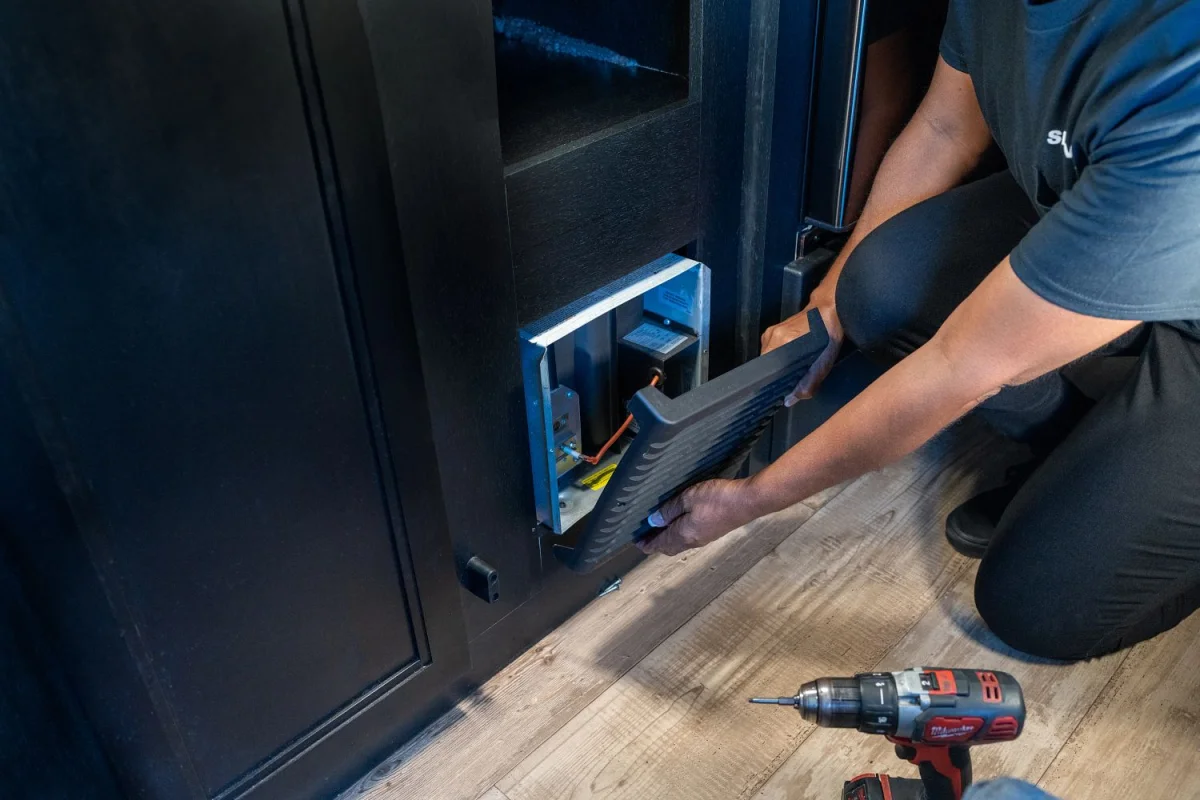
Most RV furnaces reset by cycling power rather than pressing a dedicated reset button. Find the furnace power switch; it’s often on the unit, behind an interior access cover or near the control board. Check the manual for your model’s location.
Turn the switch off, wait about 10 seconds, then switch it on. If the furnace has no power switch, the source describes removing its fuse, waiting 10 seconds and reinstalling it. Know which fuse you’re handling before removing anything. On many models, turning the thermostat off for about 30 seconds and back on can also clear an ignition lockout. A clearly labeled fuse panel makes this easier; see the guide to RV circuit breakers.
When to stop and get help
If the basic checks don’t solve the problem, confirm that propane is available and the container valves are open; battery voltage is adequate; fuses and breakers are intact; the exterior intake and exhaust and interior return-air vent are clear; the thermostat is set to HEAT above the indoor temperature; and the furnace has been reset. Remaining faults may involve components that require diagnostic equipment or access to the gas valve.
Stop troubleshooting and turn off the furnace if a carbon monoxide or propane alarm sounds, you smell propane, soot appears around the exterior vent, or you smell burning plastic or wiring. If propane is present in the air, shut off the supply at the container and get everyone out of the RV. If a carbon monoxide alarm sounds, move everyone into fresh air. Call 911 if anyone has a headache, feels dizzy or is nauseous.
The source notes that a new, unused furnace may set off an LP or carbon monoxide alarm during its first 20 minutes of operation, a period manufacturers call “burn off.” An alarm still calls for a careful response; don’t assume the cause without checking the situation and the appliance instructions.
Certified RV technicians can diagnose furnaces from major brands including Dometic, Atwood and Suburban; mobile service is available at select locations. See the linked furnace repair service information and repair cost guide.
Common questions
Why does the furnace keep shutting off? A high-limit switch may be stopping the burner because the furnace is overheating. Restricted airflow from a blocked return vent, covered floor registers or a dirty blower can contribute. Clear accessible obstructions and retest. Never bypass or jumper a limit switch. If it continues to trip, arrange an inspection.
What commonly causes an RV furnace problem? The first places to check are power, propane and airflow. Low battery voltage, an empty container, a closed valve or a blocked vent can disrupt operation. A stuck sail switch is a common cause when the blower runs but the furnace doesn’t light.
Who should inspect a furnace that still won’t heat? Contact a certified RV technician at a service center or through a mobile service provider. A recurring ignition, electrical or overheating fault needs diagnosis before the furnace goes back into use.
For routine care, see the guide to keeping an RV furnace in working order. A methodical check of power, propane and clear airflow can resolve simple interruptions; persistent faults and alarm signals call for a technician.