Karel’s Kona Ironman: A 10:11 Finish Built on Patience and Adaptation
Hamstring trouble, a dead bike and Kona’s heat tested Karel’s race plan. He finished in 10:11:02, 37th in the 50–54 age group.

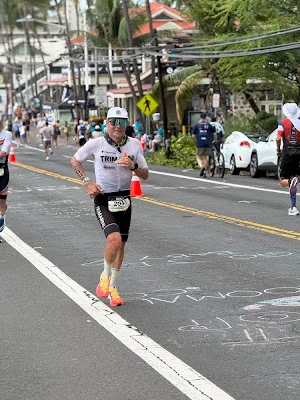
Karel’s sixth Ironman World Championship in Kona came down to adapting to the day in front of him. He reached the finish in 10:11:02, placing 37th among 249 athletes in the 50–54 age group, after a difficult ocean swim, a bike problem that nearly derailed his start, and a marathon run on a hamstring still recovering from injury.
It was his 20th Ironman. Kona had featured five times in his triathlon journey before this race, but experience couldn’t erase the effects of limited training or make the island’s heat, humidity and wind any easier. His account is a reminder that a familiar course can still demand a fresh assessment of what the body can manage that day.
A compromised build and a race morning setback
Karel entered the race with a partial tear in his upper hamstring tendon, sustained near the end of the marathon at Ironman Lake Placid. For several weeks, he couldn’t train consistently on the bike or run. Swimming became his most reliable outlet, and he felt he was swimming well, but he couldn’t prepare for the other two disciplines as usual.
He also had to manage recurring discomfort in his hips and back, especially in the aerodynamic position on his triathlon bike. He usually rides his road and mountain bikes, and keeps tri bike use to the work needed for racing because that position can aggravate those areas. In Kona, where the course and conditions can expose gaps in preparation, he decided to start cautiously and adjust his expectations.
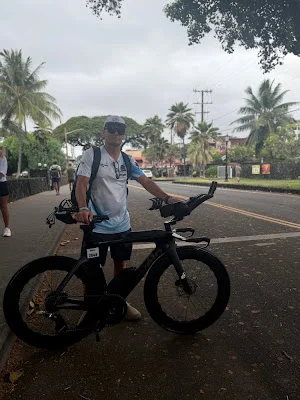
Race morning began in heavy rain, the first since he had arrived nine days earlier. The weather raised an immediate concern: at Ironman Lake Placid, rain had preceded a failure in his electronic shifting. The system had worked after he charged it during a swim, but he’d spent time since then replacing wires and trying to reproduce the fault by wetting the bike. He brought a spare battery and charger to transition as a precaution.
At about 5:15 a.m., he found the shifting system dead. Swapping the battery didn’t help, and disconnecting and drying the wires made no difference. With the start approaching, he began preparing to ride all 112 miles in one gear, something he had experienced in Kona in 2018 after a water-damaged wire failed on another bike.
Race mechanics kept working after transition closed at 6:15 a.m. They eventually spent nearly two hours troubleshooting, including finding extra equipment at the host hotel. Karel left the bike with them and headed for the start without knowing if they’d be able to fix it. A message relayed through Marni, their friend Lauren, and Katie brought the news around 7:15 a.m.: the bike was back on its rack and shifting again.
The problem, as the mechanics diagnosed it, was water in the system’s master unit. The repair brought relief, but the scramble had consumed much of his pre-race focus. Even during the swim, part of his attention remained on whether the bike would work. Once he knew it did, he had to turn toward what he could still control.
Choppy water and a slower swim
Swim, 2.4 miles: 1:11:03
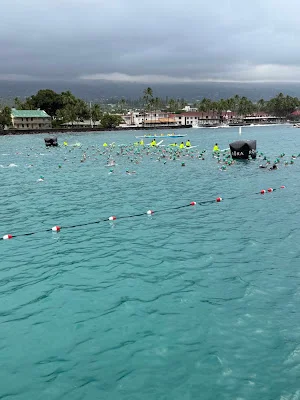
The swim was his biggest disappointment. The months when his injury limited cycling and running had given him more time in the water, and he had felt comfortable in open water during race week. Race day brought warm, salty, choppy water, large swells and the congestion of a mass age-group swim.
He first tried to follow other athletes, but the crowded, rough conditions felt chaotic. He chose to find clearer water and swim alone. That tactic had worked for him before, but he suspects it cost time in Kona, where staying with a group might have been quicker. His result was slower than expected; later comparisons with swimmers of similar ability confirmed that it hadn’t been a strong swim for him.
His takeaway is measured: feeling prepared doesn’t settle how a swim will go. Conditions and choices made in the water can shape the result, and he was glad to be back on land.
T1: 5:54
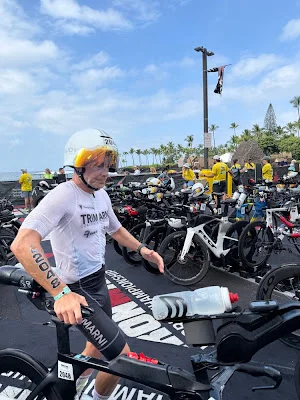
After climbing the exit stairs, he rinsed off, collected his transition bag and put on his shoes and socks. He checked the bike before setting off and was relieved to find the electronic shifting working. The lingering worry had followed him through the swim, but there was nothing to be gained by dwelling on it now.
Riding by feel on the Queen K
Bike, 112 miles: 5:11:34
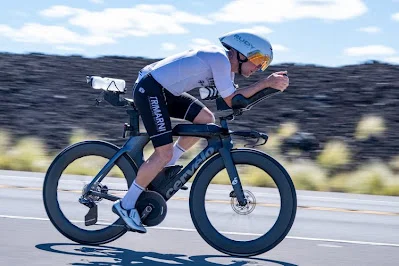
The bike brought two questions: how his back and hips would tolerate more than five hours in an aerodynamic position, and whether the tri bike would aggravate the hamstring more than his road or mountain bikes. In the days before the race, hip pain with each pedal stroke had made it difficult for him to hold power. He planned to ride conservatively through town, stay safe on the technical sections around Palani and keep energy in reserve for the return from Hawi.
Near mile 15, shortly after the airport on the Queen K, his bike computer and mount snapped off. He stopped, turned around to retrieve them, then put the computer in his pocket and continued without it. The loss meant he had no power or pace numbers to chase. He says it helped him focus on feel, the way he rides in training, rather than respond to a metric while his body was already under strain.
For the first two hours, his legs felt poor, and he could feel the hamstring, hips and back. As the ride continued, the discomfort became less prominent. Turning off the Queen K toward Hawi, his legs began to loosen up. He passed athletes and felt comfortable staying in the aero bars on the climb, even in the wind.
At the turnaround, around mile 57, he made a quick stop at special needs for three bottles. They were ice cold, and a drink gave him a welcome lift before the exposed, hot stretch back toward the Queen K. The descent from Hawi was windy, with athletes around him struggling to keep their bikes steady. He felt confident and stayed in his aero position for almost all of it.
The final 30-plus miles back to town brought shifting wind: favorable stretches, headwinds and crosswinds. The sun was strong, hills accumulated, and false flats made it hard to judge the effort. Still, he says this was the first time in Kona that he had been able to ride the return without significant pain. His legs tired, but he maintained a steady effort, drank consistently and used the aid stations to cool himself. After an uncertain start and a restricted build, finishing the bike in better shape than expected was a meaningful turn in the day.
Fueling the bike and adjusting at transition
His bike nutrition followed a plan practiced in training. He carried 32-ounce bottles of Formula 369, with three scoops providing 90 grams of carbohydrate, plus a lemonade electrolyte booster that brought sodium to about 1,000 milligrams per bottle. He also took a caffeinated Enervit gel with 20 grams of carbohydrate and 20 milligrams of caffeine, although he didn’t feel he needed it.
Across the ride, he consumed about 560 grams of carbohydrate, or roughly 105 grams per hour; 192 ounces of fluid, about 38 ounces per hour, not counting water from aid stations; and 6,010 milligrams of sodium, around 1,200 milligrams per hour. The heat made fueling difficult, but the amounts he had practiced with sat well. He finished the bike without gastrointestinal trouble or a major energy drop, giving him a steadier start to the marathon.
T2: 4:32
In the final miles of the bike, he sat up to stretch his back and hips. This year, athletes had to rack their own bikes, and his legs felt like wooden sticks as he walked it to the rack. In the transition tent, he put on his hat, shoes, ice bandana and hydration belt, but forgot the flask of fueling powder. He decided to adapt at the aid stations instead of letting the missed item unsettle him.
A marathon shaped by injury and heat
Run, 26.2 miles: 3:38:01
The first steps off the bike felt rough. Karel had completed only a few brick runs during the six weeks of returning to running, far fewer than he would normally do before an Ironman. The tri bike could irritate his hamstring, and running afterward often made it worse. He could feel the injury at times and worried that a long stride or awkward movement might bring it back.
He had to keep that concern in check while also managing heat, cooling and nutrition. The crowds on Aliʻi Drive gave him a boost, but his legs never came around. Running felt harder than he expected, so he set his effort according to the fitness he had on the day, not the fitness he hoped to have.
The heat and humidity raised the cost of each mile. It was cloudy in town, but the sun was intense on the bike and again on the Queen K, particularly on the long way toward the Energy Lab. Karel took more time at aid stations to cool down and drink and eat. His run fueling became a mix of gels, Precision Hydration, Coke and water. He moved through the stations more slowly than usual because he wanted to keep himself supplied and able to continue.
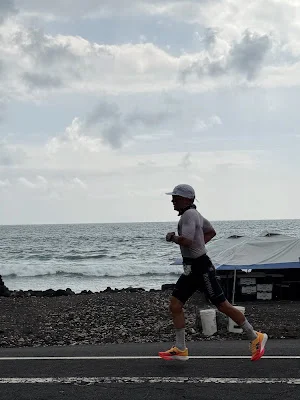
His energy stayed relatively stable, which he attributes in part to consistent bike fueling and hydration. His legs, however, grew heavier, and lifting them became harder as fatigue accumulated. Downhills sometimes felt manageable; the next uphill quickly showed how much effort remained. He kept revising his expectations as the marathon unfolded.
Around mile 17, at the Energy Lab and special needs, he collected the flask he had left in his bag. At the next aid station, he filled it with cold water. The mixture tasted better than expected, and he drank most of it over the miles that followed. It also gave him something to sip between aid stations on the Queen K, where the gaps varied.
Seeing other athletes and familiar Trimarni athletes on the course helped him keep moving. By the top of Palani, as he began descending toward Kuakini, his legs were exhausted and roughly a mile and a half remained. He wasn’t sure how they would handle the downhill. Seeing athletes, including professionals, struggling on course reinforced how demanding the day had become.
He chose to keep working at the effort he had left rather than force a faster finish. His reminder to athletes about the last aid station on Palani came into focus: the finish can look close while there is still distance to cover, and taking care of basic needs still matters late in the race. He made it back to Aliʻi Drive and crossed Kona’s red carpet. After the bike failure, injury concerns and difficult marathon, reaching the finish was a huge relief.
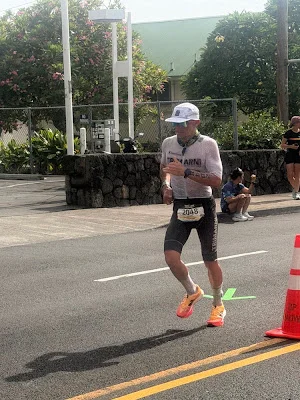
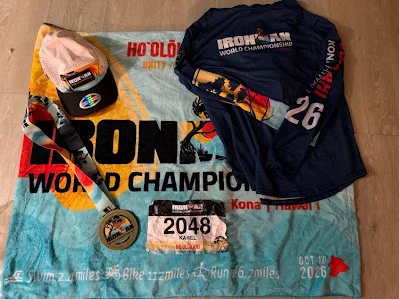
Finish: 10:11:02
37th in the 50–54 age group, out of 249 athletes
What Kona left him with
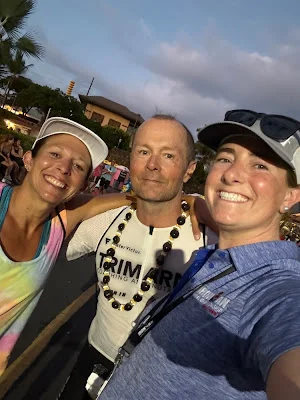
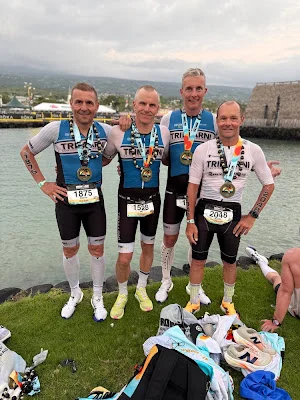
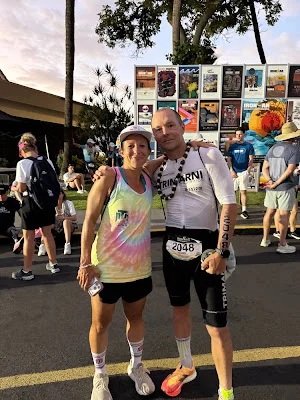
After the finish, Lauren, a friend from Greenville and his massage therapist, greeted him. He was too drained to talk much. She walked him over to Jirka, a Trimarni athlete, and they waited for the other Czech athletes, who had finished within a similar stretch of time. Karel later met up with Marni and returned to the condo, moving slowly. After a shower, he watched some marathon coverage while Marni went back for his bike and bags.
That night, sleep came in fits. He went to bed around 10:30 p.m., slept for a few hours, got up to eat, slept on the couch, got a drink and returned to bed before rising around 7 a.m. It had been a long day, and he was relieved to have finished a race he hadn’t been sure he could start.
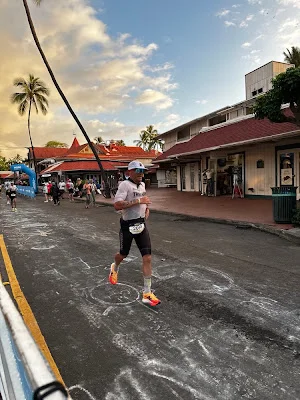
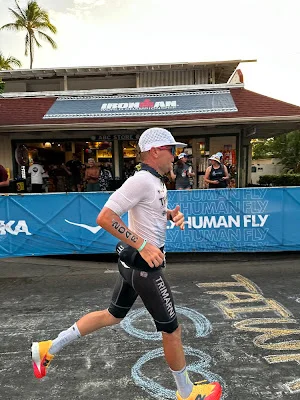
This Kona race asked him to manage a compromised training block, a lingering hamstring injury, rough swim conditions, a dead shifting system on race morning and a missed fueling flask. He is proud that he stayed patient with the bike, that his body held up for 112 miles and that the hamstring allowed him to complete the marathon, even when running was uncomfortable.
His experience points to a practical lesson for endurance athletes: past results and years in the sport can’t dictate what a particular day will allow. Kona demanded attention to the body, the heat, humidity, wind and distance, along with a willingness to change plans. The useful skill was letting go of the race he had hoped for and responding to the one unfolding around him.
Karel expected to finish and close the Kona chapter. Instead, he remains motivated to train, race and improve. For now, he’s looking forward to getting home and riding his mountain bike.