Sailing Beyond Cell Range: Radio, Signals and Clear Crew Communication
Learn the radio, visual and onboard communication practices that help sailors pass urgent messages when cell service fades.
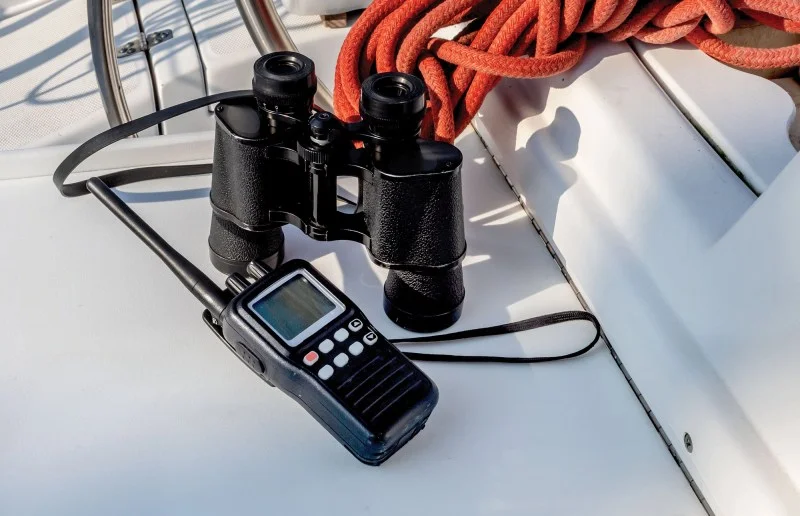
When a boat leaves reliable cell coverage, familiar tools such as phones and internet connections may no longer help. Sailors still have a well established set of ways to communicate: radio, sound, visual signals and direct, precise speech. Knowing which method to use—and how to make a message understandable—can help a crew respond when a vessel needs assistance, someone becomes ill or a navigation warning must be passed.
The International Code of Signals brings visual, sound and radio practices together. Its history stretches back to a volume published by Great Britain in 1855, with an early emphasis on messages that could cross language barriers. The National Geospatial-Intelligence Agency revised the book in 2020. Its tables assign letters and numbers to flags and pennants, alongside guidance on hand signals and Morse code.
Morse remains part of the maritime toolkit. The writer recalls needing to send and receive it at five words per minute for a U.S. Coast Guard third mate license exam; the most skilled operators could reach twice that speed. The practical lesson is simple: these methods are useful when learned and practiced before a stressful moment, rather than treated as obscure history.
Radio and visual signals
VHF radio has an approximate direct line-of-sight range of 5 to 10 miles. The Coast Guard, marinas, yacht clubs and vessels underway in local waters monitor it. Channel 16 is reserved for emergency traffic. After making contact there, mariners should quickly move the conversation to another channel.
Keep radio calls clear and brief. Unnecessary conversation can get in the way of urgent traffic, while a message delivered slowly and plainly is easier to understand. Use the phonetic words and pronunciations in the International Code of Signals to spell names or other details. A microphone held out of the wind helps reduce noise; a pad and pencil at the chart table make it easier to record instructions accurately.
Sound can also attract attention. A horn, siren, whistle, bell or shout may alert another nearby vessel. Flares provide a visual signal, but require care: ignite a flare only over the water. A handheld flare produces a powerful light, while a flare fired from a gun can rise more than 200 feet, making it visible from farther away. Handle these devices deliberately and make sure the crew understands their use.

Code flags provide another shared visual language. Letter flags are square, with different colors and patterns; number flags use pennant shapes and the same color scheme. The system also includes three pointed-tail substitute flags and a red-and-white striped pennant. Racing sailors recognize that striped flag as a postponement signal; in international use it serves as an answering pennant or decimal point.
When boats are close enough to see one another, raising and lowering the arms slowly indicates distress or a need for assistance. The most urgent calls are “Mayday” and SOS in Morse code, used when a vessel faces imminent danger and requires immediate help. A vessel that hears a Mayday should respond to the emergency. “Pan,” sent with the code letters XXX, marks an urgent concern about a vessel’s safety or a person aboard. “Sécurité,” preceded by TTT, introduces a message about safe navigation or an important weather warning.
Build communication into crew practice
The writer recommends that cruising and racing sailors take US Sailing’s Safety at Sea course every five years. A recent course included a 15-part online drill that took 13 hours. Each section ended with a 10-question quiz, and eight correct answers were needed to continue. Flares and other signals were among the subjects covered. The detailed format underscores that communication is a skill set crews can rehearse, not just a list of terms to glance at before departure.
On deck, clarity depends as much on how people speak as on what equipment they carry. Make eye contact when asking a question or giving an instruction, and get close enough to be heard instead of shouting from stern to bow. If a discussion needs more attention, move to the after part of the boat. Noise and distance can turn even a simple exchange into confusion.
Commands should name the action and give a useful measure. “Ease the mainsail 12 inches” tells a crew member what to do more clearly than “ease it a little.” Watch for words that sound alike, too: “no” and “go” can be mistaken for each other when shouted over wind and boat noise.
The writer recalls a skipper who yelled through sail hoists, anchor work and jibes. A crew member recorded the repeated outbursts and played them at a crew party; the skipper laughed, took the point and stopped yelling. The anecdote gets at a serious onboard principle: a calm delivery helps people hear, understand and carry out a command.
Messages from other boats, a flotilla, a race committee, a harbor patrol or a yacht club launch should be acknowledged clearly. Discuss radio and signal protocols with the crew, learn the code flags, and post them where people can refer to them. With sailboats and fast powerboats sharing crowded waters, practiced communication can make assistance easier to request and routine sailing more orderly.
Prepare the crew before cell coverage fades: review the signals, agree on concise commands, and keep a writing tool near the radio. Clear communication is a piece of seamanship that pays off in ordinary coordination as well as urgent situations.