Suburban and Dometic RV Furnace Troubleshooting: Codes, Parts and Repairs
Identify your RV furnace, read its warning signs and check model specific service details before attempting a repair.
When an RV furnace stops heating, its brand and model determine what the warning signs mean and how a technician should approach the repair. Suburban and Dometic furnaces use different diagnostic methods, switches and replacement parts. Older Atwood and Hydro Flame furnaces are now supported as part of the Dometic family, but their model numbers and service access can differ from current units.
Start with the furnace data plate
Find the data plate on the furnace, often behind the interior access panel. It lists the manufacturer, model, serial number and BTU rating. Your RV owner’s manual may identify the unit as well. Use these details when looking up manuals, interpreting fault signals or ordering parts; a similar looking furnace may use a different component.
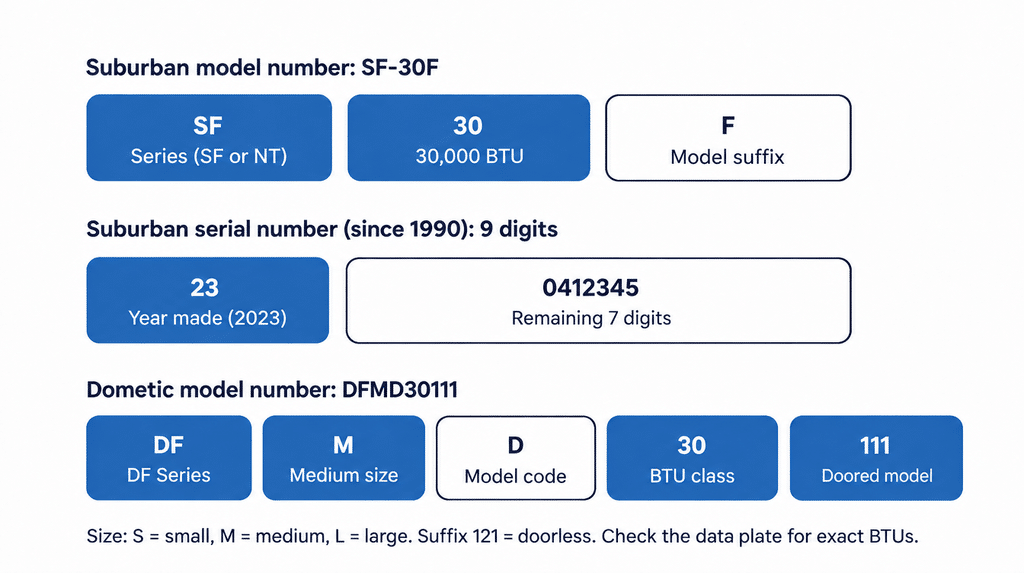
Suburban model numbers commonly begin with SF or NT, followed by a number indicating the BTU rating in thousands. An SF-30, for example, is a 30,000-BTU furnace. Suburban serial numbers made since 1990 have nine digits. The first two identify the production year and the next two the week. Parts compatibility can depend on the serial range, so read the year digits as a year rather than comparing the serial as a single number: a serial beginning with 98 is from 1998, while one beginning with 01 is from 2001.
Dometic models start with DF, then use a letter for size—S for small, M for medium or L for large—and a number for the BTU class. In DFMD30111, for instance, “M” indicates medium and “30” indicates the 30,000-BTU class. That class isn’t the furnace’s exact output; check the data plate for the rated figure. Models ending in 111 are designed for an exterior access door, sold separately, while those ending in 121 are doorless. Dometic Essential models add an H after the size letters, as in DFMDH30111.
Older Atwood furnaces, including Hydro Flame models, use four-digit series numbers such as 7900, 8500 and 8900. Dometic publishes manuals for its current furnaces and former Atwood models. Airxcel publishes Suburban manuals. The model specific manual is the best reference for troubleshooting steps and service requirements.

Read Suburban’s startup sequence
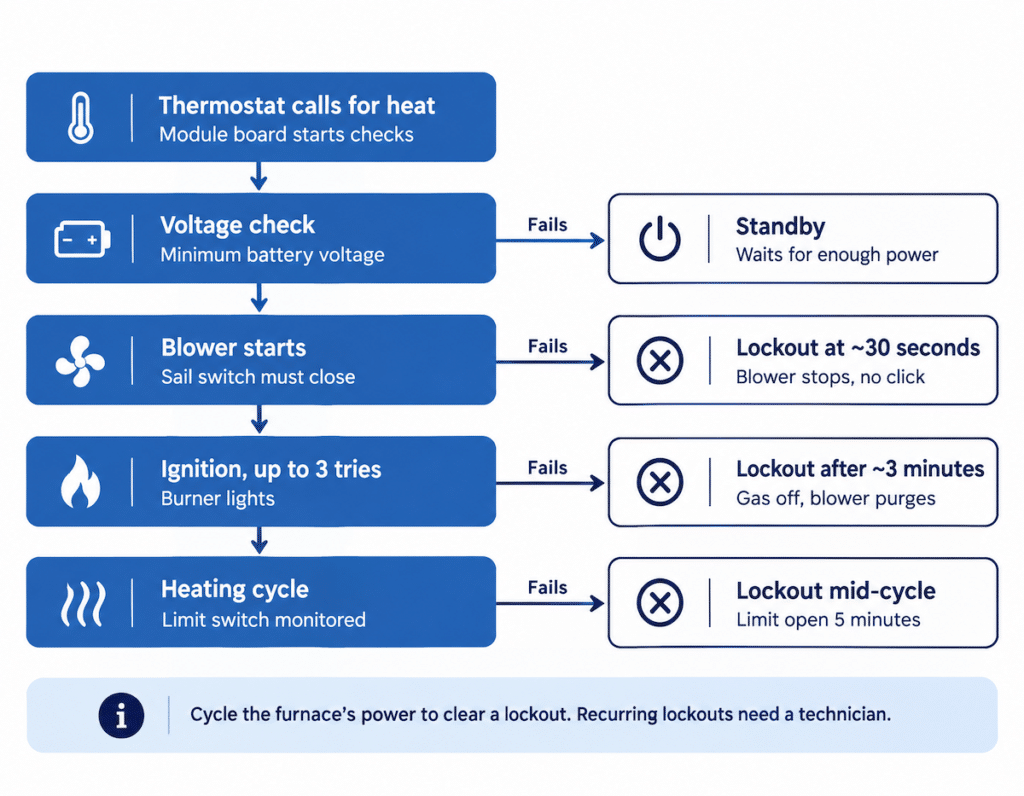
Current Suburban SF and NT furnaces are available in ducted and direct discharge versions. Their module board checks conditions each time the thermostat calls for heat. The timing of a shutdown can narrow down which part of the sequence failed, though it doesn’t identify a repair by itself.
- No blower startup: The board checks for minimum voltage before starting. A low RV battery can leave the furnace in standby. A sail switch stuck closed can also prevent the blower from starting.
- Blower stops after about 30 seconds, with no click: The board waits for the sail switch to confirm adequate airflow. If it doesn’t get that signal within 30 seconds, it locks out and stops the blower. The sail switch or restricted airflow may be involved.
- Cold air for a few minutes, then shutdown: Suburban ignition controls make three attempts to light. After failed attempts, the board closes the gas valve, runs the blower for about three minutes to clear the combustion chamber, then enters lockout.
- Shutdown during a heating cycle: If the limit switch stays open for five minutes, the board locks out. Restricted airflow and overheating are possible causes.
A power cycle resets a Suburban lockout. If the same shutdown pattern returns, share its timing and the furnace’s model and serial numbers with a certified RV technician. Those details help distinguish a startup airflow fault from failed ignition or a limit switch opening during operation.
Two repair details are specific to Suburban. Electrode replacement on SF models takes longer under the manufacturer’s labor schedule than on its other furnaces. The 521099 module board is intended as a replacement for Suburban furnaces, but some older units need a wiring kit to work with the current three try ignition board. Confirm compatibility before ordering.
Use Dometic’s LED codes as a starting point
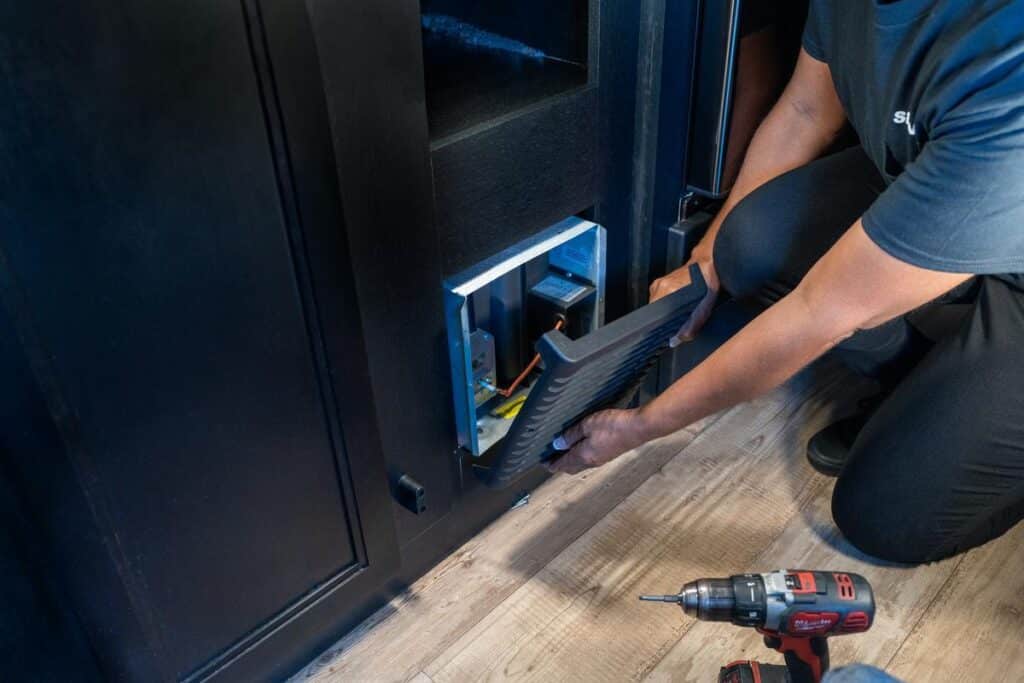
Dometic furnaces report faults through a status LED on the electronic control board, usually a red light near its center. Some newer systems can also show codes on compatible digital thermostats, including the Comfort Control Center 2. On units with an exterior access door, open it to view the board. For doorless models, the return air grille may need to be removed; a mirror and flashlight can help locate the LED.
Dometic ignition controls typically make three ignition attempts. A soft lockout is timed and permits another attempt after the system has had time to recover. A hard lockout requires a manual reset, by resetting the thermostat or switching power off and back on.
| Fault | LED indication | Lockout |
|---|---|---|
| Internal circuit board failure | Steady light, no flashes | Hard |
| Limit switch or airflow problem | One flash, then a three second pause | Soft |
| Flame sense fault | Two flashes, then a three second pause | Hard |
| Ignition lockout fault | Three flashes, then a three second pause | Soft, with a one hour retry |
Some boards also report four flashes for high voltage and five flashes for low voltage. Check the manual for your exact model before interpreting a code.
What to check for each Dometic code
A steady light that remains after a power cycle points to a failed control board; replacement should be handled by a certified RV technician. For a one flash airflow or limit switch code, make sure vents and the return air opening are clear and inspect for crushed or blocked ducts. If airflow appears normal, a technician can check the sail and limit switches.
A two flash flame sense fault calls for inspection of the igniter and flame sensor electrode, along with confirmation that the burner lights correctly. A three flash ignition lockout is a reason to confirm propane is on and other propane appliances operate. If the furnace still won’t light after a reset, a technician can check gas pressure, burner condition, electrode and gas valve. Recurring codes and gas system work belong with a trained RV technician.
Check switch location and airflow before service
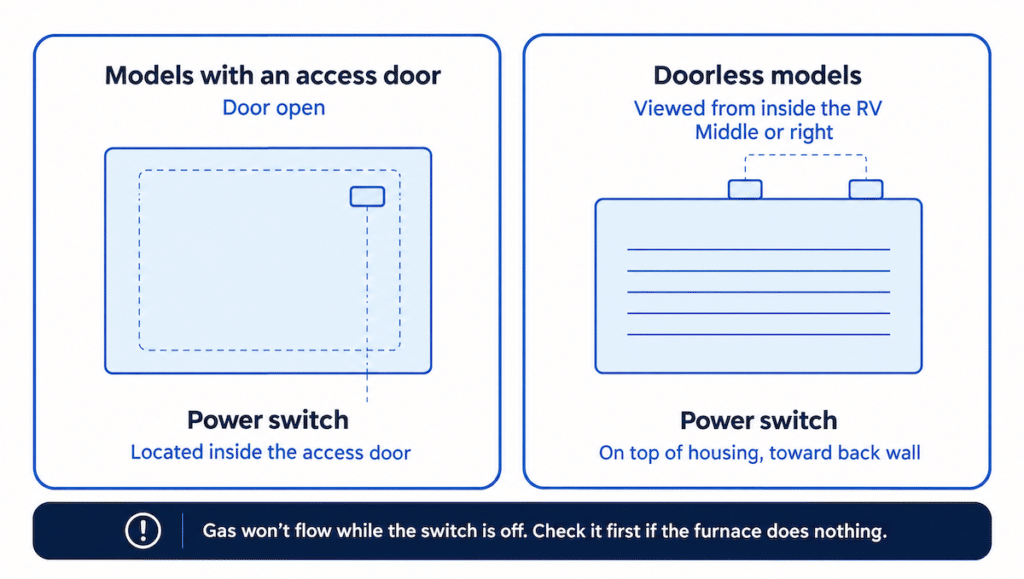
On Dometic DF furnaces with an access door, the power switch is inside the door. On doorless installations, it’s usually on top of the furnace housing against the wall, centered or toward the right when viewed from inside the RV. The burner won’t receive gas while the switch is off, so check the switch if the furnace appears completely inactive.
Some Dometic models—including DFMD35, DFLD35 and DFLD40—use a 15 amp circuit breaker in the RV’s main panel. Startup surges from the blower and igniter can trip an auto resetting breaker repeatedly. The source guidance specifies replacing a repeatedly tripping auto reset breaker with a standard 15 amp ATC fuse. Have a qualified technician verify the circuit and correct component for the specific installation.
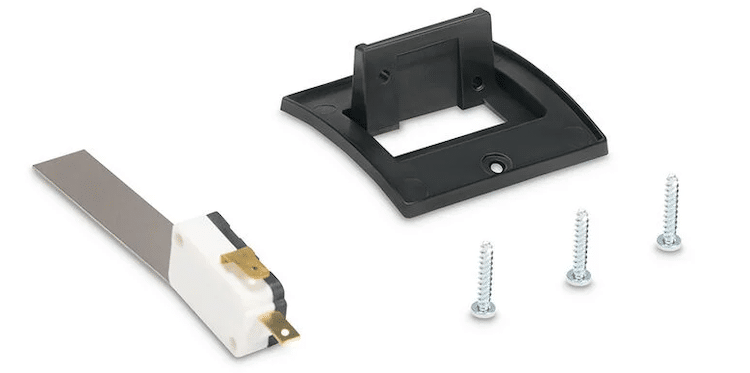
The sail switch is another airflow control. Dometic and former Atwood Hydro Flame furnaces use parts sold under the Dometic name, including the 31377 low airflow sail switch and the 36165 airflow sail switch upgrade kit with mounting bracket. Access depends on the furnace: 79 and 80 series units must be removed from the RV to reach the sail switch, blower motor and blower wheels. Mid size and large furnaces installed with an outer door can generally be serviced in place; doorless installations usually take longer.
Sail switches aren’t interchangeable across every model. Match the part to the data plate and leave installation to a trained RV technician, since the switch is a furnace safety control.
Keep model compatibility and warranty in view
DF Series furnaces light automatically; there’s no pilot to light by hand. Dometic’s manual also warns against powering a DC furnace with a battery charger, including during testing. Its operating instructions specify Dometic replacement parts and components approved for the furnace. Suburban parts also depend on model and, in some cases, serial range.
Before paying for a repair on a newer RV, check the applicable warranty. Most Suburban furnaces carry a two year limited parts and labor warranty for the original owner. Heat exchangers have continued coverage in years three through five, without labor coverage. Common Dometic DF Series furnaces carry a two year warranty covering labor, specified parts and freight. Routine maintenance isn’t covered by either warranty. Furnaces sold as Atwood were built before the Dometic rebrand and are beyond the two year coverage period described here.
For parts or service, provide the full model number and, for Suburban, the serial number. That information helps confirm fit and identify when an older furnace needs a conversion kit or different service access. If a lockout keeps returning, airflow checks don’t resolve the fault, or the repair involves gas, arrange service with a certified RV technician.