Beneteau Oceanis 52 Review: A Fast, Flexible 52-Foot Cruising Sailboat
The Oceanis 52 pairs brisk sailing with a roomy cockpit and flexible cabins, with details that matter for both coastal cruising and longer trips.
Beneteau’s Oceanis 52 makes its case under sail: it’s quick to respond, easy to manage and notably roomy for a 52-foot cruiser. Replacing the Oceanis 51.1, which launched in 2016 and reached 500 hulls, this eighth-generation design brings a bigger cockpit and a more considered deck layout. My first look at the brochure left me unsure what had changed. A day aboard, sailing on Chesapeake Bay, changed that impression.
Under power, the 110-hp turbocharged Yanmar pushed the test boat out of the marina and onto the Bay at 7.7 knots at 2,300 rpm. A short run at wide-open throttle reached 8.9 knots at 3,150 rpm. That pace comes with a practical tradeoff: the boat carries 53 gallons of fuel, so running hard may make fuel use a concern on a longer motoring leg. Beneteau fitted a saildrive rather than a straight shaft. The boat moved smartly and turned within its own length, though the choice may not suit every owner’s preference for a vessel this size.
Quick response, manageable sail plan
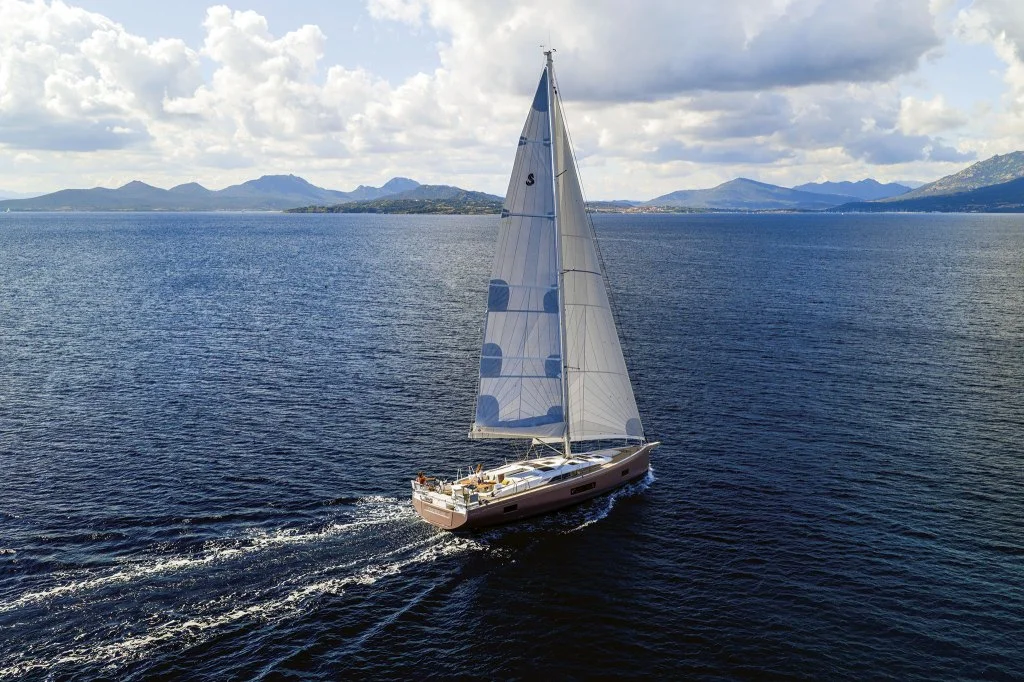
Conditions shifted during the test, but the Oceanis 52 handled the changes with composure. Its 1,453 square feet of upwind sail area helped it accelerate in small gusts; as the breeze rose, the hull settled onto its chine and felt steadier. The deck-stepped mast can carry either a self-tacking jib or an overlapping genoa. Adding the 1,539-square-foot Code 0 should help owners get more drive from the sail plan.
Performance was convincing in the conditions we encountered. At 11.4 knots of true wind and a 60-degree apparent wind angle, the boat made 7.4 knots over ground—about 65 percent of wind speed. It continued to glide along as the apparent wind angle tightened to 35 degrees. The helm felt direct and responsive, making measured steering important through tacks. Owners interested in club racing or fast passages can consider the First Line package, which includes a taller mast and upgraded sails.
Keel choice affects where the boat can go: the deep T-shaped option draws 7 feet 9 inches, while the shoal version draws 6 feet 4 inches. The test boat had the shoal keel, suited to the shallower waters we encountered on the Bay. Those figures are useful planning constraints, not a substitute for checking local depths and conditions.
The cockpit changes improve the work of sailing as well as the time spent relaxing. Primary winches sit aft near the helm, within reach of the driver; electric models can be operated with buttons. Secondary winches are farther forward, where crew can brace and grind without crowding the helm. The helmsman can also control electric secondary winches from the starboard pedestal when sailing short-handed.
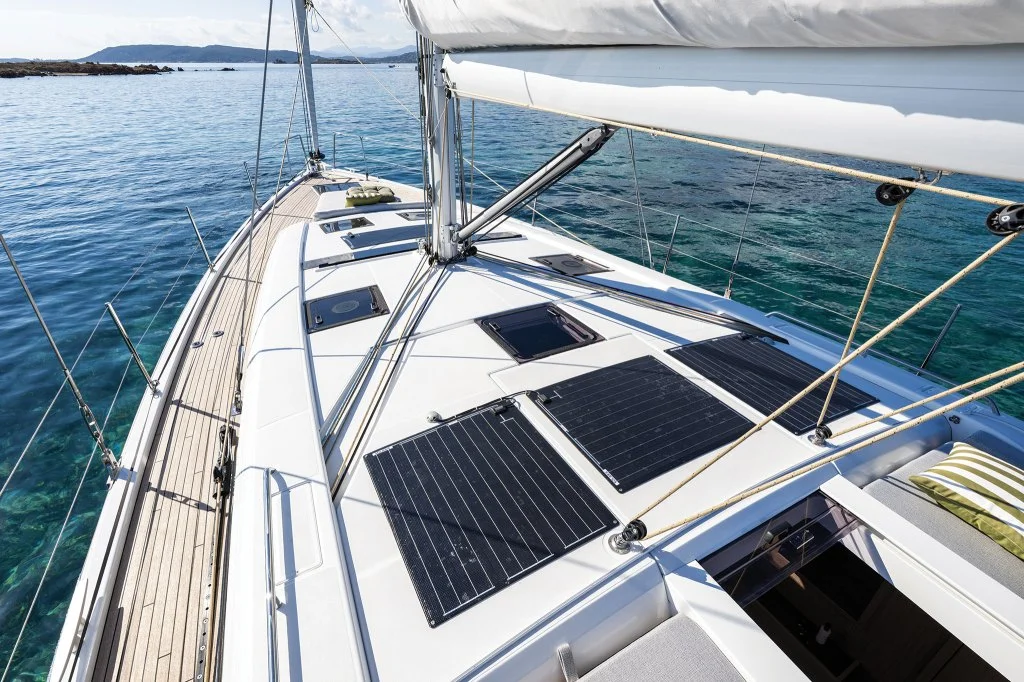
Moving the lower shrouds inboard opens up the side decks. The self-tacking jib track sits just ahead of the mast, while an integrated composite bowsprit keeps the anchor clear of the stem and provides the Code 0 padeye. The double-ended mainsheet runs to an arch over the companionway, removing the need for a traveler.
A larger cockpit and practical interior
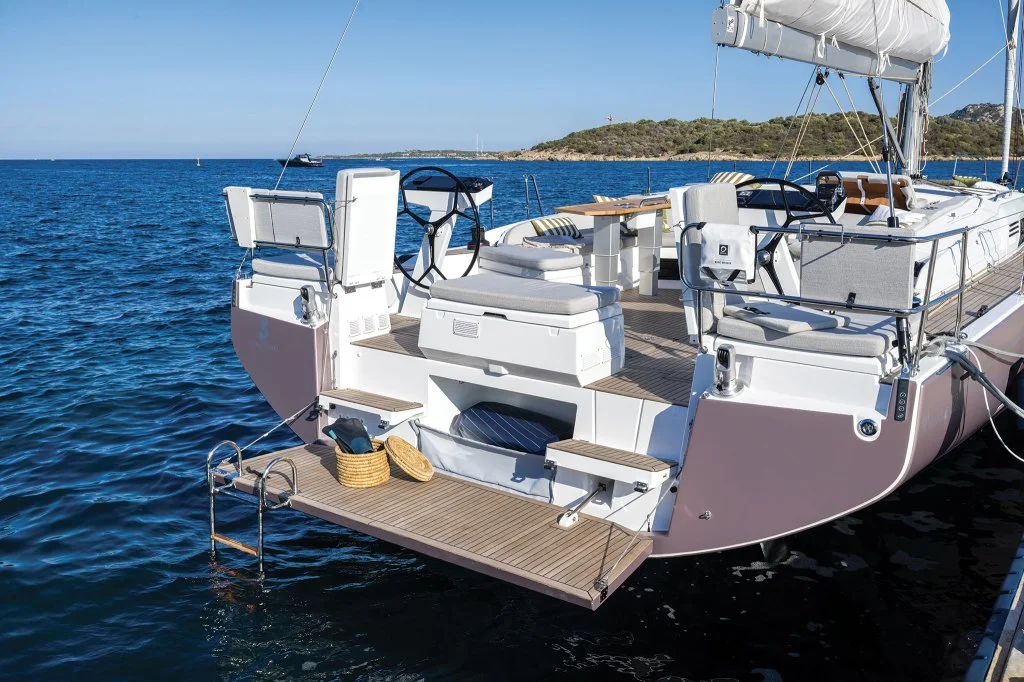
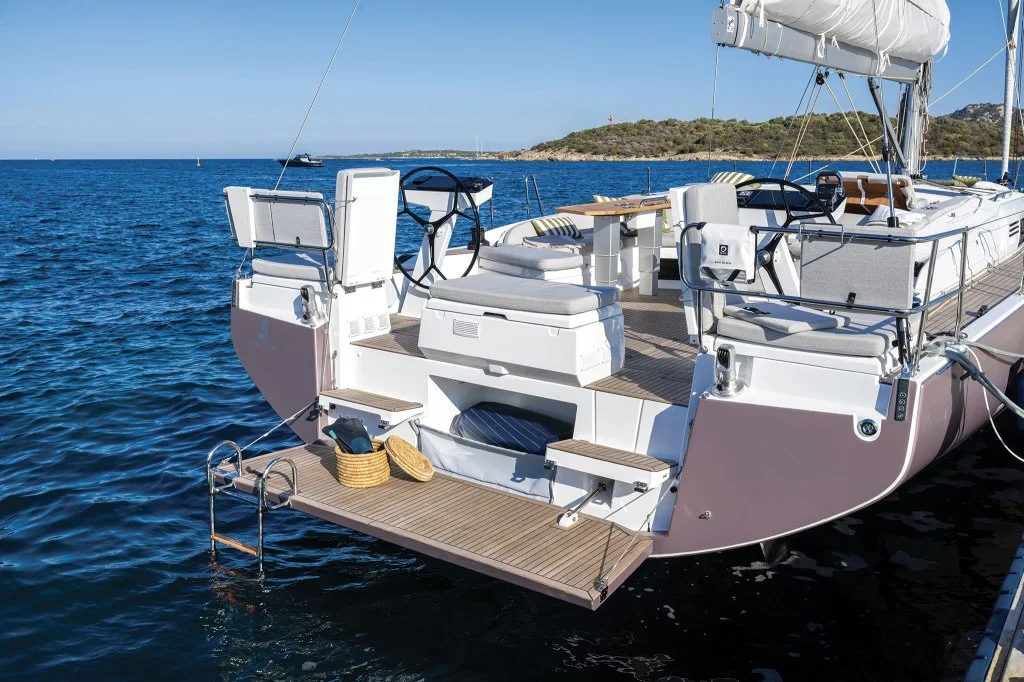
Designed by Roberto Biscontini with owner and dealer input, the “diamond cockpit” is 30 percent more spacious than the one on the 51.1. Two angled settees define the space, each with a table that lowers for lounging. Steps at the ends of the benches connect the cockpit to the side decks, so people can move through without climbing over the cockpit coaming. Those steps also leave room for crew to handle the forward winches while others use the seating area.
The raised aft section gives the boat a more expansive feel. Two angled helm stations have large dashboards with a 12-inch Raymarine multifunction display, windlass controls, winch buttons and engine throttles. The electric drop transom can be equipped with a grill and small drawer fridge, and integrated steps lead back up to the cockpit. Cushioned seats beneath the dodger make use of another sheltered spot.
One placement deserves a second look: the fuel fill is in the cockpit sole beside the starboard wheel. Spills can happen during refueling, making this a less reassuring location than the otherwise carefully arranged cockpit suggests.
Below deck, the interior combines upscale finishes with storage and systems access that should be useful on extended cruises. An aft-facing navigation desk sits forward to port, backed by a mirror that helps brighten the salon. Nearby, an open cabinet pairs book storage above with a bar below, giving the space a domestic feel.
cockpit.”
The DC panel, digital switching screen, battery switches and breakers are gathered in a cabinet to starboard, aft of the dinette. Tank manifolds sit below the cabin sole near the U-shaped galley, where they’re accessible without moving furniture. The test boat had a stand-up refrigerator and freezer, a gimballed three-burner stove, microwave, split sink and optional washer-dryer beneath the counter.
Cabin arrangements range from three to five cabins. In the three-cabin owner’s version, the master suite sits forward, with a split head and two overhead hatches for light and ventilation. A charter layout divides that forward area into two cabins with twin wet heads. Two aft staterooms and one large head are standard, with an optional Pullman cabin bringing capacity to 10. In that charter configuration, the galley stretches along the port side in place of the navigation desk and bookcase.
Compared with the preceding .1 series, the finishes feel more refined. Upholstery options have expanded, textured wood accents the master headboard, and indirect lighting works alongside the many hatches and hull ports to brighten the interior.
Specifications
- LOA: 53 feet 5 inches
- LWL: 48 feet 2 inches
- Beam: 15 feet 11 inches
- Draft: 6 feet 4 inches or 7 feet 9 inches
- Displacement: 31,905 pounds
- Sail area: 1,453 square feet
- Engine: 110-hp diesel
- Fuel and water: 53 gallons and 111 gallons
- Designer: Roberto Biscontini
The Oceanis 52’s strongest impression comes from the combination of sailing pace, a helm that rewards a light touch and a cockpit with room for both sail handling and downtime. A trial sail is the clearest way to judge how its layout and performance fit your plans; before heading out, match the keel draft and fuel range to the waters and distances ahead.