Leopard 52 Catamaran Sea Trial: Sailing Performance, Layout and Hybrid Power
The Leopard 52 handled 18–22-knot Chesapeake Bay winds at speed, with a bigger rig, flexible cabin plans and optional hybrid propulsion.
In 18–22 knots of true wind and cold, driving rain on Chesapeake Bay, the Leopard 52 showed the quality that matters most in a large cruising catamaran: it stayed composed while making useful speed. Robertson and Caine’s new sailing flagship replaces the Leopard 50, a familiar choice in private ownership and charter. Its bigger rig, flexible interior and optional hybrid drive make it a substantial update, and the rough-weather trial put its sailing manners in clear view.
The boat sailed at 8.1–8.3 knots, with occasional bursts to nine, under full sail and without a reef. Gusts reached 24 knots. When we turned downwind to 150 degrees apparent, the breeze eased to 14 knots, yet the boat held 7.3 knots under main and overlapping sail. The platform felt solid in the unsettled conditions, and the boat remained responsive rather than ponderous.
The new rig has a taller mast and longer boom, with 17% more upwind sail area than the Leopard 50. Ullman aramid sails are an option. Those figures help explain the pace under sail; the test also suggested that the added power is manageable, even when the weather is unpleasant. The experience came with a practical reminder: cold rain and spray can make a day on deck punishing, so appropriate foul-weather clothing matters.
Deck connections and shared space
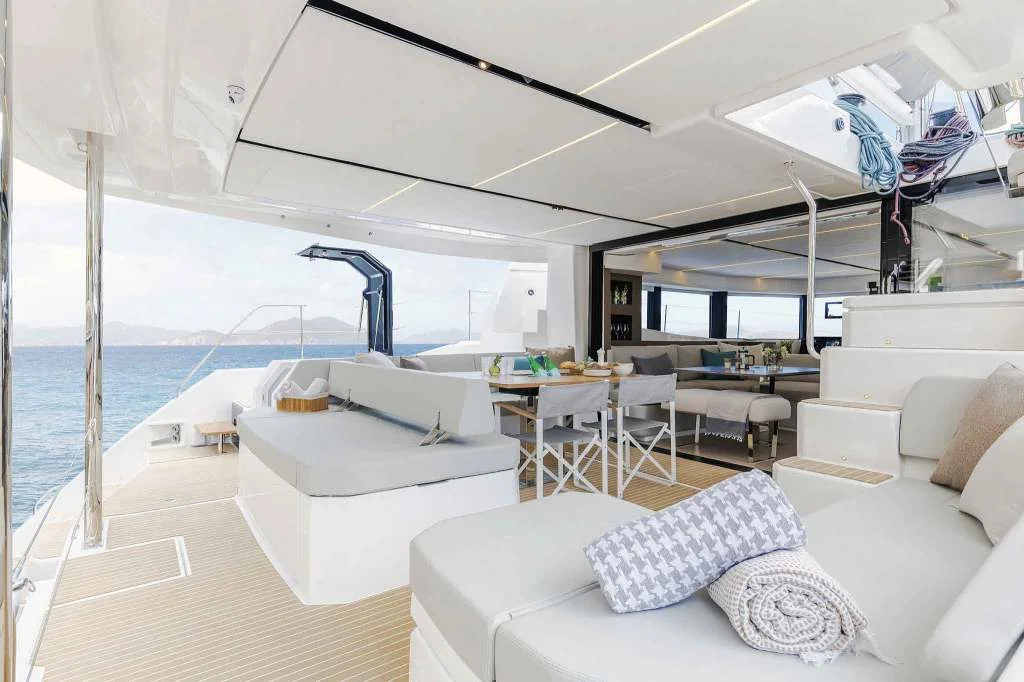
Simonis Voogd designed the hulls with narrow entries intended to help upwind performance, while a pronounced chine creates more interior volume above the waterline. Leopard’s forward cockpit remains, with a watertight door connecting it to the salon. That route gives people another way to reach the foredeck and can help bring air through the boat at anchor.
The raised helm sits to starboard, with a double bench, two electric winches and jammers for handling the lines. Raymarine electronics are within reach, and visibility forward and along the starboard deck helps when docking on that side. Above, the enlarged coachroof lounge—described as a “semi-flybridge”—adds a table, settee and sunbeds, giving guests a place to sit near the helm while underway.
A three-panel door slides into a casing beneath the helm to open the salon and cockpit into one broad living area. The dining arrangement runs along the port side, linking the interior dinette with cockpit seating. This layout makes movement between the spaces straightforward and also opens a wide path for airflow.
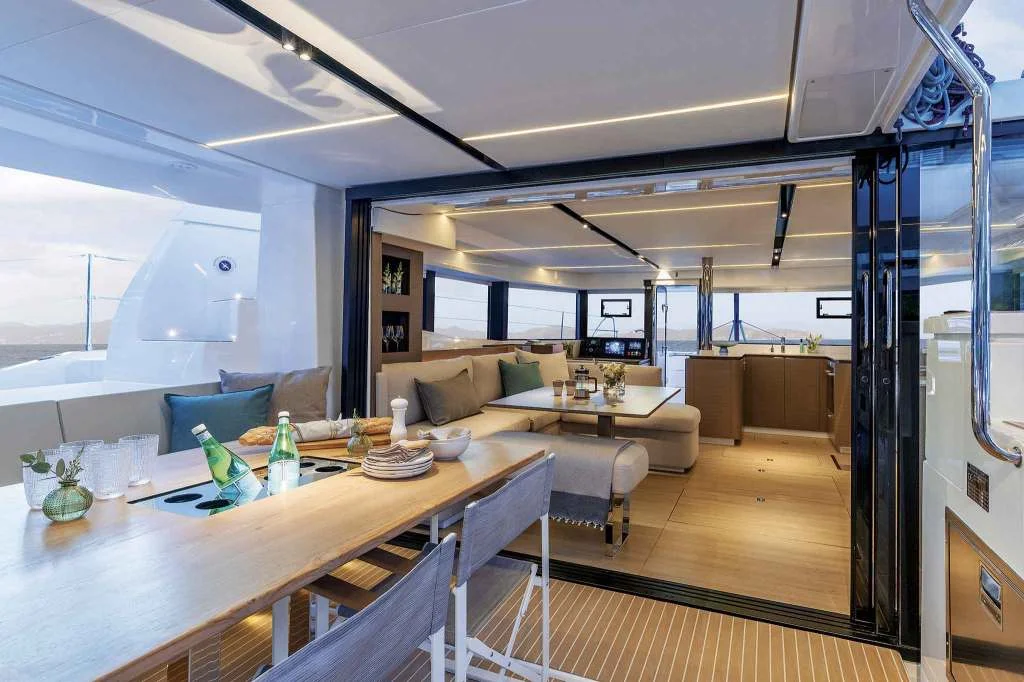
salon.
The cockpit adds a double lounge to starboard and a full grill. An optional hydraulic platform carries the tender when raised and lowers to form a teak beach at the water’s edge. It’s a useful place to prepare snorkel gear or spend time near the water, and the low access can make getting back aboard easier for dogs.
Cabins for owners or charter use
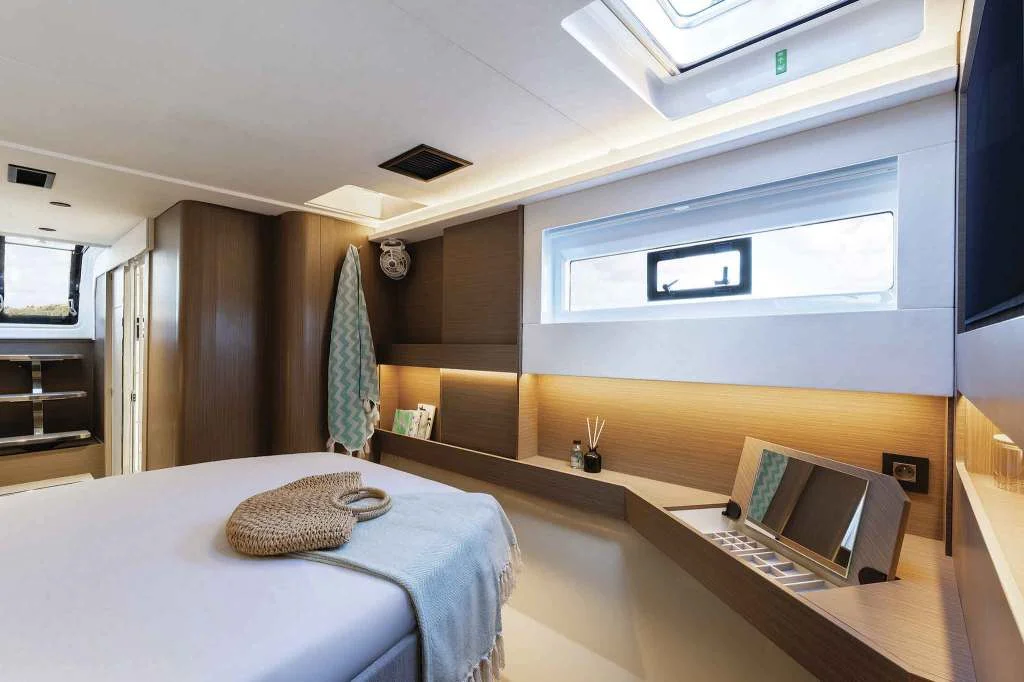
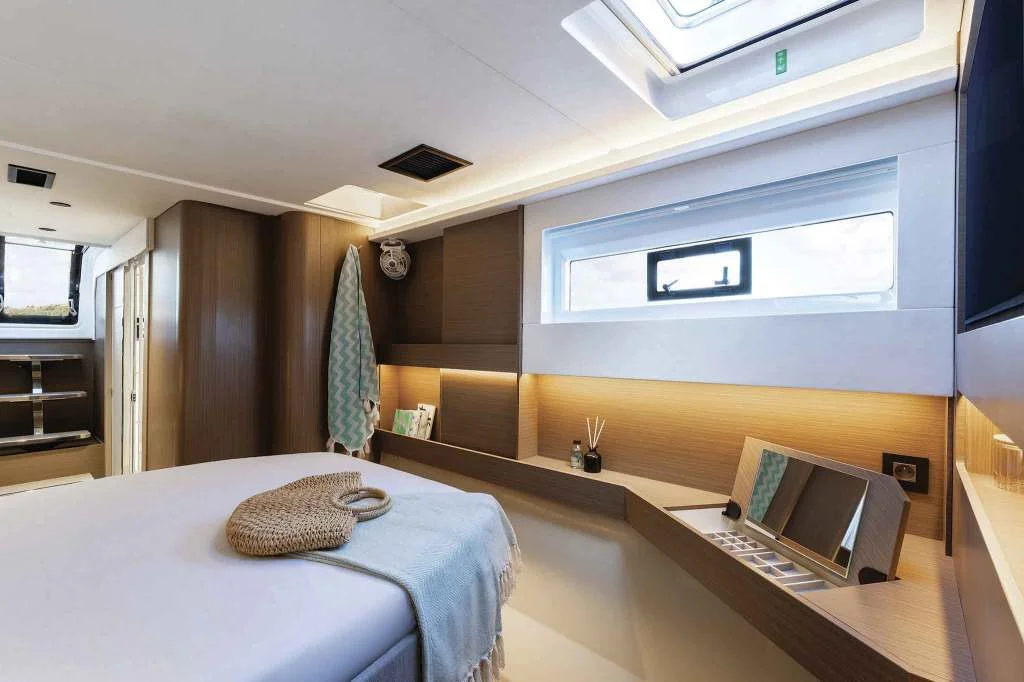
Buyers can choose from three to six cabins, with a small optional crew cabin in the port bow. The three-cabin owner’s layout gives the master stateroom about two-thirds of the starboard hull, with its own interior stairway. The room includes a large bed, an expansive head, a desk and storage. In the port forward bow, a utility room can hold tools, spares and dry provisions; a washer and dryer are optional.
The four-, five- and six-cabin arrangements suit charter use. Each cabin in the six-cabin version has an ensuite head, including the over-and-under aft cabin intended for crew or children, which opens directly to the cockpit. The range of layouts makes the boat adaptable, though the small bow cabin’s narrow berth is likely to serve better as storage.
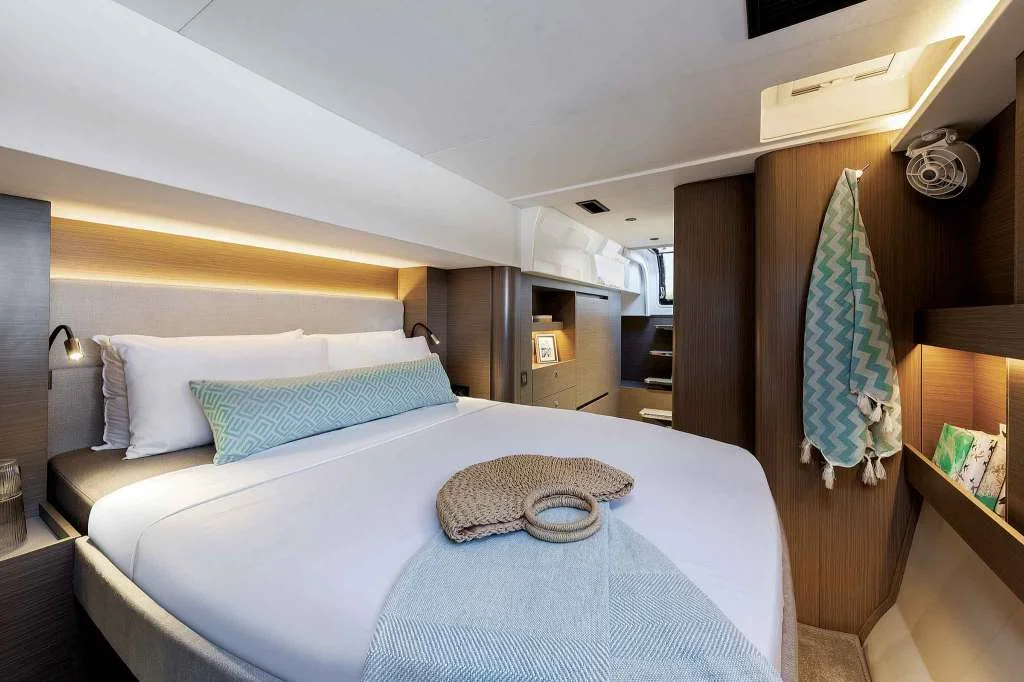
Large salon windows bring in daylight, while the contemporary finishes give the interior a residential feel. Optional equipment includes a wine fridge, induction cooking and a dishwasher. Those additions support extended time aboard, while the forward cockpit and open salon-cockpit connection keep the water and outside seating close at hand.
Diesel and hybrid propulsion choices
Standard propulsion is a pair of 57-hp diesels, with 80-hp engines available as an upgrade. The test boat carried the optional JOOOL serial hybrid system: a 1,600-watt solar array charges a 27kWh lithium battery bank, and a 24kW range-extending generator supplies additional power. Twin 25kW electric pods drive the boat.
The generator starts automatically when battery charge reaches 40%, with no operator input required. The reported electric range is three hours at six knots. The system can also recover energy under sail, though spinning the large propellers creates drag. Meaningful regeneration is expected around nine knots of sailing speed, so the trade-off between charging and maintaining pace is part of how owners will use the setup.
Robertson and Caine, based in South Africa, builds sailing and power catamarans and has launched more than 3,000 boats. The Leopard 52’s steady behavior in rough test conditions fits that background. It combined brisk sailing with enough sheltered space to get out of the rain, and it felt light on its feet despite the choppy water. For a large catamaran intended to serve both private owners and charter crews, that balance is the strongest impression from the trial.
Leopard 52 specifications
LOA 51’ 8”
Beam 26’ 9”
Draft 5’ 7”
Displacement 45,232 lbs
Fuel/Water 238/185 gallons
Engine 2x 57 or 80-hp Yanmar or JOOOL hybrid system
Builder Robertson and Caine
Design Simonis Voogd Design
This article was originally published in the November 2026 issue.