Seven Lessons From Kona’s IRONMAN World Championship for Triathletes
Kona’s rain, rough water and punishing heat showed why adaptability, practiced fueling and sound judgment matter across every distance.

Kona offers triathletes a revealing look at what happens when a carefully prepared race meets real conditions. The IRONMAN World Championship is known for its history, demanding course and high stakes, but the pro race also puts preparation and decision-making on display. Athletes have to respond to weather, equipment issues, penalties, nutrition problems and the physical strain of a long day.

Those lessons apply well beyond the Big Island. Watching experienced racers can show what helps when a plan needs to change, and where copying a pro’s choices without context can lead an age grouper astray. Kona’s latest race offered seven useful reminders: adapt early, handle setbacks calmly, respect heat, make fueling personal, leave room for bad luck, expect uneven patches and treat health as more important than a finish time.
1. Prepare to adapt when conditions change
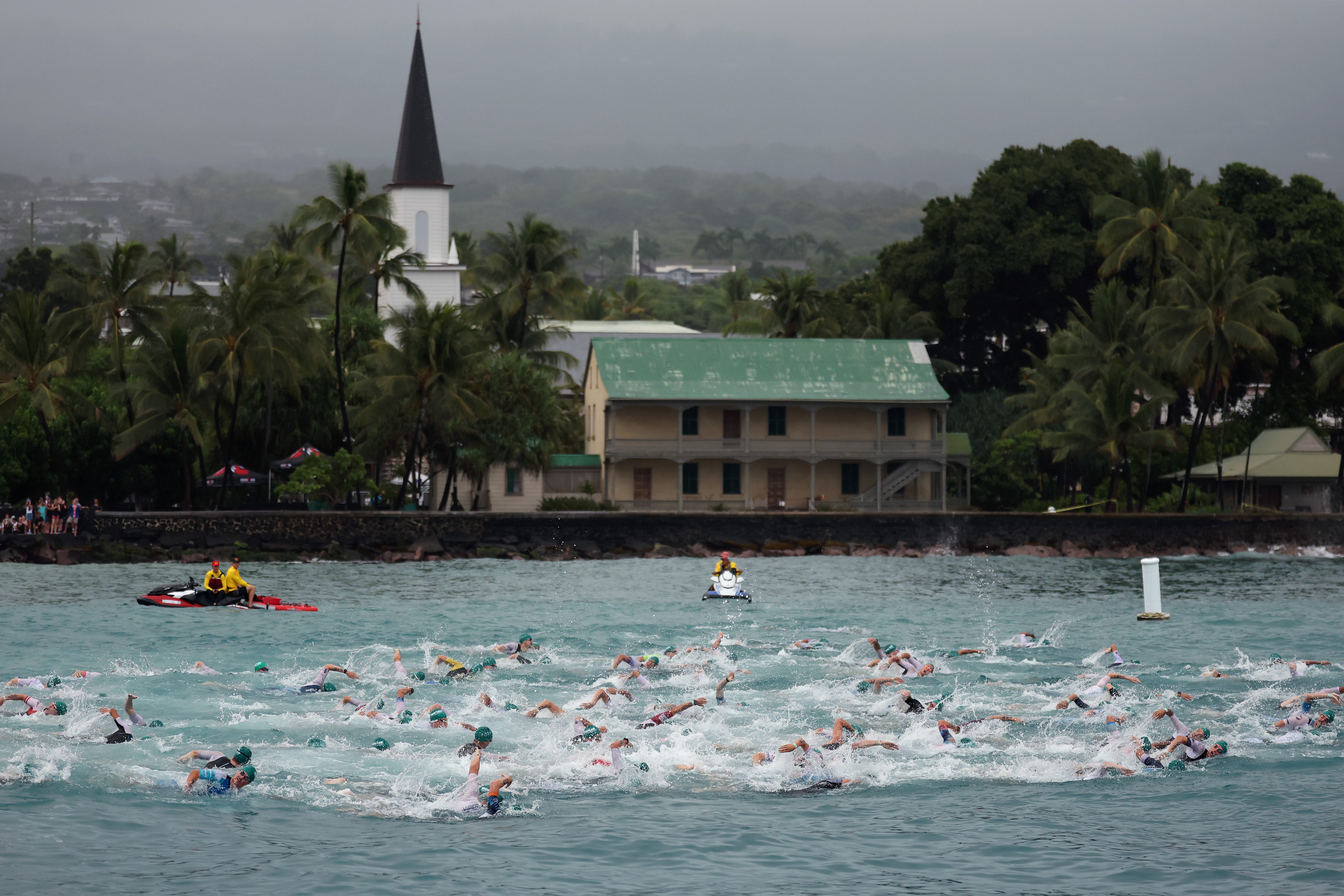
Race morning brought heavy rain. Transition mats and roads were slick, puddles formed along the course, and the overcast start gave way to humidity as the sun emerged. Offshore, the storm left the swim choppy, with large swells that made some athletes seasick.
That’s a substantial change from the conditions athletes can rehearse in training. A sound plan needs room for those changes: footing may be less secure, the swim may take more effort, and heat stress can rise later in the day. Responding well begins with recognizing what has changed and adjusting expectations before frustration or a rigid pace target compounds the problem.
Everyone faced the same broad weather challenge, but their response was individual. Kona is a reminder to prepare for likely demands while accepting that no forecast or training session can reproduce every race-day combination. Adaptability is part of preparation, not evidence that preparation failed.
2. A bike penalty is a setback, not a verdict
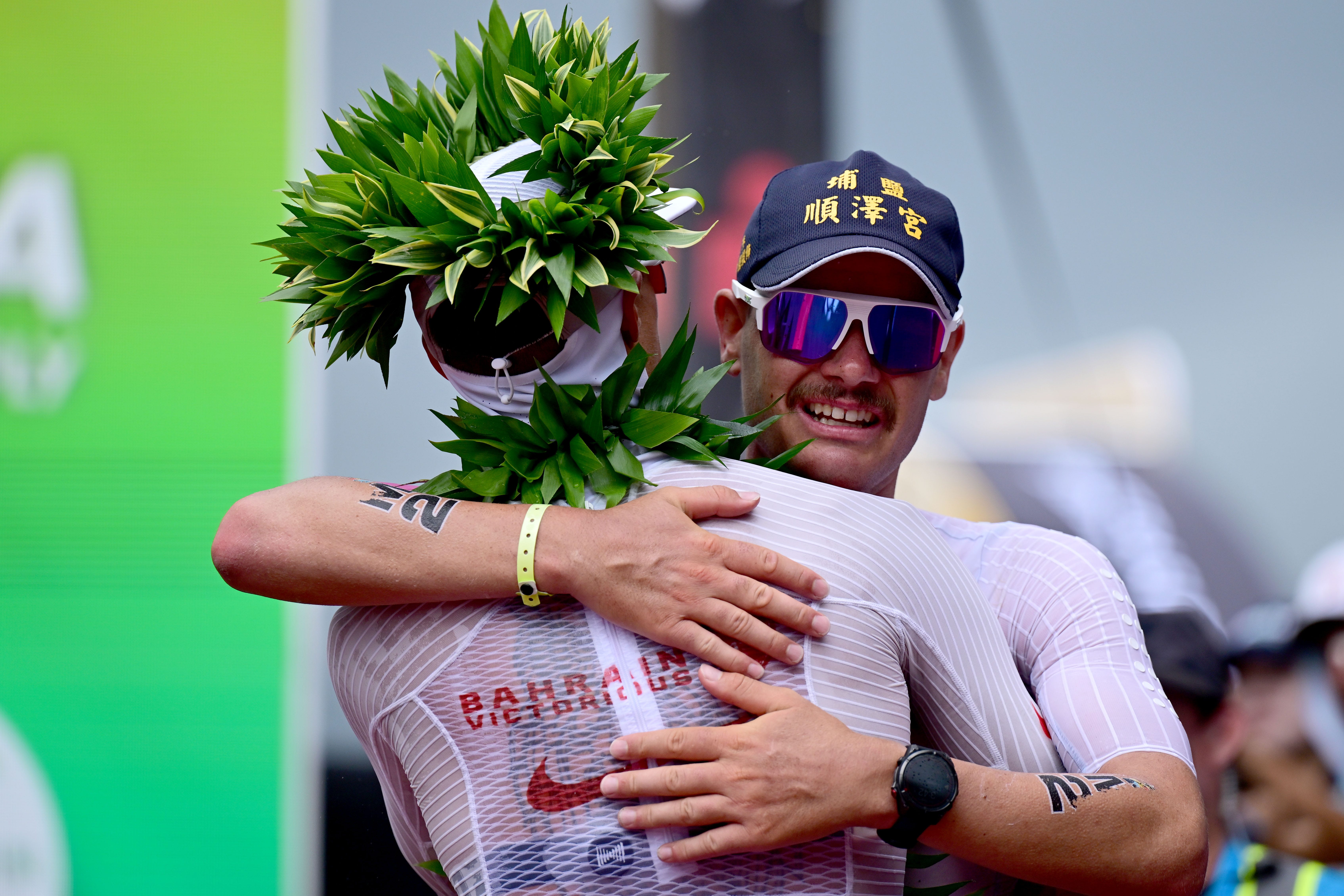
Several pros received bike penalties, most for drafting. The field was large, the course prone to congestion, and the pros had a 20-meter draft zone. RaceRanger lights, used to indicate when athletes are approaching a draft zone, are also a system racers are still learning to interpret. In those conditions, a penalty can happen without deliberate drafting.
The useful lesson is how athletes handled the interruption. Gustav Iden, who finished second, Matthew Marquardt, who finished third, and Julie Derron, who also placed third, all served bike penalties and went on to reach the podium. The reported response was practical: stay calm, use the stop to drink water, stretch or adjust equipment, then return attention to the race.
A penalty costs time and can change a race, but it doesn’t automatically erase every opportunity. The same principle applies at other events: once a decision has been made, spending the penalty stop arguing or panicking adds strain without recovering the lost time. Use the pause safely, follow race procedures and focus on the next part of the day.
3. Heat management belongs in the race plan
Kona combines heat and humidity with limited shade, extensive blacktop and stretches with little airflow. Cooling equipment was prominent among the pros, including neck towels, headbands, gloves, ice vests and hats designed to hold ice.
Lucy Charles-Barclay and Matthew Marquardt wore Velotoze Glacier Gloves from Ultra Cool Tech during the bike and run. Marquardt also wore a bucket-style hat with an ice pocket on top; Solveig Løvseth wore a standard-style hat with an ice pocket at the front. Magnus Ditlev used an ice hat from The Feed.
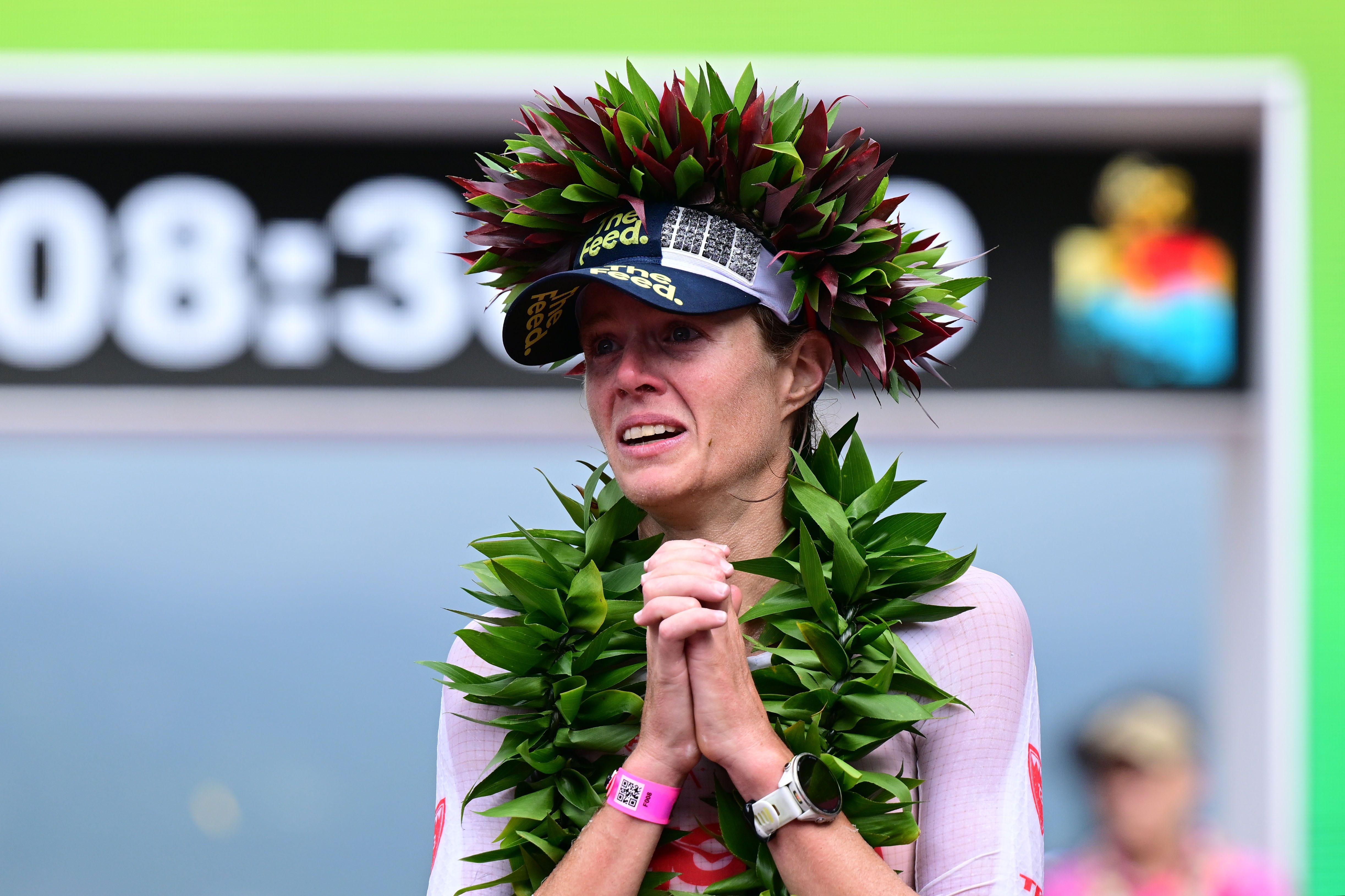
Taylor Knibb wore a Feed visor with an Omius graphite cooling strip and used a CORE body temperature sensor. Kat Matthews wore an ice vest during her swim warm-up.
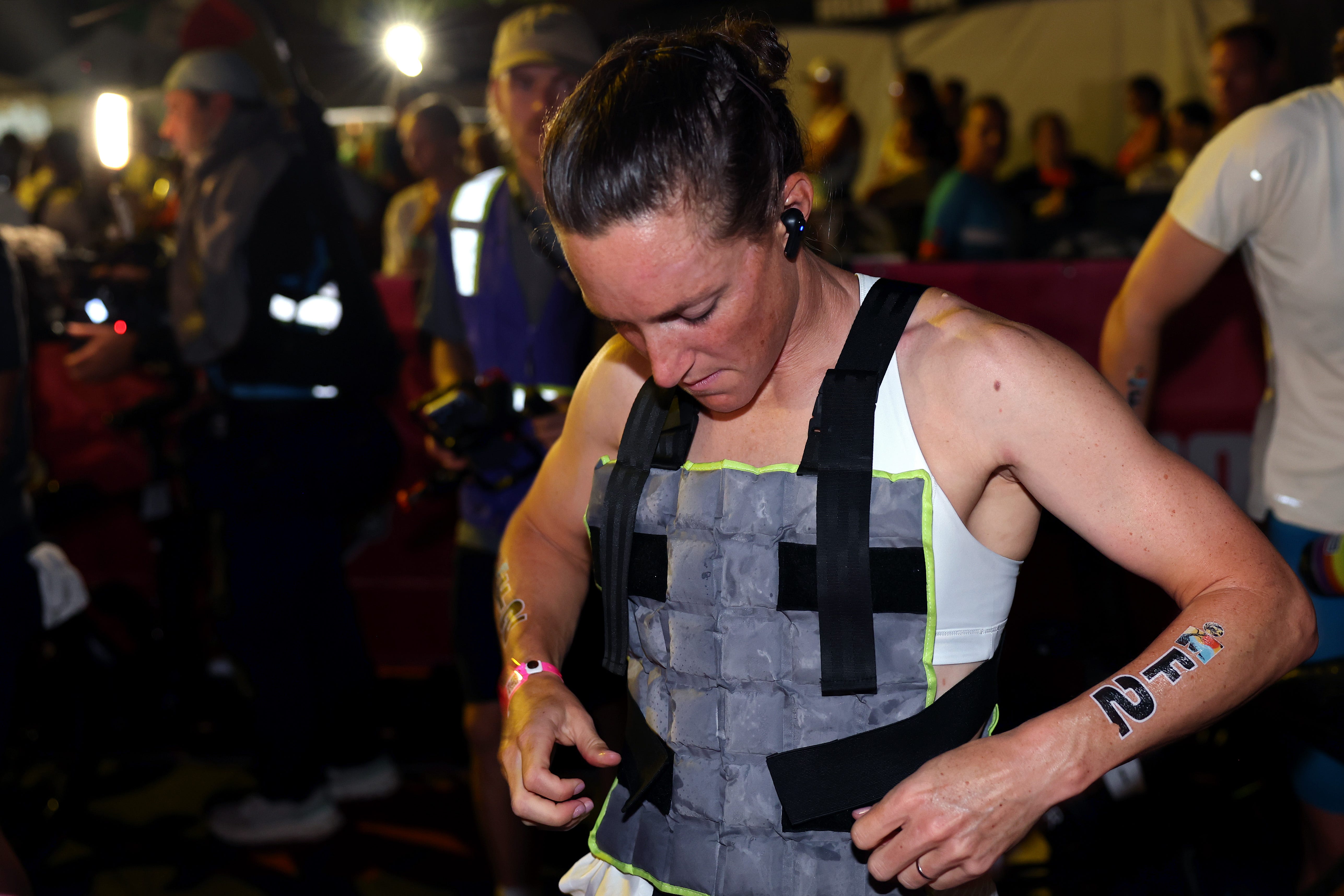
These examples show how much attention top athletes give to cooling, but gear alone can’t guarantee safety or performance. Pacing, fluid and electrolyte intake, acclimation and individual responses all matter. Heat strain can bring nausea, dizziness, headache, poor coordination and confusion; exertional heat stroke involves a very high core temperature alongside nervous system dysfunction and can become life-threatening.
When an athlete shows signs of serious heat illness, the priority is to stop exertion and get urgent medical help. A finish line is never worth continuing through confusion, stumbling or collapse. For athletes planning a hot race, practice a conservative pace and a fueling strategy, and know how to respond if symptoms develop. Cooling tools are part of that preparation, not a substitute for stopping when the body is in trouble.
4. Plan fluid and nutrition around your own needs
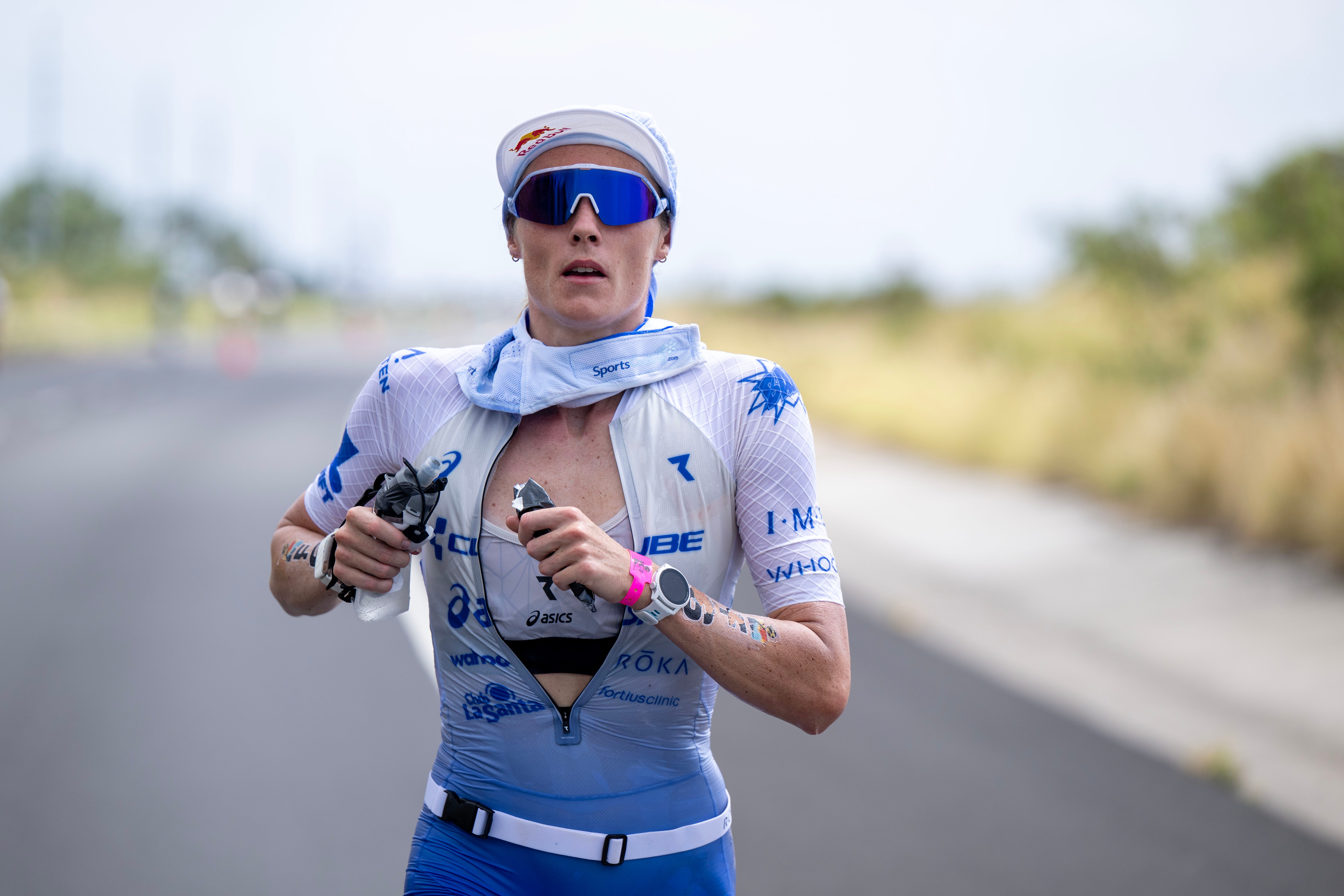
Several pros carried fluid on the run. Ditlev was seen with a full-sized bottle and another tucked into his kit; Knibb took a bottle at a pro aid station, and Charles-Barclay carried a small handheld flask. Their choices underscore a broader shift away from assuming that water and gels alone will suit every athlete in every set of conditions.
Fluid, electrolytes and carbohydrate intake affect how an athlete experiences a long effort, but there is no single plan that fits everyone. What works depends on the individual, the conditions and what they have practiced. Carrying a flask in a belt can keep fluid accessible without holding a bottle; the source author mentions the Naked Band as one example.
The practical point is to rehearse fueling in training and adapt it to the race rather than improvising under pressure. A plan should account for aid stations, how much fluid the athlete can carry and tolerate, and the possibility that heat will change what feels manageable. Carrying extra nutrition doesn’t mean consuming it regardless of symptoms; persistent nausea or signs of heat illness call for reassessment and, when needed, medical attention.
5. A practiced plan can still meet an unpredictable day
Charles-Barclay was seen vomiting on course, and the source describes other athletes becoming sick as well. The broadcast captured one moment, but it can’t explain the cause. Nutrition that isn’t settling, heat stress and other individual factors can overlap, and an observer can’t know which combination is at work.
Athletes can prepare carefully, pace with restraint, practice their food and fluid schedule, and still have a race that goes wrong. That uncertainty is one reason a spectator should resist diagnosing someone from the roadside or assuming a visible struggle reflects poor preparation. The same symptoms can have different causes, and advice offered without context may be unhelpful.
If someone is sick or struggling, offer kindness and give them space to respond to their situation. A brief, supportive gesture can matter; unsolicited instructions or judgment can’t tell you what their body needs. On a course, serious symptoms deserve attention from race medical staff rather than speculation from other athletes or spectators.
6. Expect the effort to have ups and downs
A full-distance IRONMAN can last more than 10 hours, and no athlete should expect to feel equally strong throughout. A day may include stretches of confidence and energy, followed by fatigue, frustration or doubt. That variability is part of the event’s physical and mental load, not proof that every low point signals a failed race.
Patience helps, but it needs to be paired with judgment. When fatigue rises without warning signs of a medical problem, slowing down, taking in a practiced source of fuel or fluid, and reassessing effort may help an athlete regain control. Sometimes a downhill or a change in pace offers a short reset. When symptoms point to heat illness or another serious issue, the right response is to stop and seek help, not push through in hopes of a rebound.
The same general rhythm can appear over the 70.3 distance. A plan that allows for changing sensations is more useful than one that assumes every split will feel smooth. Keep reassessing effort and conditions as the race unfolds.
7. Finishing matters, but safety comes first
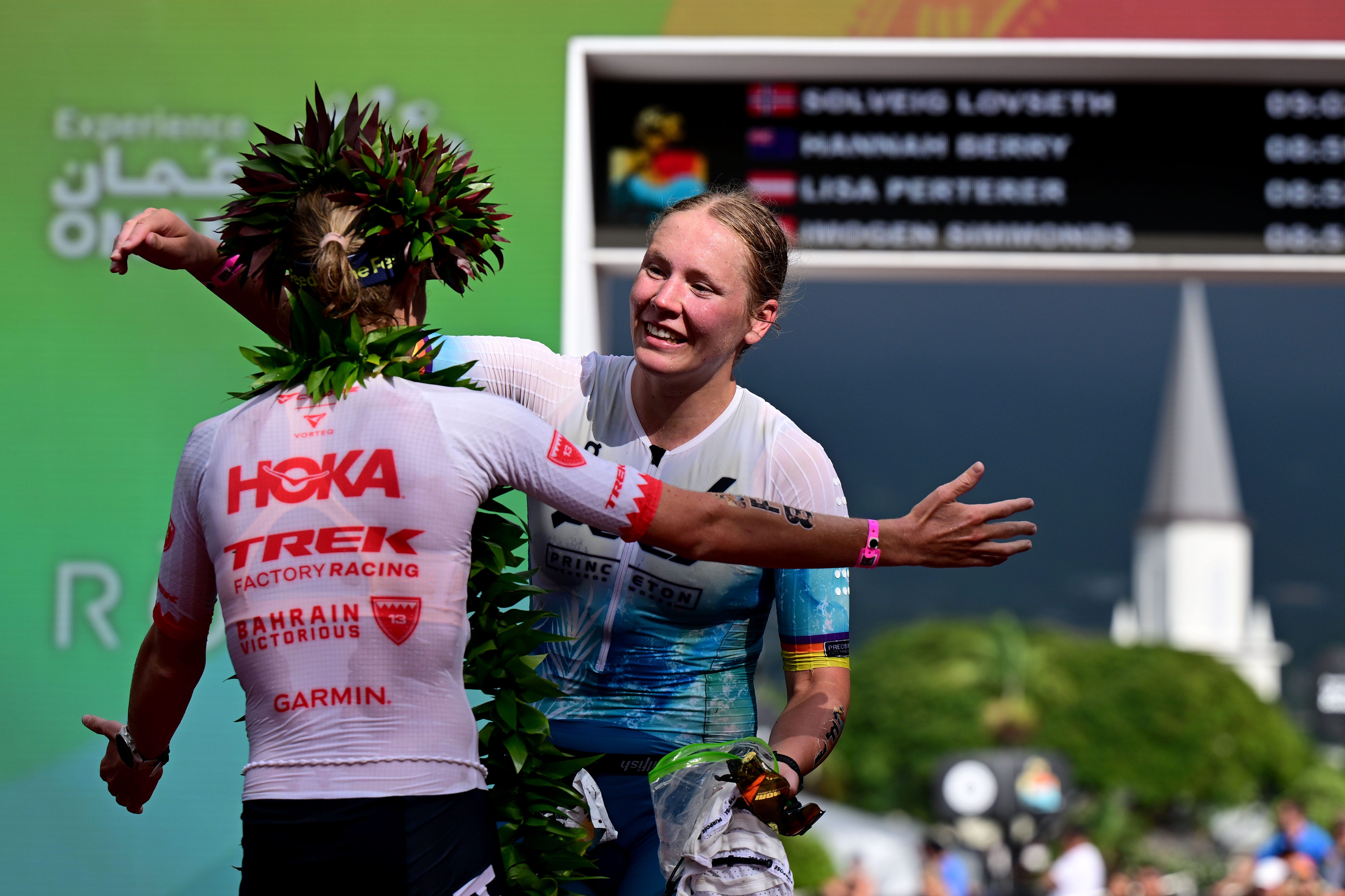
Near the finish, Løvseth stumbled and collapsed several times, less than a kilometer from the line. The scene recalled Knibb’s collapse in 2025. The source author’s account says Løvseth was cooled with ice and later appeared more composed, then walked the final kilometer. From the broadcast alone, however, viewers can’t confirm a diagnosis or know the full medical picture.
Collapse and loss of coordination in extreme heat are warning signs that call for immediate medical attention. A person experiencing those symptoms may be unable to walk safely, even when the finish is close. Cooling and assessment by trained medical staff take priority over completing the course. No athlete should feel obliged to continue because they have entered a race, or because spectators expect them to finish.
There is real meaning in a finish, especially after a difficult day, but a result can’t be more important than an athlete’s health. Some races end with a walk to the line; others need to end with medical care. The most useful lesson from Kona is to prepare thoroughly, stay flexible and make the decision that protects the athlete when conditions or symptoms demand it.