Triathlon and the Comparison Trap: Keep Results in Perspective
Race times can guide training, but they don’t measure an athlete’s worth. These practices help keep comparison from crowding out the joy of sport.

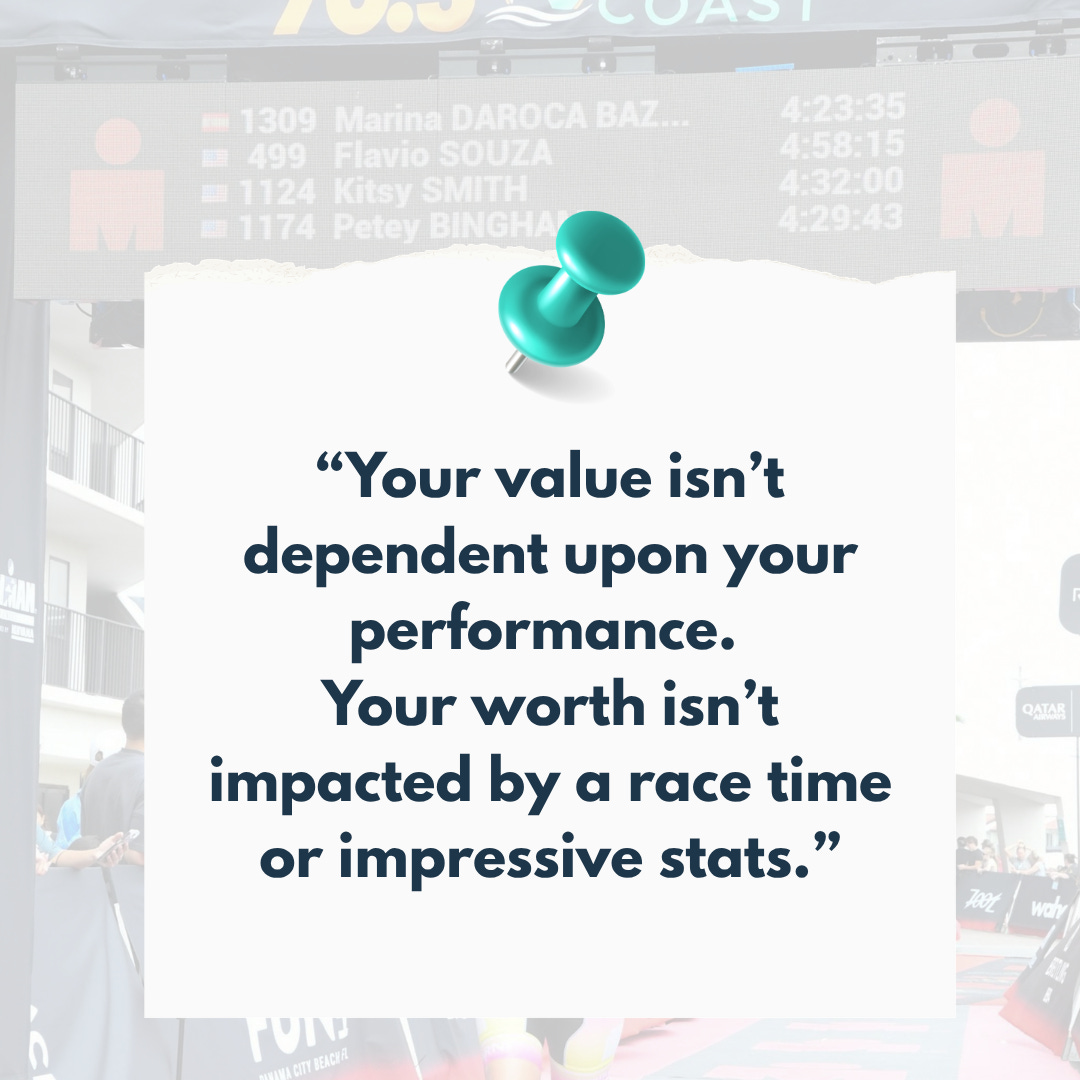
Race results make comparison part of sport: athletes are ranked by time, points or performance, and there will almost always be someone faster, stronger or more skilled. The hard part is remembering that a ranking describes one result. It doesn’t measure a person’s worth.
That distinction can be difficult to hold onto. Professional athletes hear their performances weighed against expectations, while amateur athletes may find their race photos, videos and captions open to comment online. Times and rankings can tell us something about a day of competition. They can’t tell the whole story of an athlete’s life or value.

There’s no finish line for comparison
Imagine sharing a pool lane with someone who regularly swims faster. That fact alone doesn’t settle what your training means, or why you swim. The comparison can feel significant because athletes are often taught to link achievement with personal value: work hard, perform well and earn respect. But the faster swimmer is also likely to see someone faster still.
Even a major win can’t end the cycle. Becoming Ironman World Champion or winning the Boston Marathon would mark an extraordinary performance in that event. It wouldn’t remove the pressure to repeat the result, meet expectations or stay ahead of competitors. If identity rests on being a high achiever, a difficult race or a downturn in performance can feel like a threat to the self, not just a setback in sport.
That pressure can erode the reasons an athlete first loved training and competing. When every result becomes a verdict, enjoyment gives way to worry about falling short. The author’s answer is to build a sense of identity that doesn’t rise and fall with race outcomes.
For the author, that foundation is Christian faith. The article describes identity as rooted in Christ and in what the Bible says about a person: chosen for a family (Ephesians 1:4), a child of God (John 1:12), made with purpose (Jeremiah 29:11), able to leave the past behind (Ephesians 4:22–24), forgiven (1 John 1:9), fearfully and wonderfully made (Psalm 139:14), and cared for (Philippians 4:19). These beliefs place athletic performance among the things a person does, rather than making it the measure of who that person is.
Share results with care
Family expectations, personal ambitions and the sacrifices of training can all add weight to a result. The author says they share race photos and videos, but generally report an age-group placing rather than times, splits or pace. Their reason is practical: a number might leave one reader thinking a similar performance is out of reach, while another judges the athlete for not going faster. Neither reaction helps people enjoy their own progress.
That choice is personal, but it points to a useful question for any athlete: what purpose does a posted result serve? Data can help track progress and shape training. Shared without context, it can also invite assumptions and turn another person’s workout into a yardstick. The author rejects the idea that athletes need constant pressure from rivals to perform well. For many, unrealistic expectations can make sport harder to sustain, especially when every difficult day is framed as evidence of insufficient desire.
The article connects its Christian perspective to the same idea: salvation and forgiveness are gifts of grace, not rewards for achievement. In this view, faith provides a source of worth that does not depend on training, race results or the approval of others.
Practices to keep comparison in check
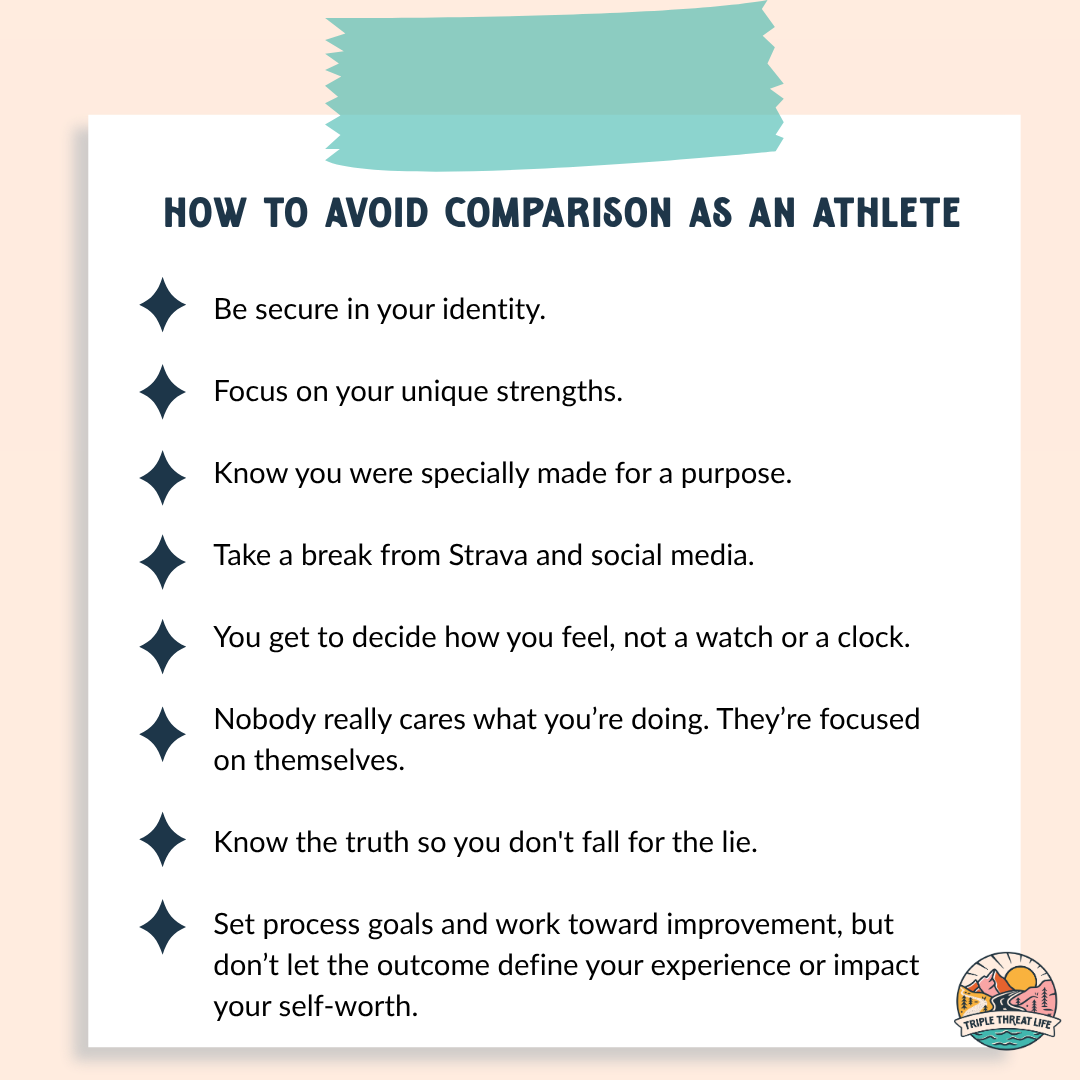
The author offers several ways to protect perspective while still working toward improvement:
Ground your identity in something beyond your athletic results.
Notice your own strengths instead of treating another athlete’s abilities as a measure of your limits.
Remember that no two people are alike, and consider what purpose you want sport to serve in your life.
If Strava or other social media feeds intensify comparison, step away for a while.
Decide how you feel about a workout or race before checking the pace or time. A watch records a number; it doesn’t decide whether the experience mattered.
Keep in mind that other athletes are often focused on their own training and goals.
For readers who share the author’s faith, read scripture and return to the beliefs that anchor your identity.
Set process goals and look for improvement, while letting the outcome remain one part of the experience.
The author’s order of priorities is identity first, then purpose, then training and effort. Their purpose is to honor God, and the article closes with a prayer asking for the ability to compete and improve without letting ambition take over, or a result define the athlete.
This piece is excerpted from the author’s devotional for athletes, which had been submitted to an agent the day before publication. The practical point holds whether an athlete posts every split or keeps race details private: pursue progress, but don’t hand a clock the power to define the day—or the person who raced it.
===