1999 GT Mountain Bike Shows Why Top-Mounted Thumbshifters Can Work
A ride on a 1999 GT puts top-mounted thumbshifters to the test, with a look back at the older mountain bikes that led to it.
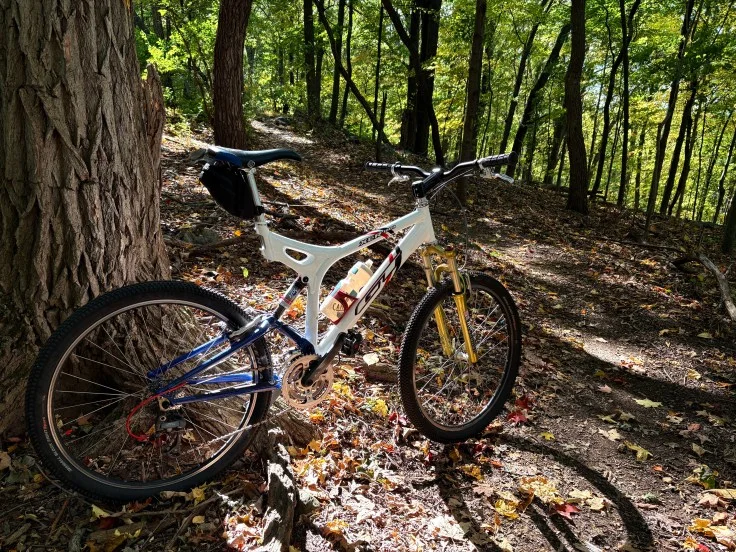
Top-mounted thumbshifters look like they might cost you control on rough ground. On my 1999 GT, the shift itself takes a little more hand movement than a trigger shifter, but my grip stays on the bar—and the lever doesn’t demand much finesse. That’s the practical answer to a question from a reader who rides technical terrain and likes suspension.

The question arrived after a particularly convincing spam text nearly drew me into a reply. The sender claimed to be an associate of Grant Petersen and wanted to know about a gift, even offering personal and banking details. I was tempted to answer, partly because I’m an unapologetic Rivendell fan. But I’ve also been riding a bike that might give Petersen motion sickness.
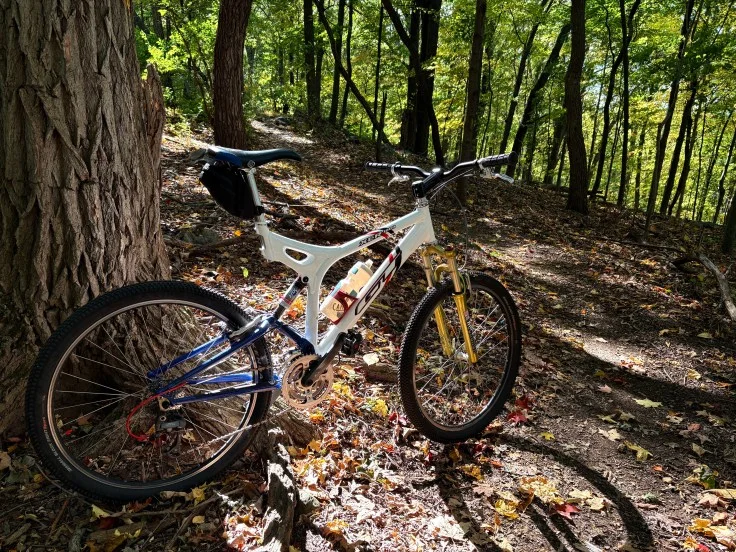
That bike has thumbshifters mounted on top of the bar. A commenter called Grouchy Doc, an avid mountain biker with a taste for suspension, asked how they work on rough or technical ground. Fair question. My own shifting standards are forgiving: this is the same reader who once sent me a Campagnolo Super Record 11-speed drivetrain because it didn’t meet his expectations. I’m content to shift a bike with sticks.

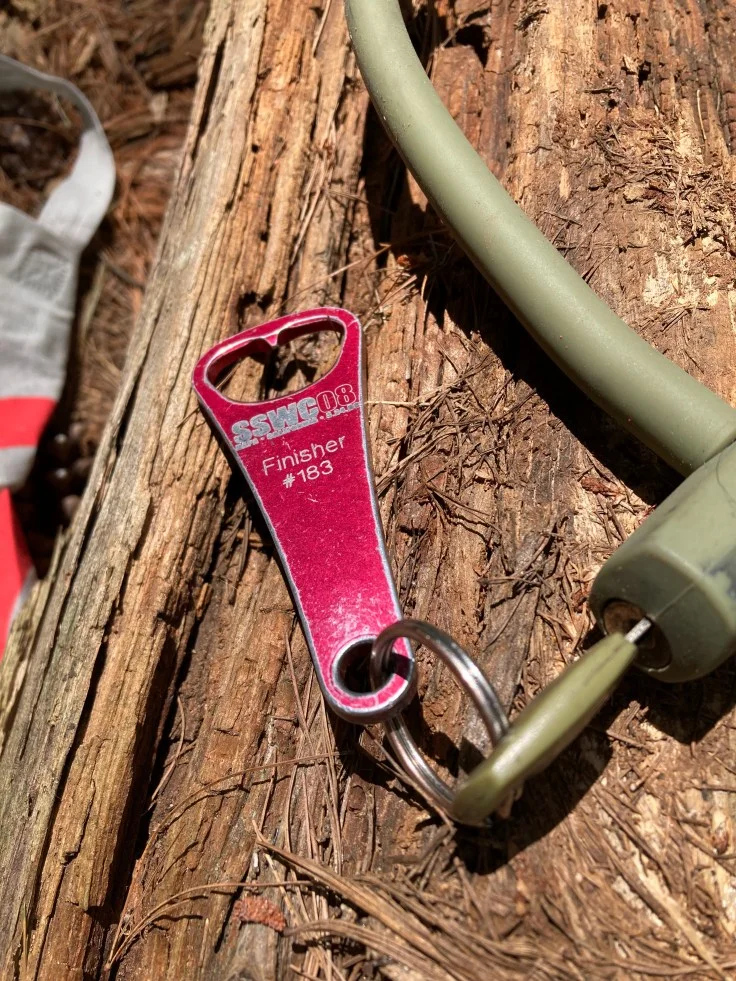
My credentials are odd, but relevant. I spent most of my prime mountain-biking years on singlespeeds, so gears still feel like a luxury, even when they’re crude enough to operate with a foot. I was also, by my own reckoning, the 183rd-best singlespeeder in the world. That ranking makes me roughly the cycling equivalent of the world’s 183rd-richest person: not the richest, but doing all right. At least, that’s the argument for letting me have an opinion.
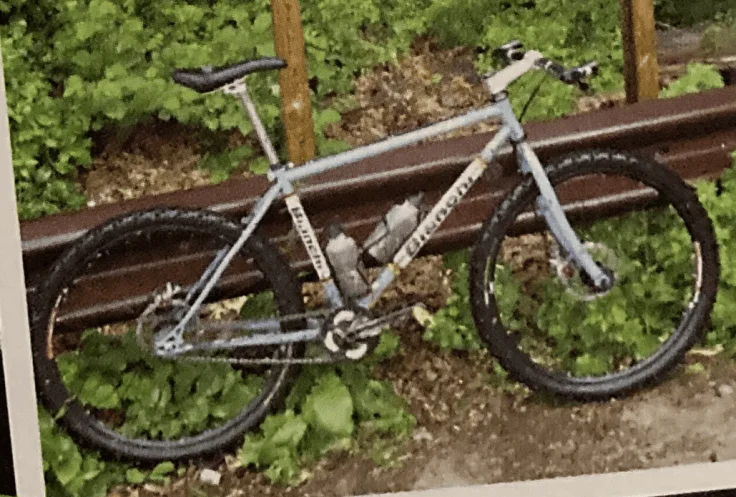
And yes, there was a period when I regarded any geared mountain bike as extravagant.
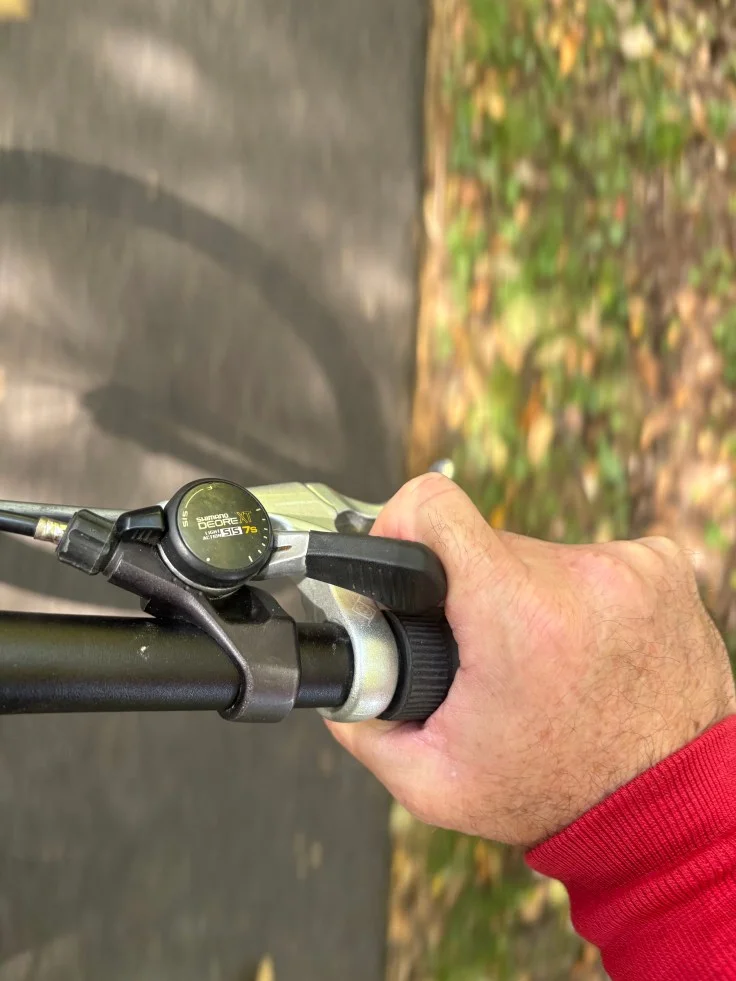
Here’s how the thumbshifters feel in use. The lever sits close enough to the grip that the reach isn’t a major stretch. Compared with trigger shifters, your hand travels a little farther; the change feels more like switching between bar-end and integrated road shifters than reaching all the way down to a downtube lever.

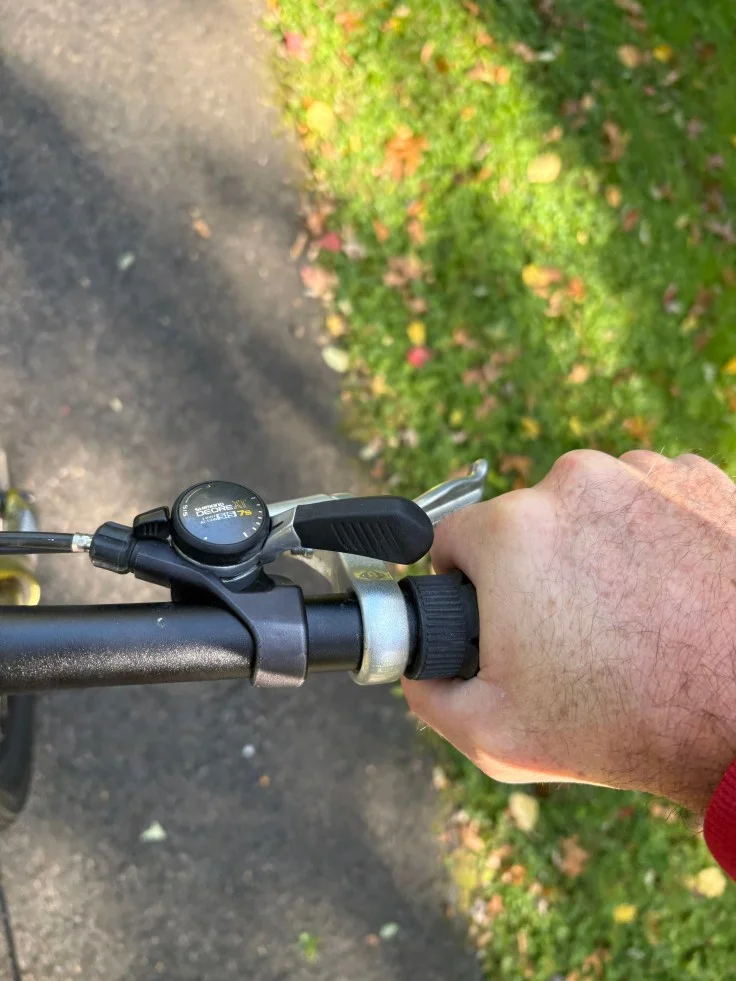
The name makes thumb use sound constant, but it isn’t. Downshifting calls for a thumb press, and the rest of your hand can remain wrapped around the grip. Shifting up from the lowest gear may call for your index finger. Once the derailleur is nearer the middle of the cassette, a small nudge can often do the job. Some shifts don’t require you to lift any finger from the grip at all.
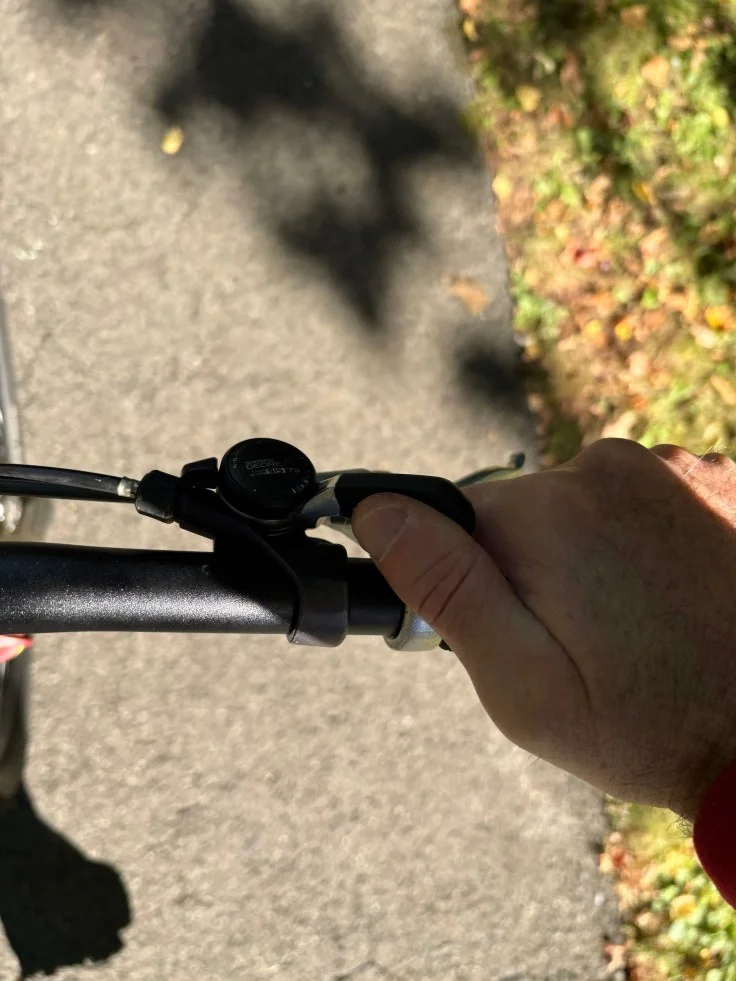
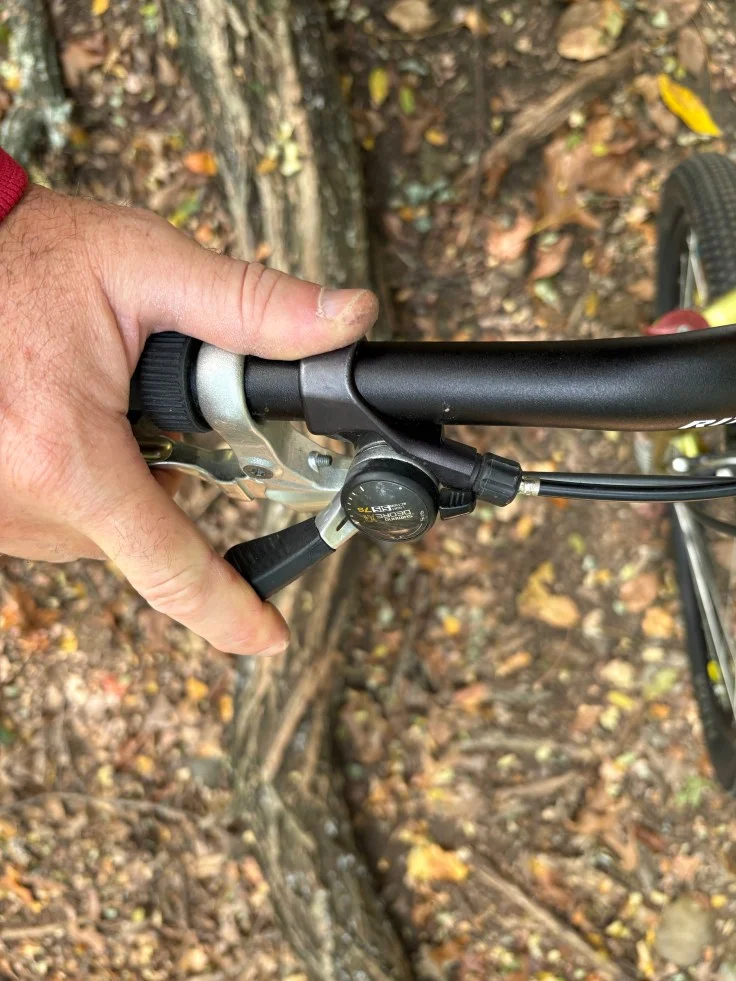
There’s no delicate touch required to make the shift, which helps keep the setup manageable when the trail gets rough. A LoNo derailleur would reverse the arrangement. I briefly considered fitting one of my two old XTR derailleurs in that configuration, then decided I’d done enough tinkering.
A ride through mountain-bike history
The thumbshifters are one reason I’ve been riding this bike, but they’re not the whole story. It’s fall, the woods are pleasant, and I’d also sorted out a few persistent mechanical annoyances. The GT is running smoothly enough that I rode it to the trails behind the mall instead of driving there as I usually do.



The ride also put my recent run of older test bikes in perspective. Paul from Classic Cycle has helped me work through a loose chronology of mountain-bike design, starting with the American M-16 from 1990. Before that came the Specialized RockCombo, a 1989 machine that I’ve described as proto-gravel. The dates aren’t perfectly tidy, but the progression is fun to ride through.
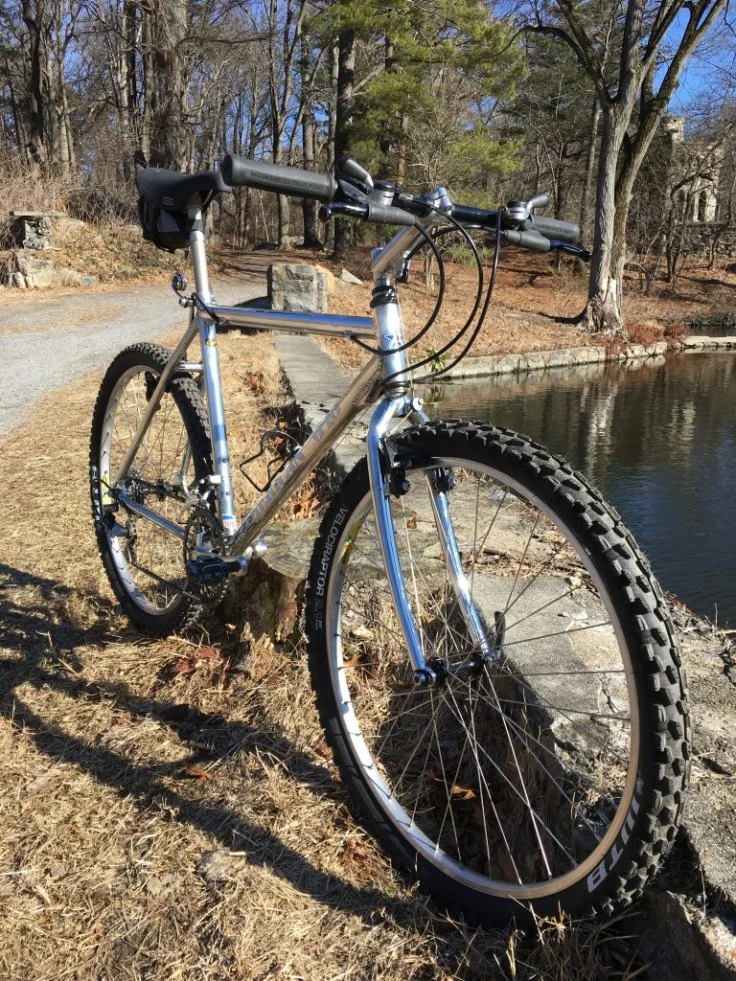
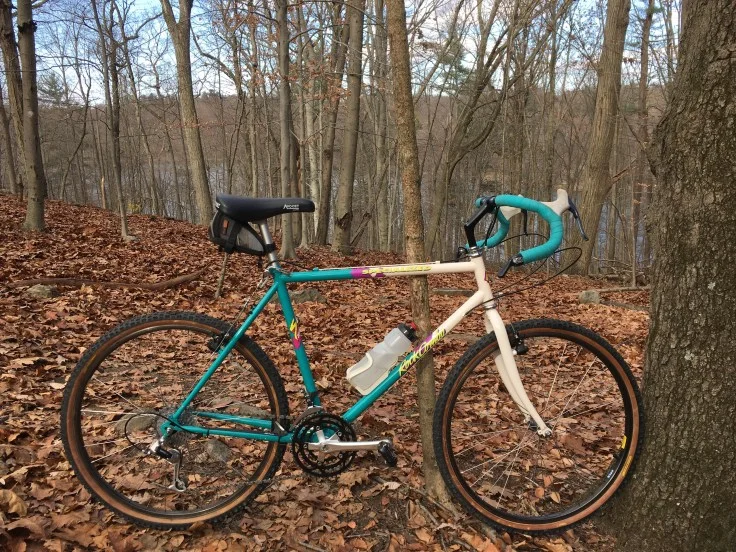
Next was an off-road test bike with some form of suspension, perhaps from 1991. It was strange at first. After I removed its worst components, though, it turned out to be a decent bike. A later model brought suspension in a more refined package, and now there’s the GT.
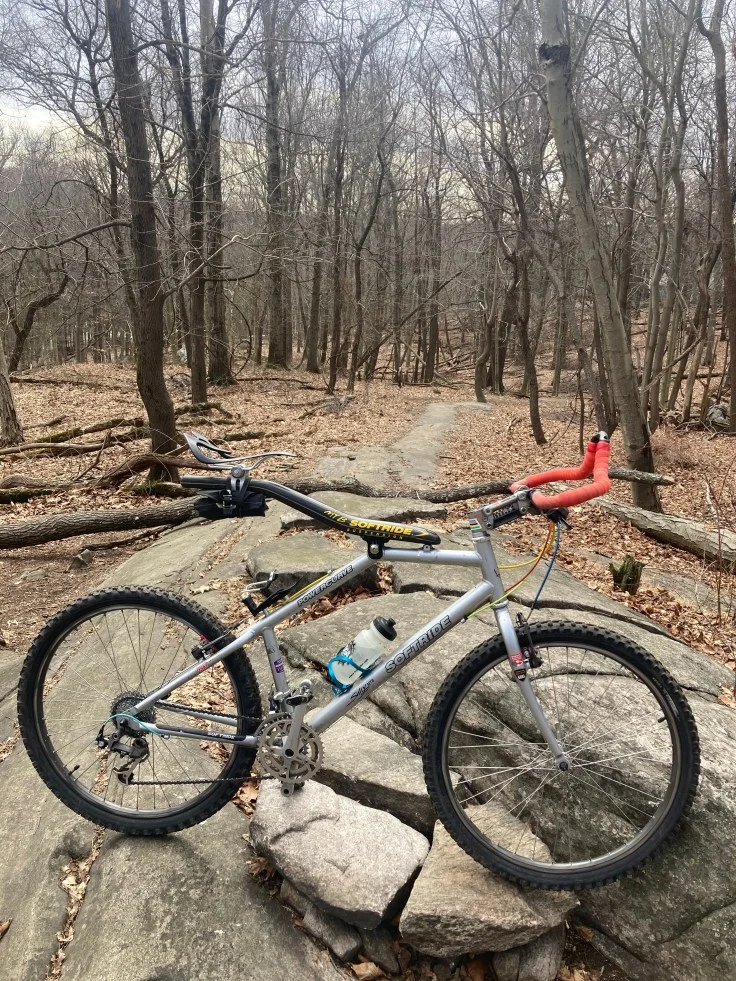
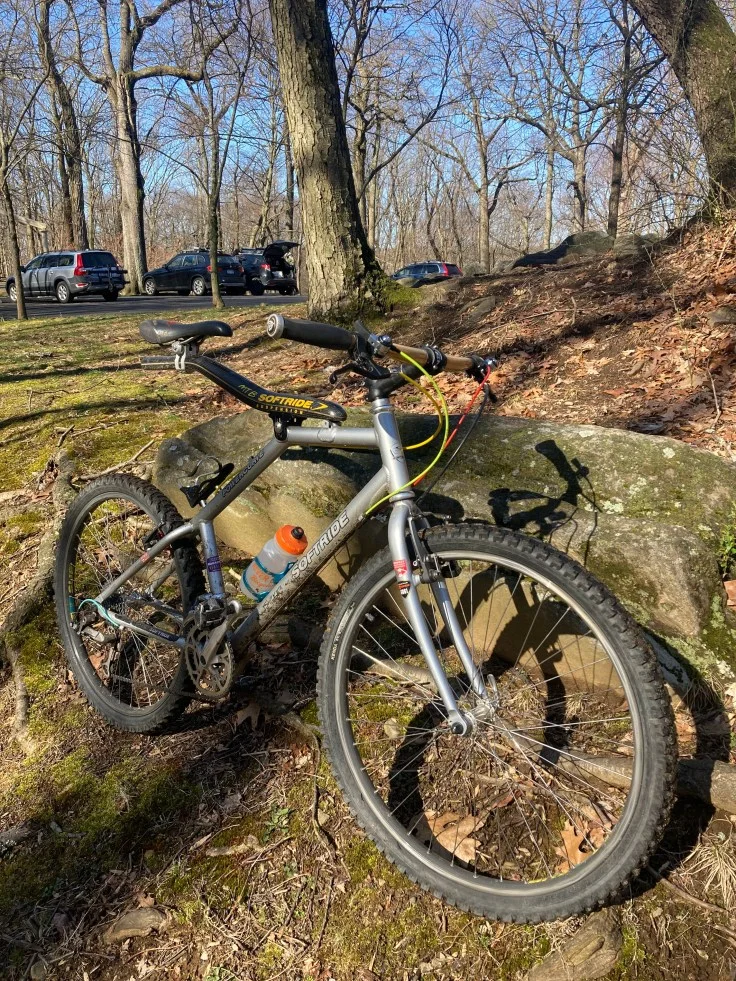
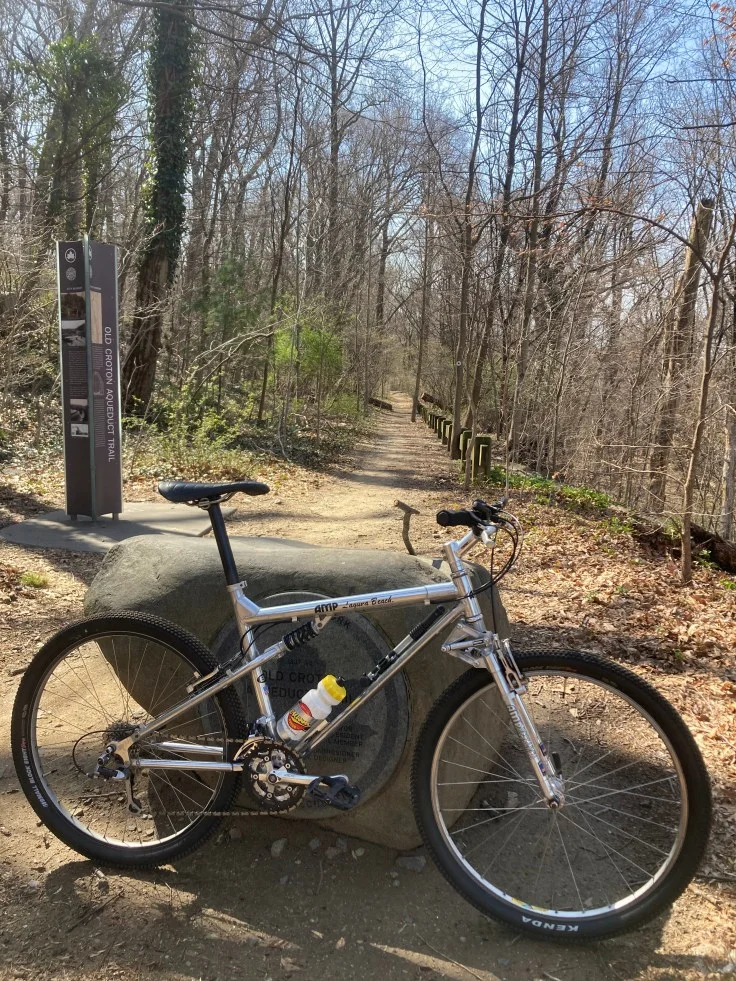

The RockCombo and the AMP remain my favorites. The RockCombo was a strong all-around bike; the AMP felt light and quick. The GT is the most capable trail bike of the bunch, and I’m enjoying its relatively plush suspension. But I’m less taken with some of the design details.
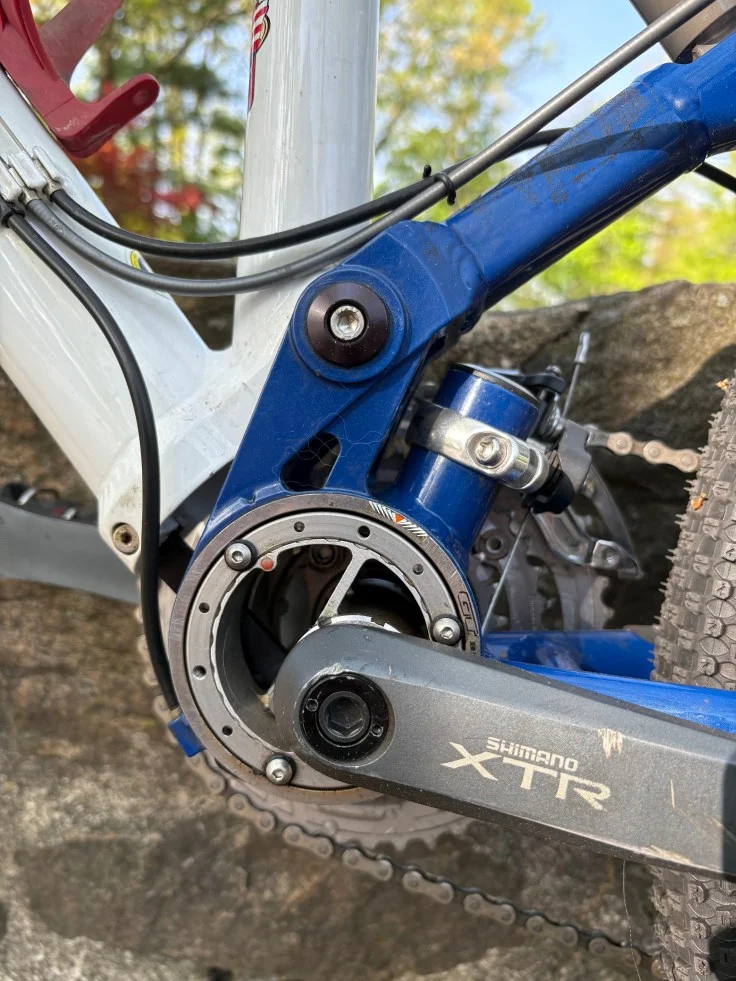
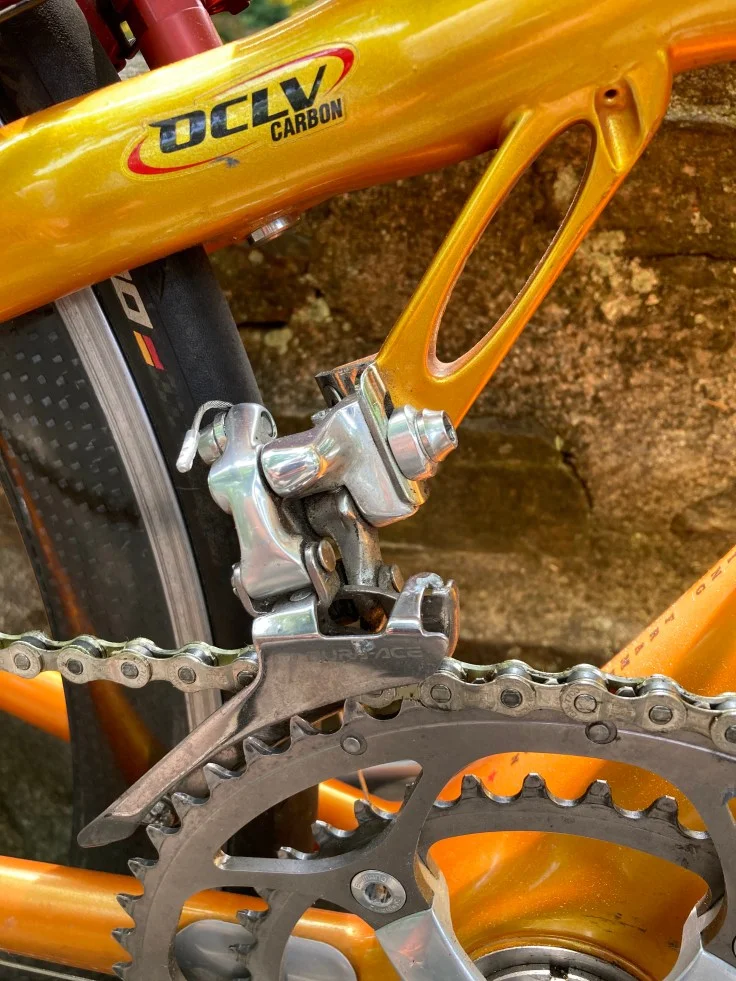
The front-derailleur stub troubles me more than the threadless stem adapter I’ve already admitted to disliking. The front-derailleur stalk on the Wife Oil looked elegant by comparison. The GT’s i-Drive seems to work as intended, so I have no complaint about its function. Still, it feels like a complicated way around using the Horst link found on the AMP—something like having a stem adapter tucked into the bottom bracket.

Maybe I’m overthinking the hardware. The useful takeaway is simpler: these thumbshifters let me change gears while keeping a hand on the grip, and the GT is running well enough to earn more rides in the fall woods.