Boat Tactics for Fighting Big Offshore and Inshore Fish
Learn when to chase, manage drag and steer around weeds, reefs and shoreline cover to keep pressure on big fish and protect the line.
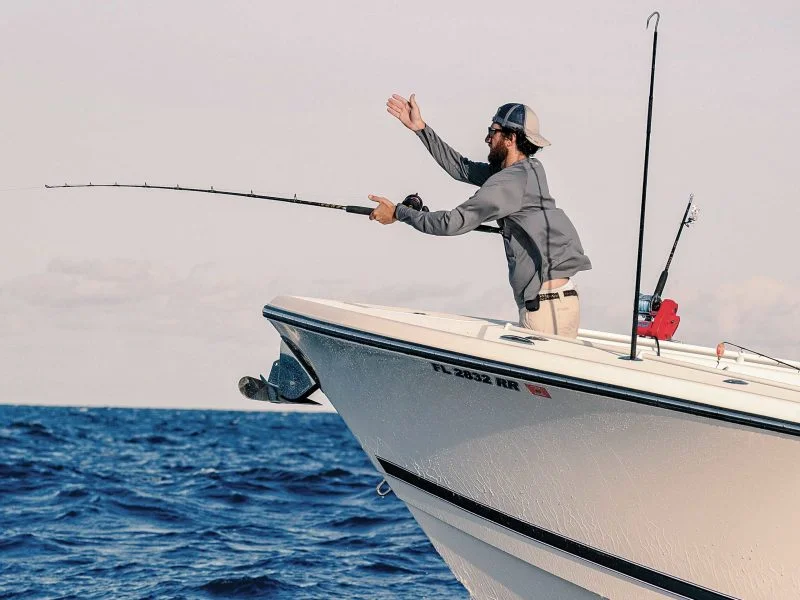
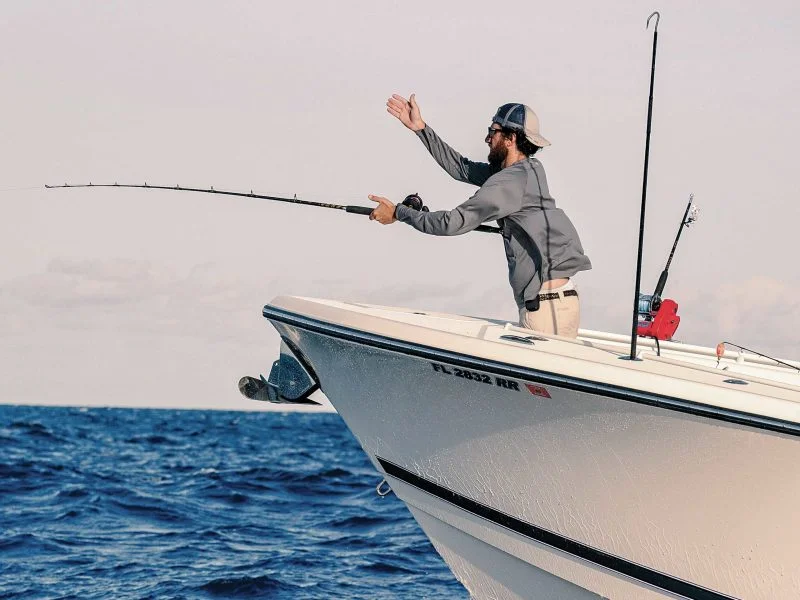
When a powerful fish takes off, the boat can be part of the tackle. Following at the right moment helps preserve line, avoid weeds and keep the fish clear of structure. The call depends on the species, line class, sea state and what lies between the angler and the fish. Staying close gives the crew control, but crowding a fish can let it rest; good boat work balances those demands.
Read the run and protect the line
A long run changes the pressure on the line. As line leaves the reel, the smaller amount remaining on the spool increases drag. Water resistance adds more strain, raising the chance of a break or a hook pulling free. Reduce drag slightly as the spool empties, then have the helmsman close the distance when the fish shows no sign of slowing. Chasing also means less line trailing through the water, where it can catch weeds.
For offshore pelagics, I start considering pursuit around the quarter-spool mark if the fish is still running hard. With light line, rough seas or dense weed patches, I’d move sooner. The aim is to prevent a dangerous combination of rising drag and line fouled in flotsam, while keeping enough pressure to stay connected.
Stay clear of sargassum
A sailfish on 20-pound tackle showed how quickly weeds can turn a fight. In May, it charged through heavy sargassum and the monofilament lodged in two large clumps. The fish was running at a 90-degree angle to the trapped line, so Abie Raymond backed off the drag. He shook one clump free and used a gaff to remove the other. Once the line was clear, he increased the drag and wound steadily. The fight remained uncertain, but the crew landed the fish.
Big dolphin also call for close boat handling in weedy water. Off Islamorada in the Florida Keys, Corinne North Fuller’s first offshore fish encounter was a 36-pound dolphin on 12-pound spinning tackle. With a large fish on light line, I kept it within a couple hundred feet of the boat and closed in further near thick weed patches. Fuller guided the line around the clumps, and the crew soon boated the fish. The same approach helped Carl Grassi land a 45-pound dolphin off Miami in challenging conditions.
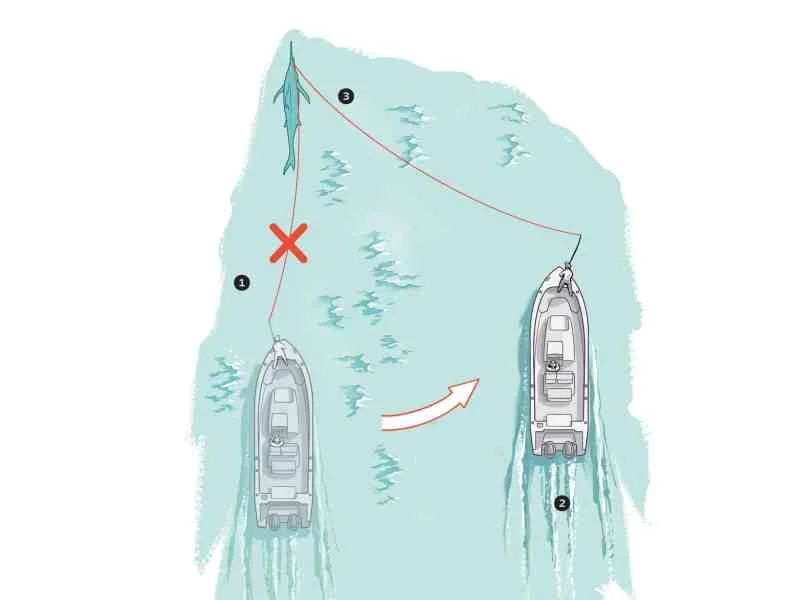
The diagrams here underline two useful angles. A line running alongside a fish can tangle or abrade, and it gives the angler less ability to turn the fish’s head. Moving the boat to one side improves visibility and keeps the line away from the fish. From that position, sideways pressure can tire it and shorten the fight.
Keep a useful gap offshore
In clean water, let a fish run 50 to 100 yards before following with enough momentum to keep a deep bend in the rod as the angler gains line under pressure. When the boat gets within 50 to 100 feet, shift into neutral. Let the fish take line again, then repeat. This gives it room to tire without letting out an uncontrolled length of line.
When conditions allow, pursue from the side where the fish is hooked. That creates a straighter pull and helps the angler steer the fish as it tires, while reducing the chance of the line dragging across its body or wrapping around its tail. The skipper and angler should keep communicating: the fish’s approximate distance and direction, and whether the angler is making line. Near the end, the helmsman can ease ahead to prepare for landing and release.
Use the boat around bottom structure
On reefs beside a sharp ledge or contour drop, large bottomfish such as amberjack, African pompano and cobia may charge over the edge. If the boat stays put, the line can scrape along the drop and part. Follow the fish to keep the line as close to vertical as possible and away from the ledge.
Wreck fishing calls for a different move. When power-drifting for big bottomfish, the helmsman can help pull a hooked fish away from the wreck by powering the boat in the opposite direction. The priority is to get the fish clear of the structure before it can take refuge in the wreck.
Turn inshore fish away from obstacles
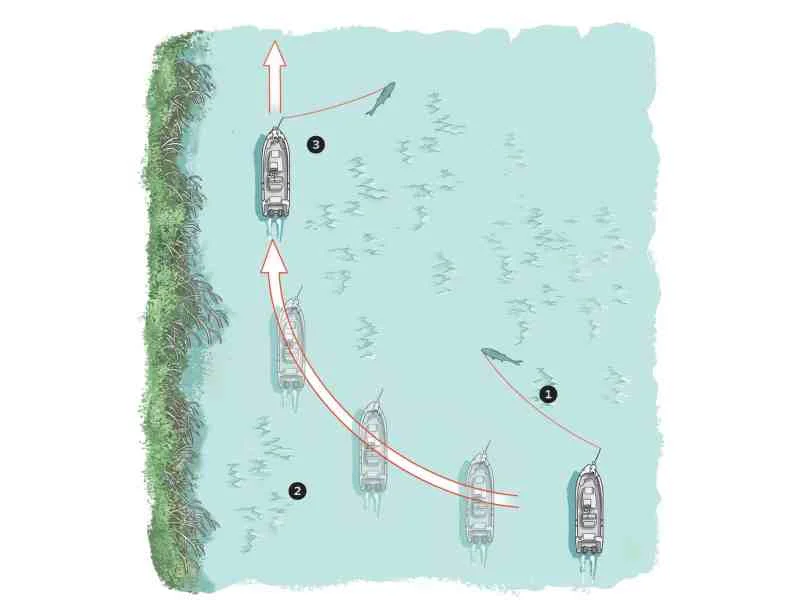
Cobia, tarpon, snook and permit often feed around ledges, channels and inlets. A fish hooked in open water may head for the nearest shoreline cover, bridge, dock or other boat. Ease the boat between the fish and the obstacle, then use line pressure to turn the fish away. Once positioned between fish and cover, the boat itself can block its route while the angler directs it toward open water.
Prepare to leave an anchored spot
Cobia, king mackerel, permit, sailfish, wahoo and tuna may appear behind a boat anchored over a wreck or other structure. A quick chase can matter when fishing for them on light tackle, but a windlass anchor may take too long to retrieve.
For bottomfishing, I carry a traditional anchor with two 150-foot clip-on sections of rode. I attach the bitter end to a poly ball. If a fish demands pursuit, the crew can uncleat the rode, release it overboard and follow without waiting to haul the anchor. After the fight, return to the spot, retrieve the ball and rode, then recleat. A strip of bright tape on the rode marks where to secure it.
During a chase, ease the drag as spool diameter shrinks, keep the line straight and preferably angled away from the fish, and wind under steady pressure. As the boat draws near, bring the drag back toward its fighting setting gradually; until then, the angler can add pressure with a hand. The right distance changes with the fish and conditions, so keep watching the line, the water and the route ahead.
The post The Best Tactics for Fighting Big Fish appeared first on Salt Water Sportsman.