Boat Anchor Types for Sand, Mud, Grass and Rocky Seabeds
Match your anchor to the seabed: fluke, plow, Bruce and grapnel designs each suit different conditions, with scope and setup shaping how well they hold.
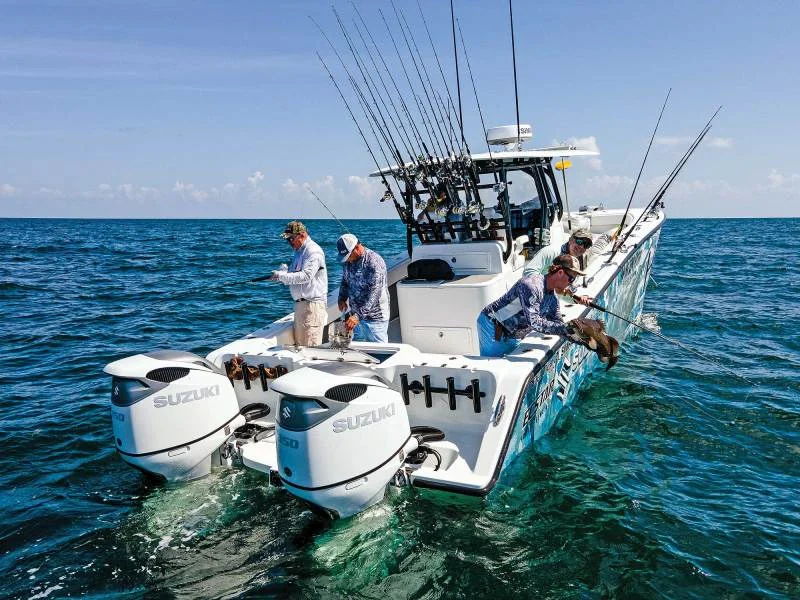
Holding a fishing boat over a precise spot still comes down to choosing an anchor that suits the bottom. A trolling motor or virtual anchoring system can be useful, but a conventional anchor has a distinct role: it can hold position without engine hours or battery use, and it can keep a chum slick aligned with the boat. The right choice depends on seabed, boat size and local conditions.
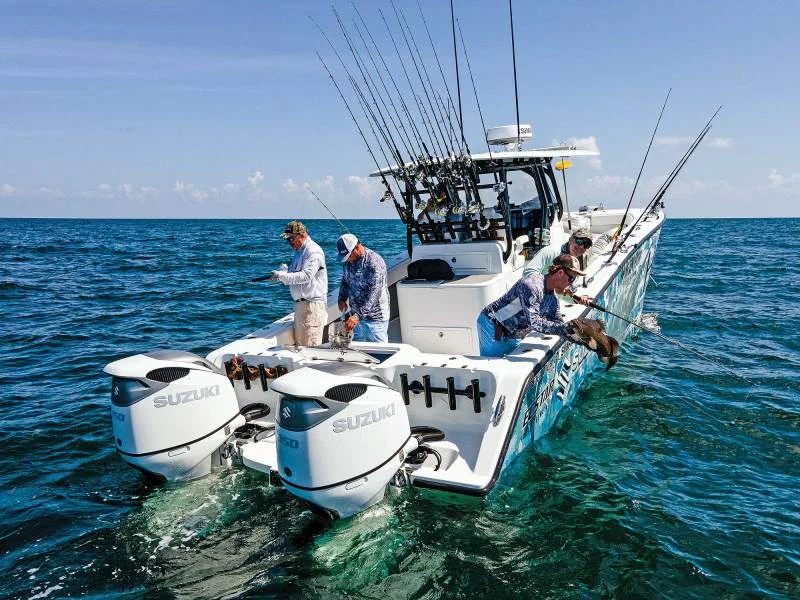
For chumming, a fixed position helps the slick from a chum block lead back toward the boat. A trolling motor or virtual anchor can shift the boat from its starting point, while prop turbulence may spread the slick. At a known fishing spot, anchoring can also hold the boat quietly in position. And if a mechanical problem develops, securing the boat can help prevent wind or current from carrying it toward a hazardous inlet; a stable position also makes it easier to share coordinates with a tow service.
Read the seabed before choosing
Start with the bottom in the places where you expect to anchor. Charts shown on multifunction displays commonly use abbreviations for seabed material, including sand (S), mud (M), rock (R), shell (SH) and ooze (OZ). Sonar can add another clue: soft-bottom returns tend to appear thin, while hard-bottom returns are thicker, brighter and may show a secondary return beneath the first.
Those signals help narrow the choice, but anchor performance is tied to the particular bottom. A design that buries well in sand may struggle on grass or hard ground. If you fish several types of water, carrying more than one anchor style can make more sense than expecting a single design to suit every spot.
Flukes for sand and mud
Danforth-style anchors have broad, sharply pointed flukes that dig into soft sand and mud. They are less effective on grassy or hard seabeds. In a four-day anchor test sponsored by Fortress, an aluminum fluke-style anchor from the company held especially well in a muddy section of the Chesapeake. Its wide mud setting, angled at 45 degrees, contributed to that performance. That setting is specialized, though, and does not suit every bottom.
The test is a useful reminder that a strong result in one place does not settle the question for all waters. If soft sediment is your regular anchoring ground, a fluke design may be a good fit; where grass, rock or firmer material is common, another style may serve better.
Read Next: Conventional vs. Virtual Anchoring
Plow, spade and Bruce designs cover more ground
For hard bottoms and areas with grass, sharp-tipped spade-style anchors are designed to bury quickly. Examples include the Rocna MK II, Viking Odin, Mantus M2 and Manson Supreme. Traditional plow designs, including the Lewmar DTX, CQR and Lewmar Delta, are also options for these conditions.
Boaters seeking performance across a range of seabeds often favor Bruce-style anchors. Their triple-fluke shape is self-righting and can handle wind shifts without disengaging and resetting. A recent Salt Strong anchor test named this style an unexpected winner. The source author’s own pick, if limited to one anchor, is an authentic Danforth. That preference points back to the practical choice at the heart of anchoring: match the design to the water you fish most often.
Rock calls for a different setup
On rocky bottoms, a grapnel anchor’s multiple prongs can catch and hold. That same shape is of little use on most other seabeds. A trip line can help free a more traditional anchor if it becomes wedged: it attaches at the opposite end of the shank so the anchor can be lifted from the direction that helps dislodge it. In rocky areas, that added recovery option is worth considering alongside the anchor itself.
Online anchor advice can be unreliable, so check whether images and descriptions show the actual design being discussed. Choosing by shape and seabed fit is more useful than trusting a generic recommendation. Local fishing guides who run boats of similar size can also offer practical insight into what holds in the area.
Set the anchor with care
Anchor size and rode setup affect how securely the boat holds. When uncertain about sizing, the source recommends choosing the larger anchor. A 5-to-1 scope is a common starting point: pay out 5 feet of line for each foot of depth. More scope may be needed when wind or current is strong. Chain adds weight and can improve holding, but carrying too much makes retrieving the anchor physically demanding.
- Lower the anchor into the water; don’t throw it. Let it descend to the bottom.
- Pay out the rode to establish scope, allowing for wind and current.
- Engage reverse briefly to check that the anchor has set.
- Choose the anchor with the fishing area and boat size in mind, and learn from local anglers using similar boats.
There’s no single design that fits every seabed. Read the bottom, carry a suitable option for the places you fish and give the anchor enough rode to hold. Those choices help keep the boat on its mark when a fishing spot calls for a steady position.
The post Choosing the Right Anchor for Your Boat appeared first on Salt Water Sportsman.