Pitch-Baiting for Marlin, Sailfish and Mahi: Tackle and Techniques
Teasers draw pelagic fish close; precise pitches can turn a follow into a hookup, or add another fish to the action.
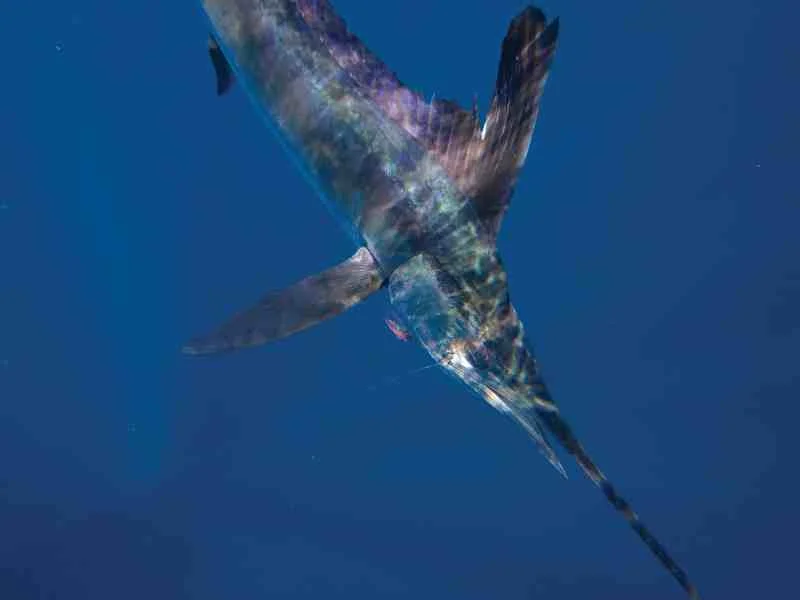
Pitch-baiting turns a fish’s interest in a teaser or trolling spread into a close-range opportunity. When white marlin gather off Virginia and Maryland in August and September, the method can turn a single hookup into a double or triple. It also works in other seasonal fisheries: white marlin migrate past the far eastern Bahamas in April and May, and Northeastern anglers use the same tease-and-pitch approach after the fish move beyond the Mid-Atlantic.
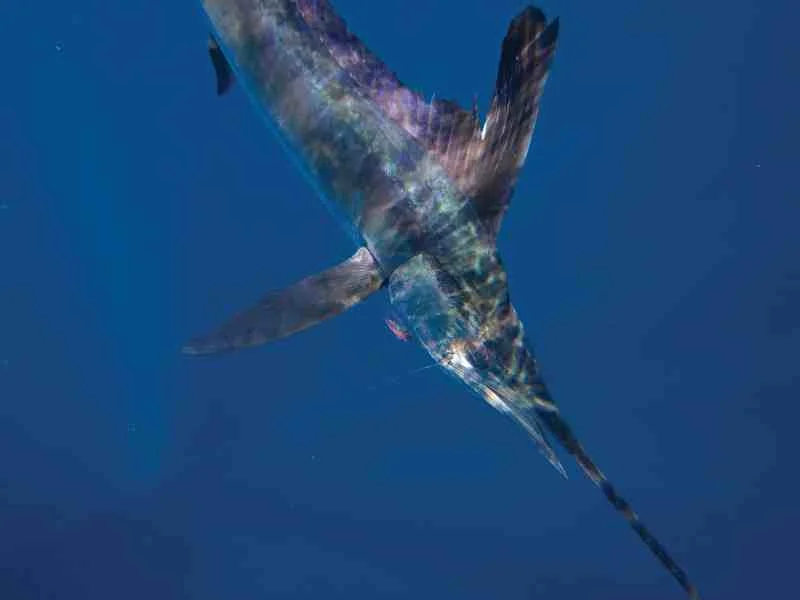
The approach can be used with teasers and dredges alone or alongside a full trolling spread. A fish drawn toward a teaser is often keyed up, and keeping the teaser just out of reach can encourage a more committed strike. Bringing the bait close to the transom also shortens the line between angler and fish, which can improve hookup odds and give the angler a clear view of the take. That close view helps with timing and choosing an angle as the fish turns or moves away from the boat. For tournament crews, it can also make releases quicker and reduce the time a fish spends under pressure.
Match the pitch outfit to the fish
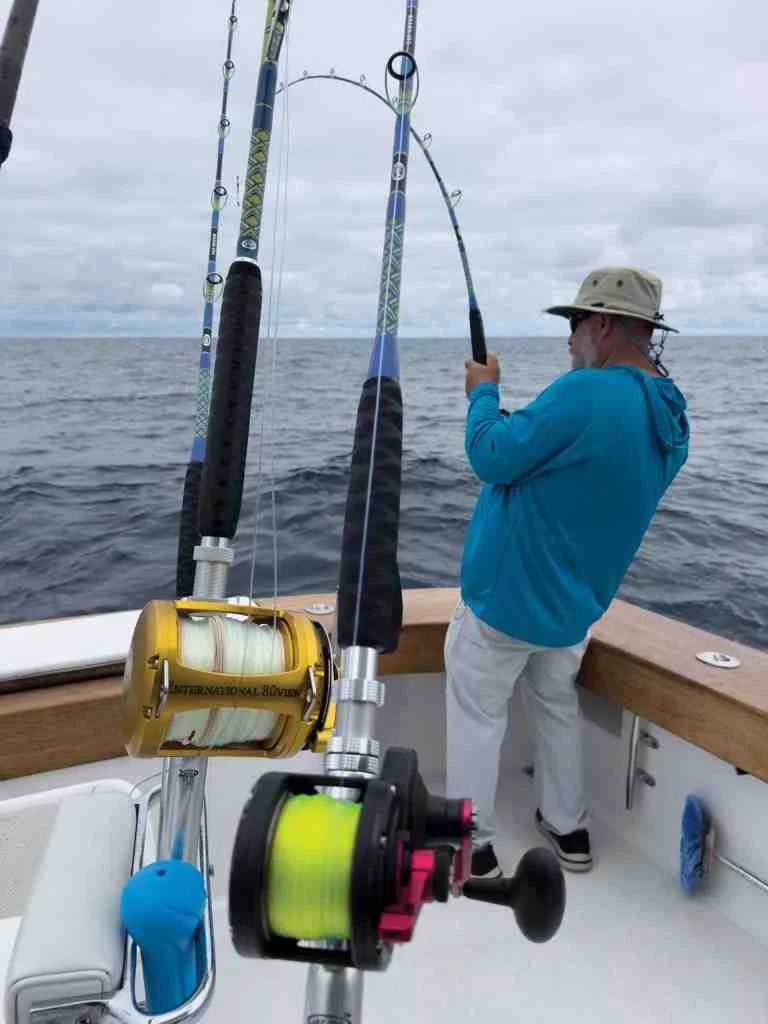
For sailfish and white marlin, a typical setup is 20- to 30-pound-class tackle, a small or medium circle hook, and a ballyhoo or strip bait rigged on 50- to 80-pound-test fluorocarbon leader. Blue marlin call for heavier gear: a popular choice is a 50-pound-class outfit with a circle hook and a large, or “horse,” ballyhoo on 200-pound-test fluorocarbon leader. Regional practice and the size of fish in the area should guide tackle and leader choices.
In the Bahamas, crews may keep a large 20-pound-class spinning outfit and a small 30-pound-class conventional outfit ready for sailfish, white marlin and mahi. White marlin have been caught off Green Turtle in the Abacos on spinning tackle.
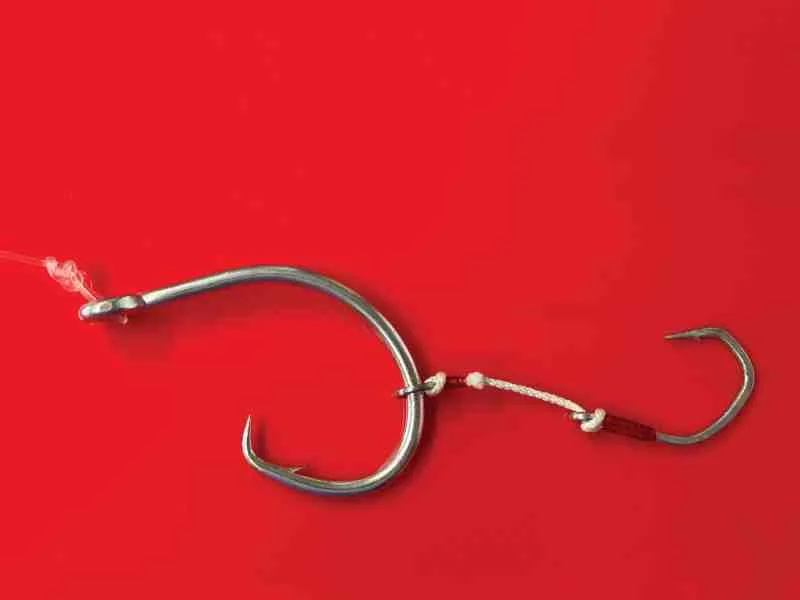
For blue marlin, a 50-pound-class outfit can be kept rigged and ready. A quick-pin rig offers one way to pitch a small mahi when a blue marlin appears at the surface or crashes a school. It uses a large circle hook with a flutter-jig assist hook attached. Pin the small assist hook through the mahi’s upper jaw and send it out; the circle hook stays in front of the bait, ready to catch the marlin.
Put the bait where the fish can take it
Pitching well takes sharp observation and quick reactions. Anglers need to spot fish in the spread or following a dredge, then cast accurately from a cockpit crowded with gear, lines and boat hardware. An underhand cast helps keep the bait clear of trolling lines, outriggers and other obstructions.
When a fish comes to a dredge, pitch the bait just ahead of the unit and let it free-spool. The aim is to make it look like an injured bait falling back and down from the school; the strike may come immediately. If it doesn’t, skip the bait in front of the dredge and free-spool again, while watching carefully to avoid tangling with the dredge rig.
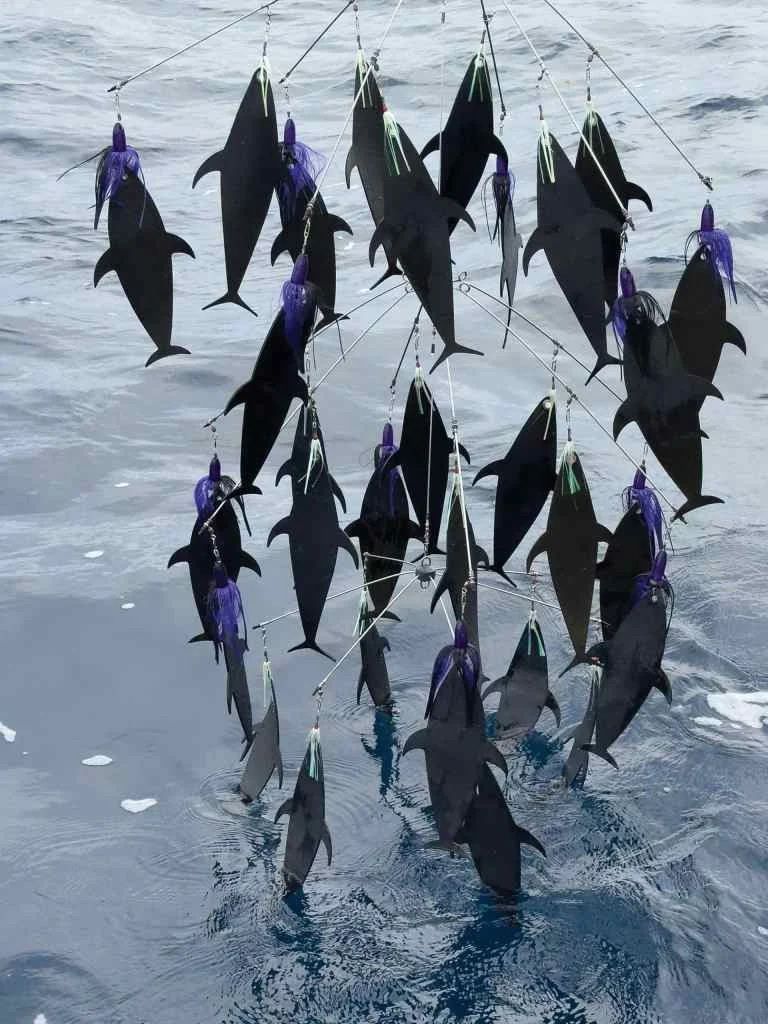
For a fish teased up on the surface, pitch toward the teaser as it’s being retrieved. Make the bait skip across the water and encourage the fish to switch over. The strike is visible, so the angler can respond to the fish’s movement rather than simply waiting for a rod to load.
Let circle hooks do their job
Circle hooks are standard for billfish. Point the rod toward the fish, ease the drag forward, and begin lifting as the fish runs off line. A hard, quick hook set can pull the bait away if it misses. With a slow set, a missed fish is more likely to find the bait still close by, leaving another chance to eat.
Awareness matters when another billfish is already hooked. White marlin, sailfish and other pelagics often travel in pairs or pods. As a hooked fish comes within casting range, a second angler can pitch behind it, taking care to keep clear of the first fish’s line. If a companion fish takes the bait, a third pitch may create another opportunity. This prospecting tactic can raise tournament catch numbers, particularly with sailfish.
Keep mahi and tuna in play
Pitching can extend the action with school mahi, too. If mahi follow daisy chains after feeding on a trolling spread, keep the boat moving slowly under autopilot rather than stopping. The fish may continue following the chains. Pitch behind one, then shift the hooked fish toward mid-ship so another angler can work on a second fish. After boating the mid-ship fish, return to position and pitch again. The daisy chains can help hold the school near the boat when the fish won’t stay with a stopped vessel.
For blackfin and yellowfin hooked on the troll, a deep jig, flutter-style iron, weighted live bait or ballyhoo can be dropped for fish following the hooked tuna. Whether to keep pitching comes down to how much work the crew wants to put into filling the fish box.