Pogačar Maps Out a Demanding 2027 Tour, Worlds and Vuelta Campaign
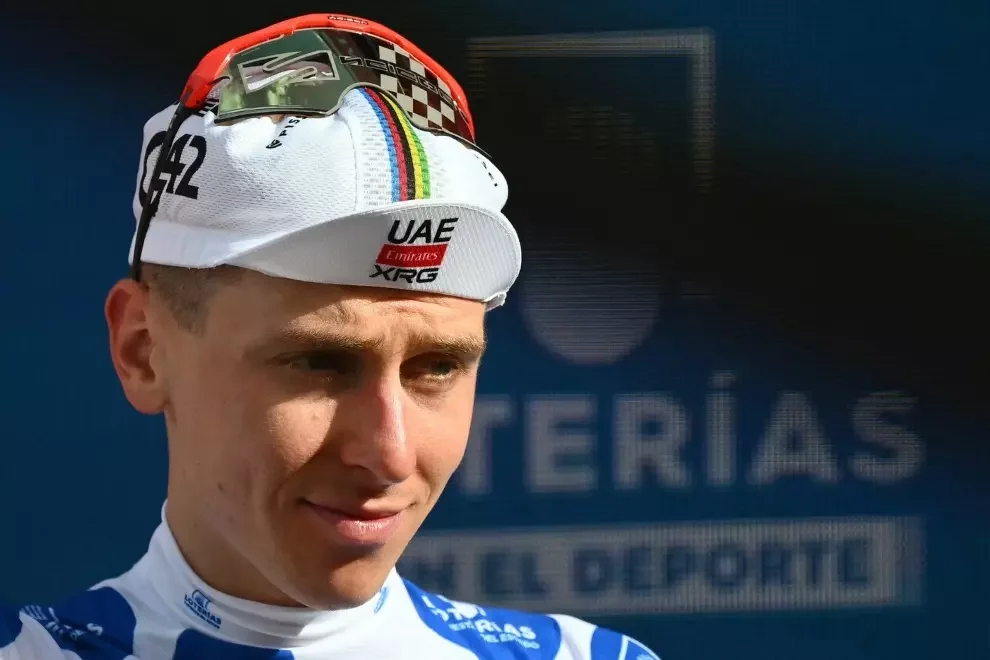
After serious injuries, Tadej Pogačar is weighing a 2027 schedule that could pair the Tour de France with the Worlds and Vuelta.
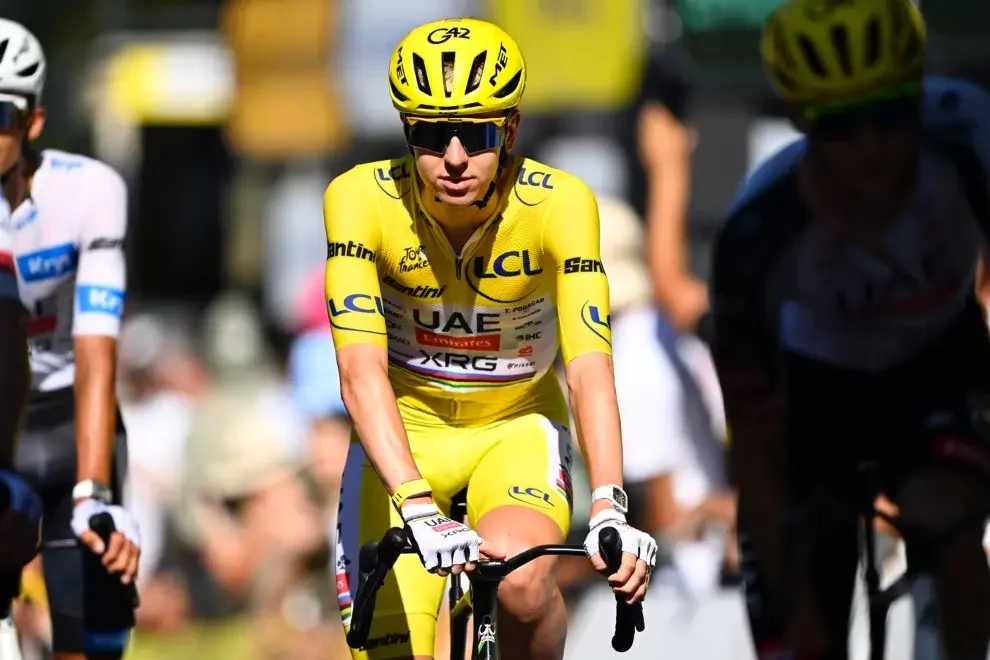
Tadej Pogačar’s first major decision for 2027 may be how much racing to fit around his return from serious injuries. He has named the Tour de France, the road World Championships and the Vuelta a España as his leading targets, a demanding run of races that would test both his form and his recovery.
“The desire for next year would of course be the World Championships combined with the Tour and the Vuelta,” Pogačar told RTV Slovenia. “Even if I would rather go to the Giro, I will have to check off the Vuelta at some point. I think that will be the goal for next year.” He also has a historic Tour milestone in view: a sixth victory would make him the first rider to win the race six times.
A compact summer of climbing
The calendar gives that ambition a steep shape. The Tour begins in Edinburgh on July 2, with its first three stages in Great Britain, and finishes on July 25. The rest of the route is due to be presented in Paris on Thursday. The road World Championships follow on August 29 in Sallanches, France. Their 265-kilometre road race includes 5,700 metres of climbing. The Vuelta starts only six days after the Worlds.
Those dates would put three major objectives into a little over two months, with substantial climbing at the Worlds and another three-week stage race immediately afterward. Pogačar has not confirmed a complete racing program, so the exact sequence remains a plan to work through with his team. His stated interest in the Giro also points to a choice between ambitions: fitting every preferred race into one season may not be practical.
For now, he has returned to regular training earlier than in previous years. “Last week I started the new season, and now it’s a slow build-up for the future,” he said. “I have now been training regularly for a week, which is a month earlier than in previous years.” The measured description matters: an earlier start gives him more time to build, but doesn’t establish how quickly he’ll be ready to race.
Recovery shapes the plan
Pogačar also clarified what caused his Vuelta crash. He sustained a fractured and dislocated left collarbone, a fractured cervical vertebra and a serious concussion. “It was a big stone,” he said, dismissing speculation about a camera flash or a television camera battery as the cause.
He said it took five weeks before he could get back on a bike. After his shoulder had healed and the dizziness had passed, he began indoor training and physiotherapy, hoping to reach the European Championships. But a little more than two weeks before the race, he decided the risk of another fall was too high. “Because if I fell again, the consequences could be really serious and it wasn’t worth the risk.” The decision underscores how recovery can set the limits of a season even for a rider eager to return.
His name remained on the European Championships participation list for a time, prompting speculation, but his team quickly ruled out a return to racing this year. At a charity event at the Volčji Potok Arboretum, 20 kilometres northeast of Ljubljana, Pogačar said he would travel to the United Arab Emirates to meet fans and speak with team management. They planned to sketch out a provisional 2027 program in Abu Dhabi, with an announcement expected in December.
RTV Slovenia reported that he could start the season at the Tour Down Under, where he made his WorldTour debut in 2019 and finished 13th. An early race start could leave a longer gap before summer and mean fewer spring classics. That possibility is unconfirmed, but it would give the team room to shape his return around a gradual build rather than a packed opening stretch.
What his recent form says
The scale of Pogačar’s 2026 season helps explain why the next schedule will attract so much attention. Despite missing racing time, he won Strade Bianche, Milan-San Remo, the Tour of Flanders and Liège-Bastogne-Liège. Wout van Aert beat him in a close Paris-Roubaix. Pogačar also won the Tour de Romandie, the Tour de Suisse and the Tour de France, and led the Vuelta before his crash.
That record makes his 2027 goals credible as sporting ambitions, but the injury changes the calculation. A return to peak form may take time, and one crash can affect a rider’s comfort and instincts on the bike as well as their physical condition. The schedules of other riders show that recovery after a serious crash can extend well beyond the initial healing period; each athlete’s path is different, and those examples can’t predict Pogačar’s own.
The provisional plan will become clearer after his conversations with the team. For now, the key question is not whether he can name three major goals, but how the final program balances them with a careful return. A sixth Tour win, the Worlds and a first Vuelta campaign would make for a remarkable season. The months of training and the December program will show how much of that ambition can fit safely into one year.