A Dockside Seacock Failure Shows Why Correctly Sized Plugs Matter
A fractured seacock threatened to flood Britannia at her dock. A diver’s plug stopped the leak, and a temporary wooden cover kept the opening sealed.
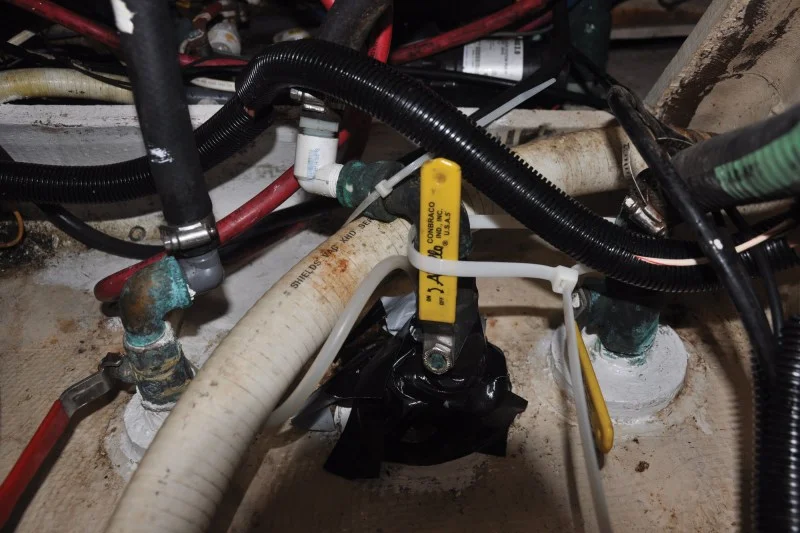
A seacock can fail below its shutoff valve, leaving the valve useless against the incoming water. That’s what happened aboard Britannia, a schooner at her dock in New Bern, North Carolina. A bilge pump kept running as water entered through a fractured fitting roughly 30 inches below the waterline. The episode turned a routine evening visit into a race to stop the leak—and a reminder that emergency plugs need to match the openings they’re meant to seal.
The first clue was the pump cycling in the lowest part of the bilge. The owner initially suspected one of the boat’s plumbing runs or the cooling pipes for its twin air-conditioning systems; similar leaks had happened before. But tracing the water led to the seacock supplying the air-conditioning pumps. The flow was coming through cracked caulk beneath the valve.
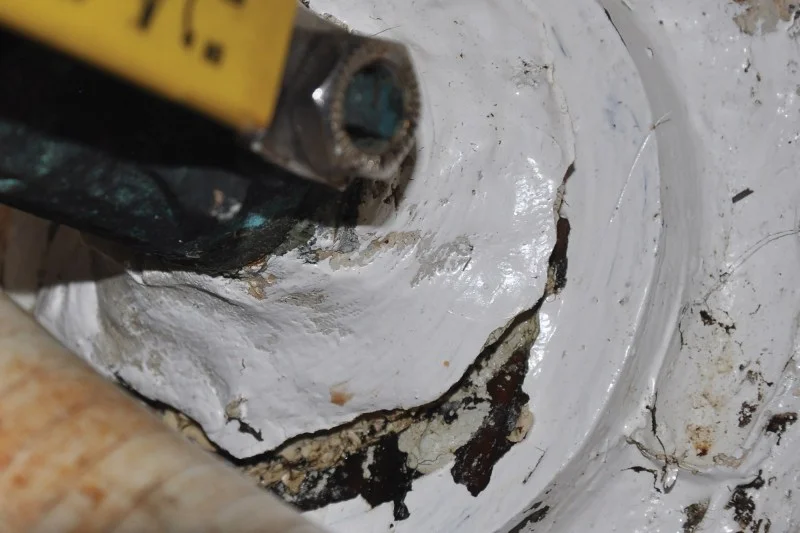
Closing the ball valve couldn’t help: the leak was below it. The bilge pump was struggling to keep up, and pressure against the fitting made even a temporary patch uncertain. The valve stem sat inside solid caulk that had split. Pressing on the valve reduced the flow, but it surged again as soon as the pressure came off. A piece of wood wouldn’t stay wedged in place. Duct tape slowed the water somewhat, but did not solve the problem.
The owner had several tapered wooden plugs aboard, yet none seemed suitable for the opening. More concerning, trying to force a plug into the damaged fitting might have broken it off completely. He considered sealing the through-hull from outside the boat, climbed down the boarding ladder and entered the water where he estimated the opening would be. He couldn’t locate it by feel.
Help came from the emergency assistance group at Fairfield Harbour Yacht Club. Two members arrived with portable pumps, and George Stateham urged him to get a diver in to place a plug, then inspect the fracture from inside. About half an hour later, diver Kirk Hathaway arrived with plugs in several sizes. Each one he tried was too large. The owner’s last plug looked too small, but it fitted—and stopped the inrush.
That bought time, but it didn’t make the boat ready to leave unattended. With the cabin at 95 degrees and the air conditioning unavailable, the owner went home rather than spend the night aboard watching the temporary repair. In the morning, the area around the valve was dry. He removed the duct tape and the pipe leading to the air-conditioning filter bowl, then lifted the valve’s top from the through-hull stem. It came apart with little effort. Caulk around the rim had been holding the pieces together.
Inside, the bronze threaded stem had sheared from the valve body. The end of the plug was visible in the through-hull, and the area was dry. The owner couldn’t determine why the stem broke. The fitting was bronze, and hard caulk surrounded it from hull to valve to limit vibration. He found no clear explanation for the fracture.
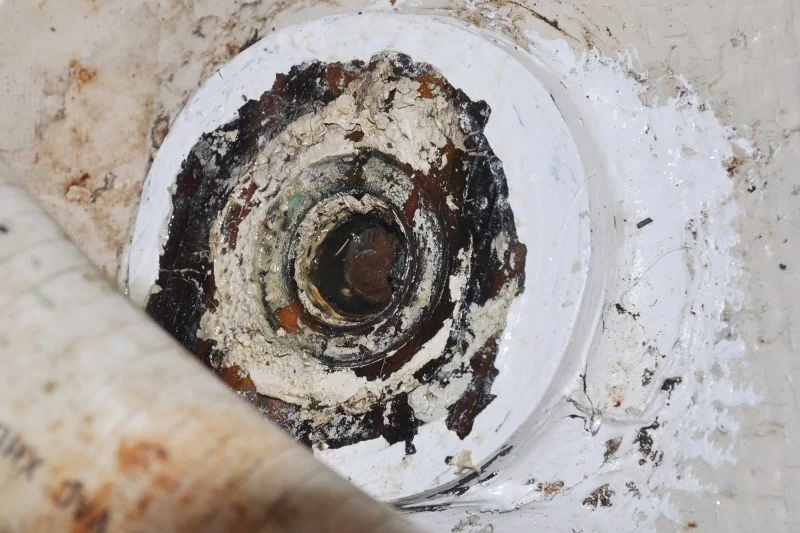
A plug alone didn’t feel like a dependable long-term repair. The owner was uneasy about leaving it in place and wondering whether it might work loose. Around the seacock was a circular wooden backing plate, about half an inch thick, bonded to the hull to provide support for the fitting. He used a piece of teak measuring 2½ inches square and an inch thick to make a cover. After drilling a hole in each corner, he coated the block with waterproof wood glue and screwed it over the opening.
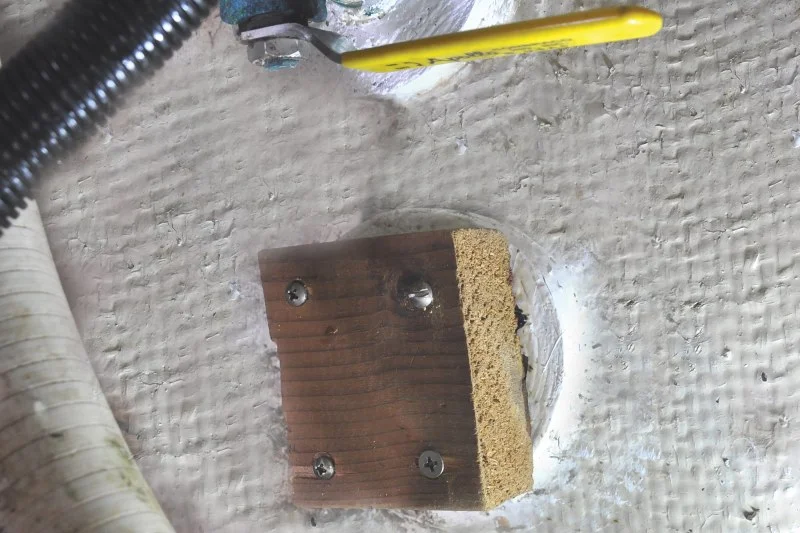
The cover was meant to keep Britannia secure until the boat could be lifted and fitted with a replacement seacock. The owner also moved the air-conditioning inlet pipe to an adjacent generator seacock, allowing the air conditioning to run while the boat was connected to shore power. He doesn’t use the generator in that situation, but wanted the cooling back.
Being at a dock with a diver nearby made a critical difference: the correct-size plug stopped the flow before the failed fitting could cause further trouble. The owner believes the through-hull may be replaceable while the boat remains in the water, an attempt he planned to report on later. After the incident, he inspected the other nine underwater hull fittings from both inside and outside.
His practical change was simple: every seacock now has a correctly sized plug tied to it. A plug is useful only if it fits the opening, and finding the right one under pressure can be difficult. Keeping the appropriate size at each fitting gives the crew a direct response if another leak develops.
The post A Seacock Failure at the Dock and What It Taught Me appeared first on Cruising World.
===END===