Leopard 52 Review: Hybrid Power, Owner Comfort and Offshore Sailing
The Leopard 52 pairs a three-stateroom liveaboard plan with optional hybrid power and a flybridge built for sailing and lounging.
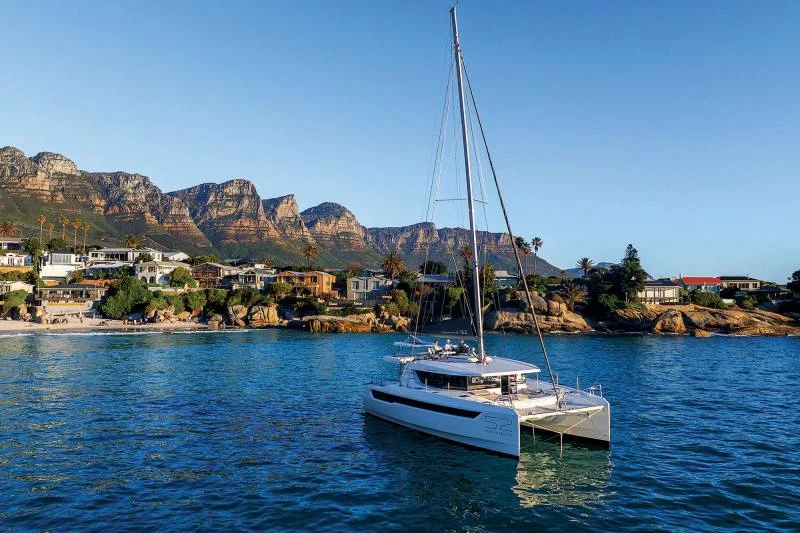
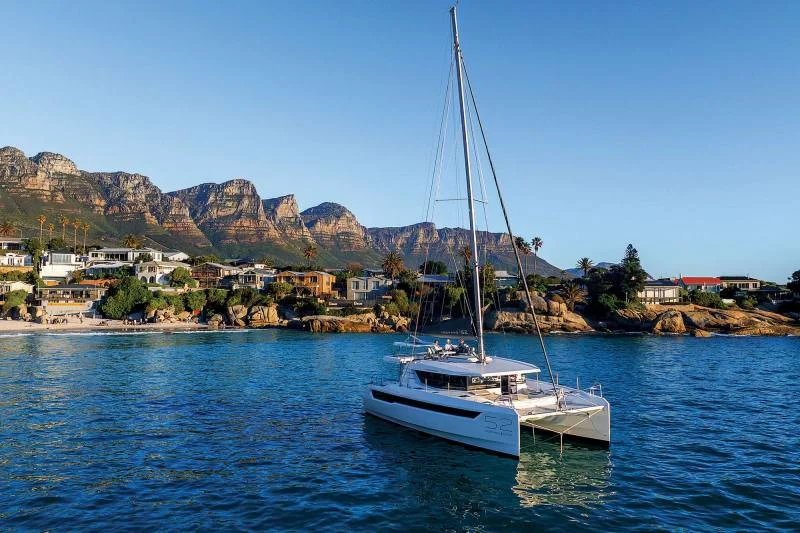
The Leopard 52’s strongest case is its range of uses: it brings together a practical owner’s layout, a flybridge that serves both crew and guests, and an optional hybrid system for boaters interested in electric motoring. Introduced in the United States last fall as the Leopard 52 and also known as the Moorings 5200, the 52 has been nominated for the 2026 Boat of the Year awards. This review focuses on the Leopard configuration. The Moorings version uses a five- or six-stateroom plan and doesn’t offer the hybrid drive.
A layout that links inside and out
Open the forward and cockpit doors and the main deck reads as one connected living space. Glass coachroof windows bring daylight through the saloon and provide 360-degree views. The galley sits forward of the dining area, with full-size appliances including a dishwasher and induction stovetop. To port, a U-shaped settee wraps around the dining table; the cockpit has another dining spot, extending the room for meals and gatherings.
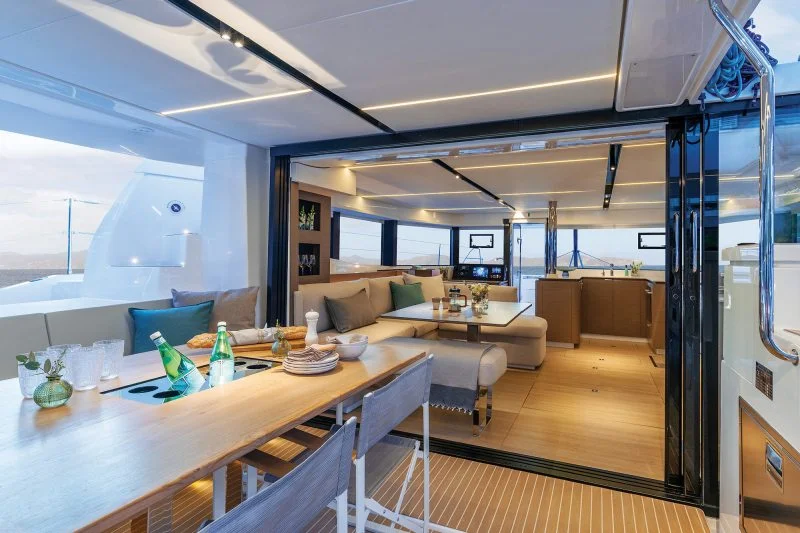
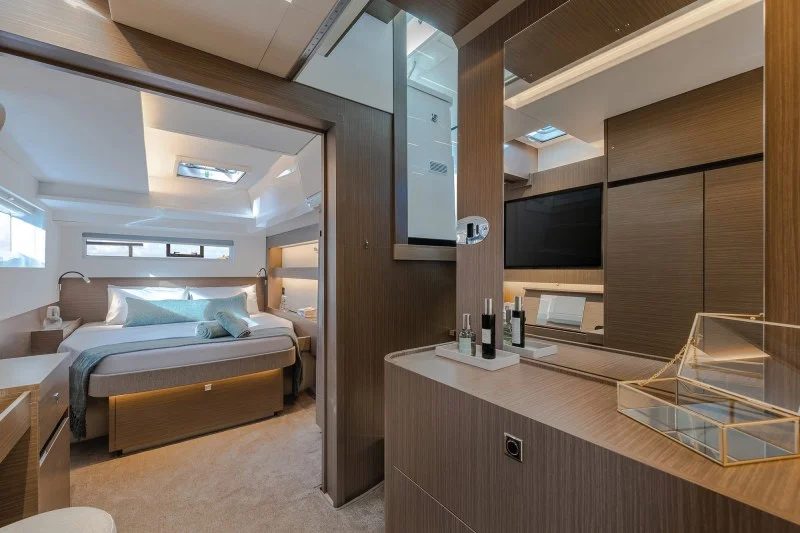
The tested boat had the three-stateroom arrangement Leopard describes as its “ultimate liveaboard” layout. Its full-length owner’s stateroom is complemented by a VIP cabin and a guest cabin aft, reached through a separate companionway. Forward to port, a utility room adds a work surface, washing machine, watermaker and storage for tools and spares. That mix gives the boat room for extended stays aboard while keeping maintenance and equipment in a dedicated space.
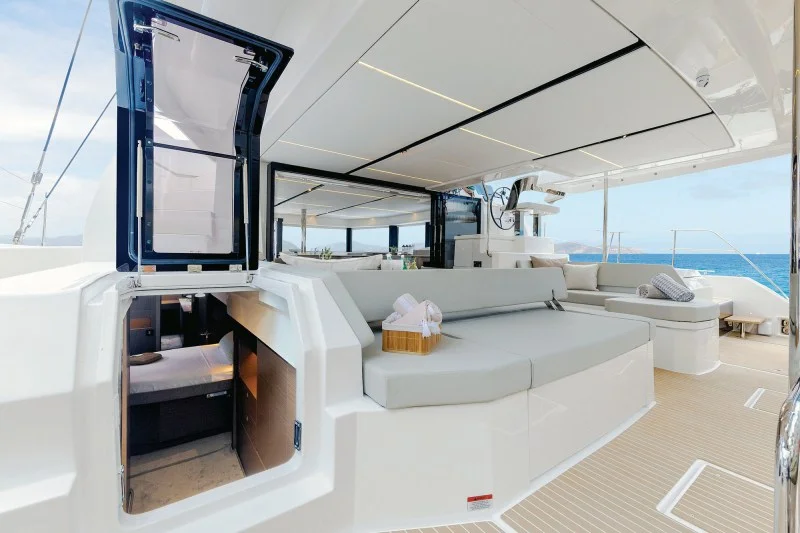
Above, the flybridge combines the steering position with a social area. The helm is to starboard, with broad sightlines and a grouping of winches, clutches and running rigging intended to support singlehanded sail handling. A hard Bimini covers the station. To port, a low L-shaped settee makes a lounge beside the helm, reached by its own staircase. The flybridge also forms the cockpit roof and carries four integrated 400-watt solar panels.
Hybrid drive and construction
The hybrid option on the test boat combines two 25-kW electric motors with a 27-kWh lithium battery bank operating at 400 volts. A Joool OneBox energy management system coordinates the electrical setup, alongside the boat’s standard 12-volt DC and 110/240-volt AC systems. A 24-kW generator, described as a “range extender,” supports pure electric motoring, and the system can regenerate power under sail.
Buyers can also choose two 57 hp Yanmar diesel engines, with an 80 hp upgrade available. The test boat’s electric-drive package was priced at $1.4 million, about $200,000 above the version with Yanmar engines alone. Those figures make the choice a substantial part of the boat’s specification: the hybrid system brings electric motoring and sail-powered regeneration, while the diesel setup is the lower-priced alternative.
Robertson and Caine builds the 52 using fiberglass ring frames and a structural cross-linked foam core. The laminate combines E-glass and modified polyester resin and is vacuum-infused. Naval architect Alex Simonis said the hulls and bridge deck are now infused in one shot, eliminating the visible centerline joint. He called that a significant step because the centerline mold split had been the hardest area to make airtight during infusion.
On deck and under sail
The profile will be familiar to Leopard owners: plumb bows, a forward cockpit, high freeboard, hull windows and a reverse transom with built-in steps for swimming and boarding. These features give the boat a recognizable silhouette while connecting the foredeck, cockpit and water access to the everyday layout.
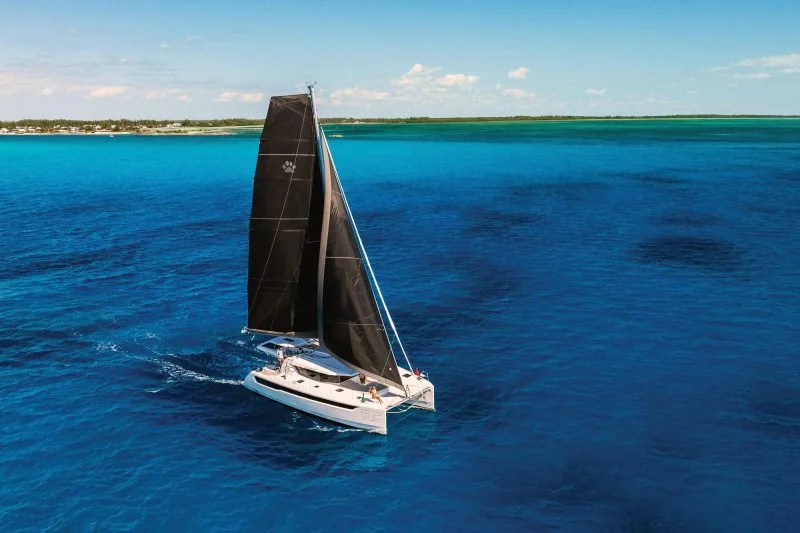
The sea trial took place on Chesapeake Bay in a cold nor’easter, with gusts in the mid-20s. The test boat carried a full square-topped carbon mainsail, an aggressive choice for those conditions. It nevertheless made 6 knots upwind and on a broad reach. That outing offers a useful, if limited, look at the boat’s performance in challenging weather; it doesn’t substitute for trials across a wider range of conditions.
The Leopard 52’s appeal rests on how its parts work together: an open main deck, a dedicated owner’s space, a flybridge that gives the helm and lounge separate places, and a choice between diesel and hybrid propulsion. A further sail in calmer weather would help fill out the performance picture, while the liveaboard layout and upper-deck arrangement already make a clear case for spending time aboard.
Read more about the test conditions in our Chesapeake Bay test report.
The post Leopard 52 Review: The Most Versatile Cat in Its Class appeared first on Cruising World.