Maine High School Sailing Builds Skill and Community Across Rockland Harbor
Islesboro sailors train with mainland teams in Rockland Harbor, where shared practice builds racing skill, confidence and lasting ties.
Photos by Dan Tutor
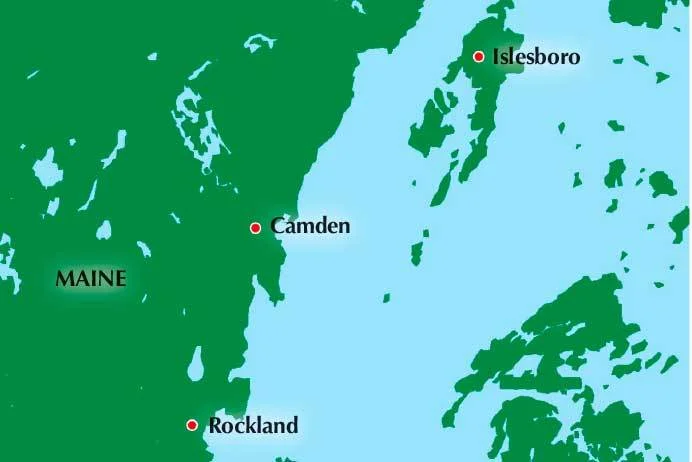
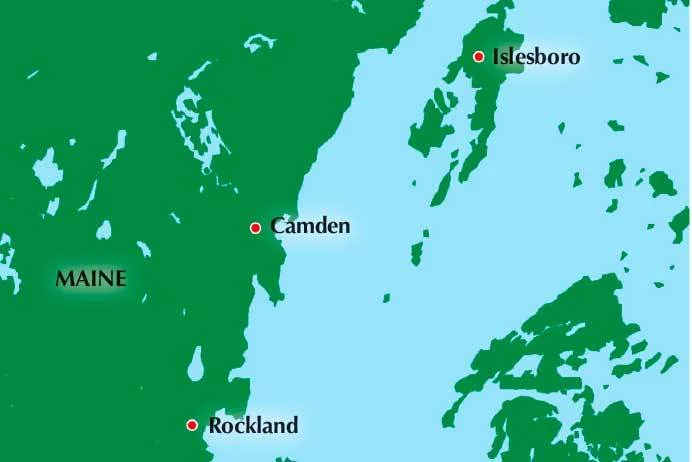
At Rockland Harbor, the value of a high school sailing practice is measured in more than seconds gained around a buoy. Islesboro Central School sailors train alongside students from Camden Regional High School and Rockland’s Oceanside High School, developing their racing skills while building ties across the water between island and mainland. The shared sessions matter especially for Islesboro, a school with only 30 high school students in a good year.
The teams have gathered at the Apprentice Shop Pier twice a week since March, including when the water was barely 37°F. On this overcast spring day, students pull on dry suits before heading into the boathouse, a small, chapel-shaped building that serves as their base. Camden coach Devan Gordon lays out the afternoon’s work: starting and rounding marks, two skills that can decide whether a dinghy crew gains time or gives it away.
Once the briefing ends, sailors collect life jackets and sail bags and head down the pier. A Boston Whaler ferries them to the floating dry dock, where the racing dinghies are stored. The crews rig Z420s, each 4.2 meters long, and push off into the harbor. The boats were bought from Harvard in 2025, seven years after they were built. Their sails had been used by Harvard two years earlier, when the Crimson won the team and match titles at the National College Championships.
With several Islesboro sailors absent, Ford Glotzl joins a Camden sailor for the session. That kind of crew sharing is routine at these practices, where students from competing schools learn alongside one another. Coaches set a course inside the breakwater to suit the wind, arranging the buoys in a “digital N,” a layout Mike Horn introduced to collegiate sailing.
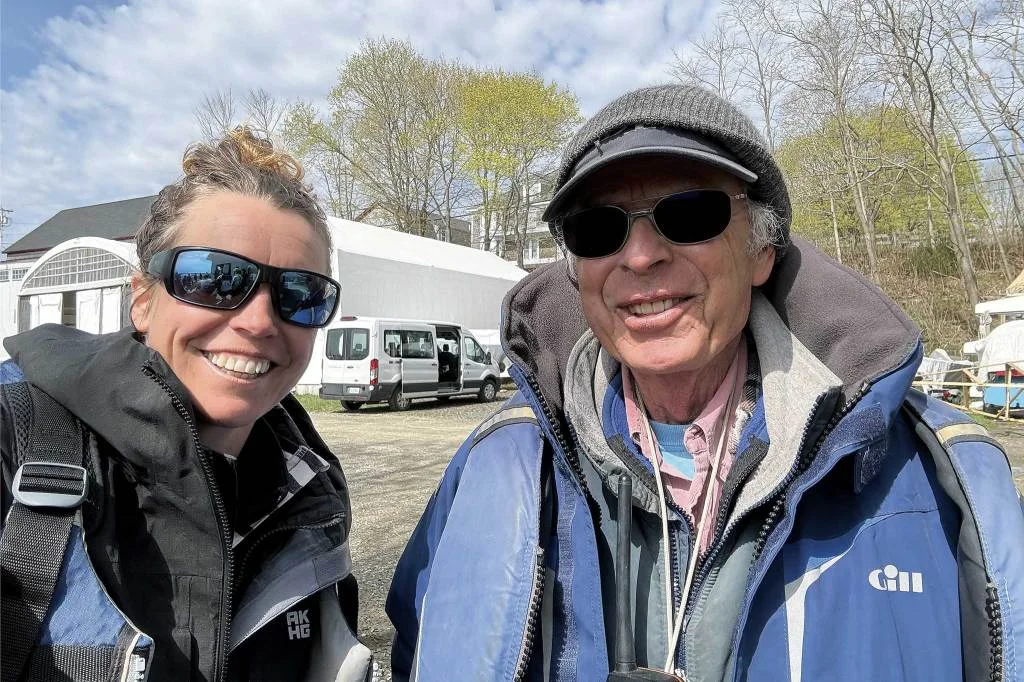
Horn’s sailing career spans coaching, competition and decades of work around Islesboro. During 32 years as Harvard’s coach, he led the program to four National Championships. Before that, he was a three-time New England Intercollegiate National Sloop Champion, a two-time New England team racing champion and a two-time National team racing champion. He was inducted into the Harvard University and Intercollegiate Sailing Association (ICSA) halls of fame.
For the past 12 years, however, Horn has spent much of his coaching time with a small group of Islesboro high schoolers. He handed leadership of the team to Tracey Wuori in 2024, but still makes the two-hour drive from Lewiston to Rockland for practices. His connection to the island began in 1992, when he arrived as a sailing instructor for the Tarratine Yacht Club in Dark Harbor. He remains involved with the club’s racing, including events for its Dark Harbor 20s: 30-foot sloops designed for the club by Olin Stephens.
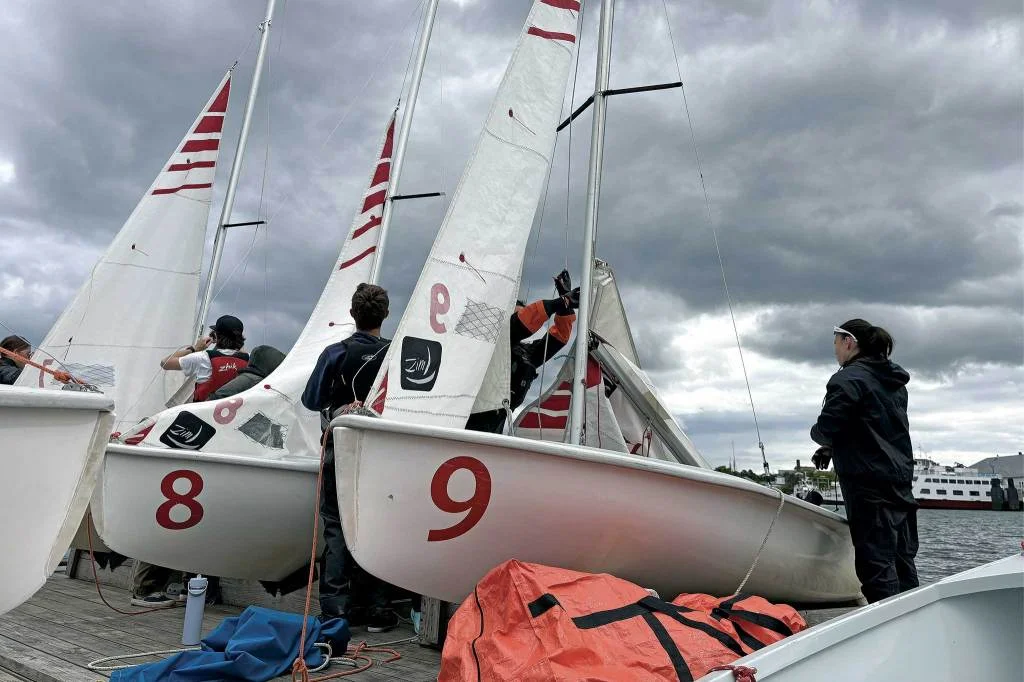
In 2000, Horn became program director at Big Tree Boating (BTB), Islesboro’s public sailing program. BTB and the members-only Tarratine Yacht Club operate on the same island waters, but offer very different entry points. Horn helped bring young sailors from both communities together, whether they grew up handling polished yachts or rowing aluminum skiffs and working around lobster boats.
BTB produced a strong pool of young sailors, making a school team a natural next step. Islesboro Central School formed its first sailing team in 2014 with BTB-trained students. Horn coached the team for ten years, a period that included its first State Championship Regatta win, earned against the largest field the cup had seen. Wuori added another State Championship after taking over in 2024.
The team’s achievements stand out against its size. In its early seasons, the number of sailors was limited by the six seats in Horn’s battered red minivan. One later season, it fielded 11 students, about a third of the high school population at the time. Over 12 years, Islesboro has won two State Championships, often facing schools with ten times its enrollment. Alumni have gone on to sail for Yale, Dartmouth and Georgetown.
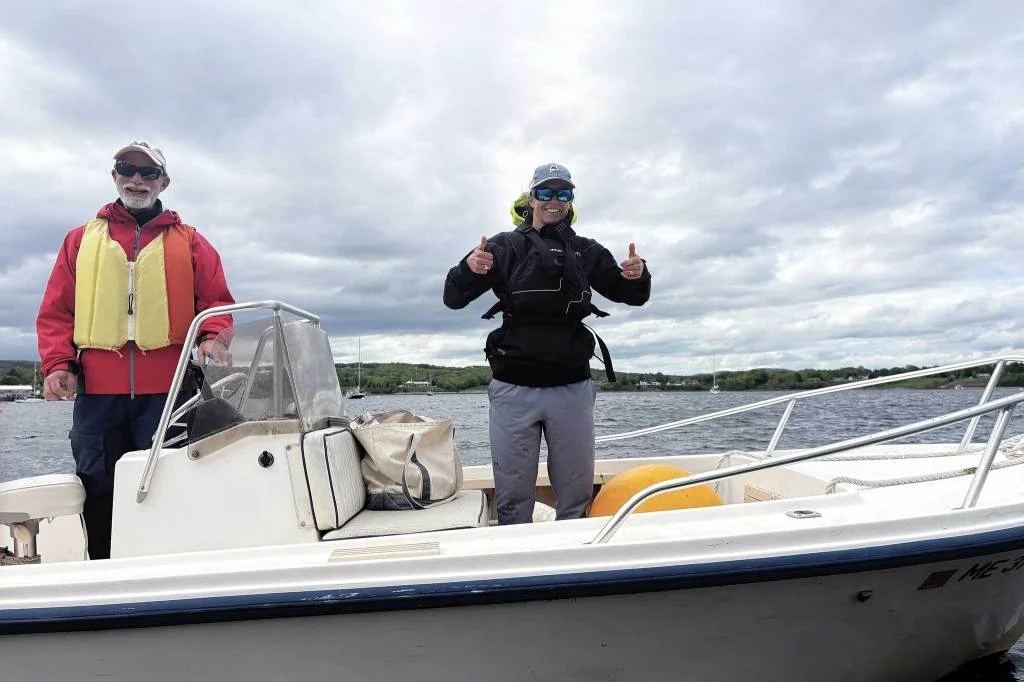
Horn says the team has thrived without the extensive early racing backgrounds common among some competitors. “They don’t have the resume that a lot of these people who grew up in yacht clubs from the age of six and have had parents that send them all over the country do. Kids in Optimists now go to world championships at eight years old,” he says.
Even so, Islesboro delivered another strong season in 2026, placing third in the Championship Regatta. Mooney and Skrivanich also took third in the Girls State Championship Becton Cup race in the fall. Horn points to the students’ familiarity with the sea, along with the chance to practice in a larger fleet. Islesboro can have at most two boats sailing at home, he says; in Rockland, the teams can get eight to ten on the water. That difference gives sailors repeated practice reading traffic and making decisions around other crews.
On this day, Skrivanich and Mooney sail in smooth coordination, shifting their weight across the boats as they tack and steering through close turns around the marks. The wind strengthens, and coaches call feedback from tender-boats as the dinghies pass. The changing breeze keeps the course in flux, and Gordon says a sailor’s feel for wind shifts can make a difference in a close race.
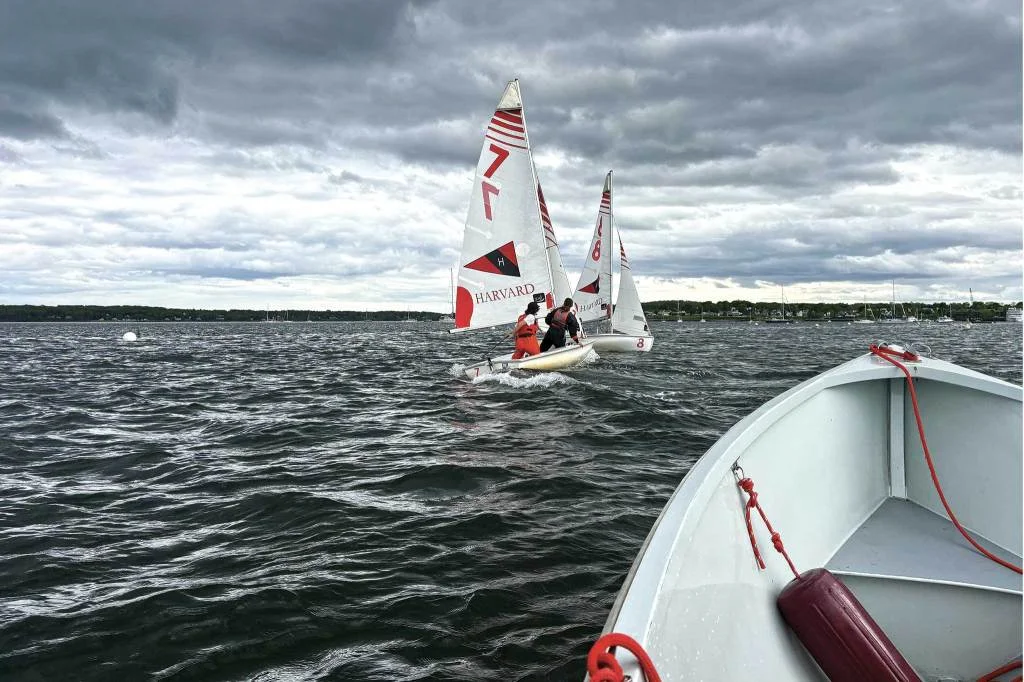
Wind is also a safety consideration. The teams can compete in winds exceeding 20 knots, and dinghies may capsize in strong conditions. In 2024, an Islesboro boat carrying Mooney and Luke Neve capsized during a race. Neve’s sheet became wrapped around his neck, and a coach from a rival team had to cut him free. Conditions hold during this practice, but the coaches continue adjusting the course as the gusts shift. The scene’s excitement comes with real demands on the sailors and the adults supervising them.
For Horn, competitive results are only part of the point. “I’ve coached college and high school for 65 years, and won national championships, but that’s not the really important thing. It’s seeing the kids develop.” He sees a shift in college sailing: some incoming students now arrive with years of competition behind them, leaving fewer opportunities for newcomers to learn after they arrive.
Islesboro graduates have still made their mark at college. Horn recalls hearing from Yale’s head coach that Emily had won the starting position in a practice race as a freshman, beating ten recruited classmates with national and international experience. At Maine Maritime Academy, he says, freshman Alma was leading captains’ practices and helping teammates understand the racing.
Those outcomes grow from a program built around cooperation as well as competition. “In my view, it’s the way high school and college sailing should both be. They practice together, they help one another. And then on the weekends, they compete against one another. They like one another, and the exchange, both for the mainland people and for the island people is very good,” Horn says. Wuori shares his view of the program’s value.
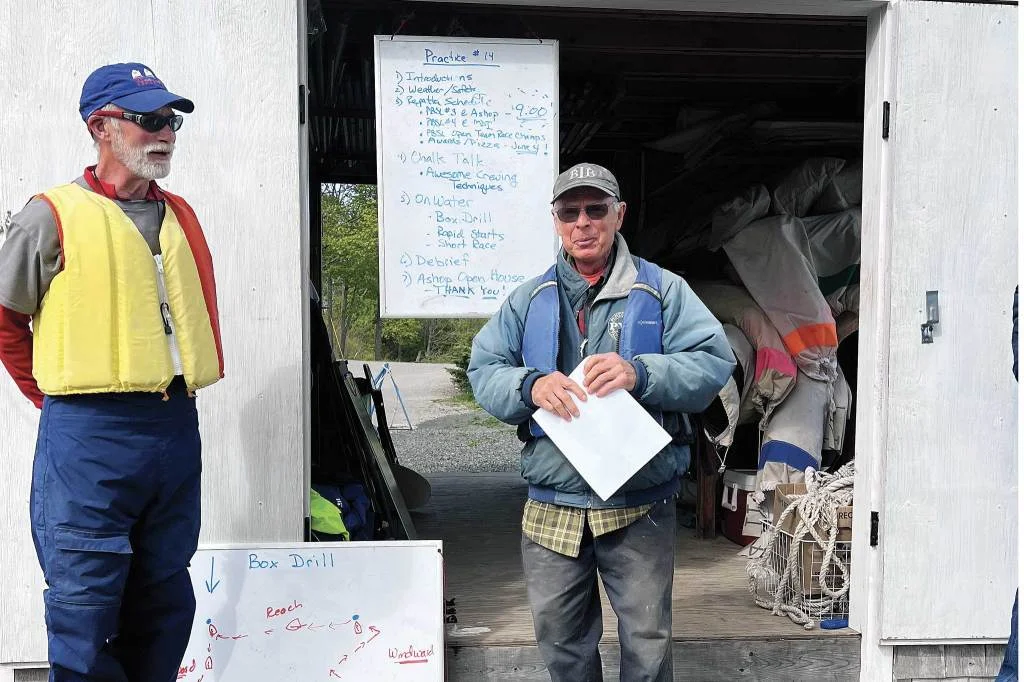
After two hours of turns around the buoys, crews return the boats, lower the sails and change out of their dry suits. Pizza and cookies bring the students together at picnic tables in the boathouse. The small school’s close student-teacher ratio is a draw, but a limited pool of peers can make new friendships harder to find. Sailing practice offers a wider circle: one Islesboro sailor met his prom date through the sessions.
Skrivanich and Mooney leave after the gathering. Both are magnet students who live on the mainland and commute to Islesboro Central School. In the fall, Skrivanich is set to sail for Georgetown University, while Mooney will lead the Islesboro team as a senior.
By sunset, the ferry has stopped running, so Wuori and a student take a chartered water taxi back to the island. The stiff breeze has cleared the clouds, leaving whitecaps across Penobscot Bay and spray on the cabin windows. After a day shaped by wind, teamwork and the careful practice that makes racing possible, Wuori puts the island’s pull simply: “It’s such a special place. It always feels good to be on a boat going home.”
This article was originally published in the October 2026 issue.