Returning to the Newport Bermuda Race After a Shipwreck
Two years after abandoning a damaged boat, a sailor returns to Bermuda with old friends, rough seas, light winds and no storybook ending.
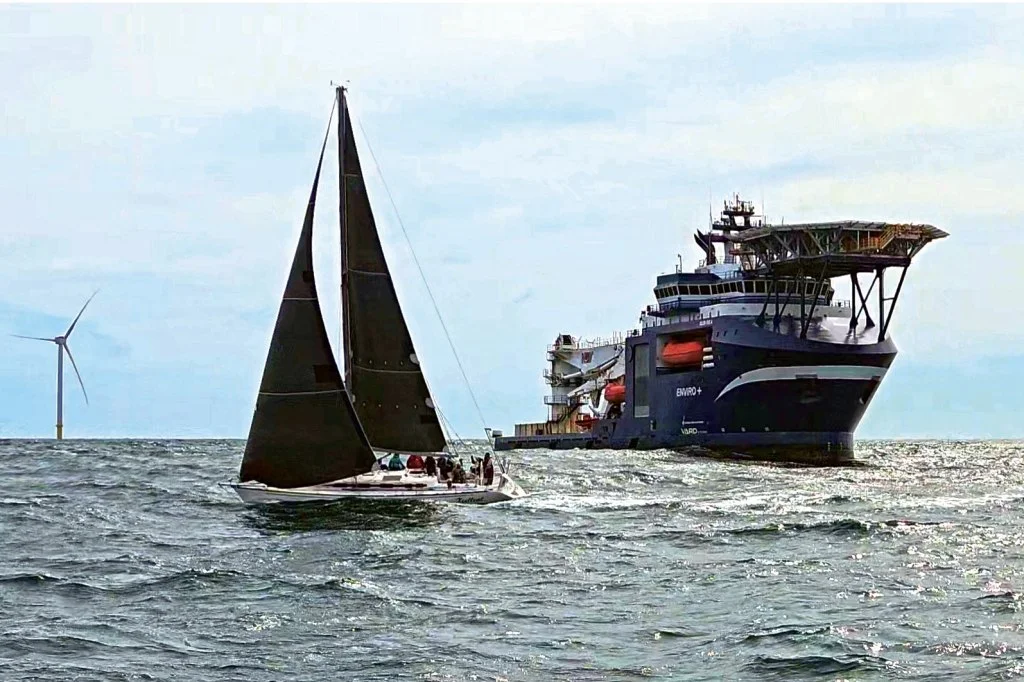
Returning to the Newport Bermuda Race didn’t give me the tidy ending I’d imagined. Two years after abandoning Alliance at sea, I sailed the 636 miles to Bermuda with friends who had helped us through the wreck. The trip brought rough water, seasickness, gear trouble, drifting fleets and a close pass with floating debris. It also brought phosphorescence in the wake, laughter below deck and the harder truth that showing up again doesn’t guarantee closure.
The rescue stayed with me
In 2024, about halfway through the Newport Bermuda Race, Alliance struck an unseen object in the dark. The impact tore the rudder post from the hull, and the pumps couldn’t keep pace with the flooding. An hour later, the nine of us abandoned the boat.
Banter, a family boat in its first season of racing, heard our call and headed toward us. Matt “Cap” Gimple was at the helm, with his wife Tori, their adult children Lindsay, Eric and Megan, and friends of the family aboard. Lindsay and Megan had sailed several hundred miles with me on Alliance during my first offshore racing season in 2023. The crews knew one another well.
There were three boats named Alliance in that year’s race, so Banter had to confirm which one was in trouble. Our navigator’s unmistakable Boston accent settled the question. The J/121 Ceilidh reached us first. Banter and Capella followed, standing by while Ceilidh’s crew brought us aboard from the life raft.
The plan was to divide our crew between Ceilidh and Banter, so neither boat would have to take on too many extra people. Then one of the life raft’s tubes tore during the transfer. Sending anyone back into it was no longer an option.
For more than two days, Ceilidh made room for us, sharing its limited supplies, dry clothes and living space. Banter stayed close as a buddy boat all the way to Bermuda. We got there without serious injuries, and the rescue was handled with calm professionalism. The experience still changed how I felt about sailing and travel. In the months afterward, I had memory lapses and episodes of dissociation, found travel difficult and spent months wondering whether I should leave my job at SAIL.
I loved the work, but my career revolved around sailing—the same thing that had upended my life. Gradually, ordinary routines returned. Two years passed. When my friends on Banter asked me to sail the race again, I said yes. Returning felt like closing a loop, and it also made practical sense: the race was close to home, and I was a sailor. Still, saying yes didn’t mean I felt ready.
Back in the starting fleet
The practice races brought back doubt. I’d logged roughly 4,000 miles since the wreck, but those miles felt different with Bermuda ahead. The closer the start came, the clearer it was that I hadn’t put the sinking behind me as neatly as I’d believed.
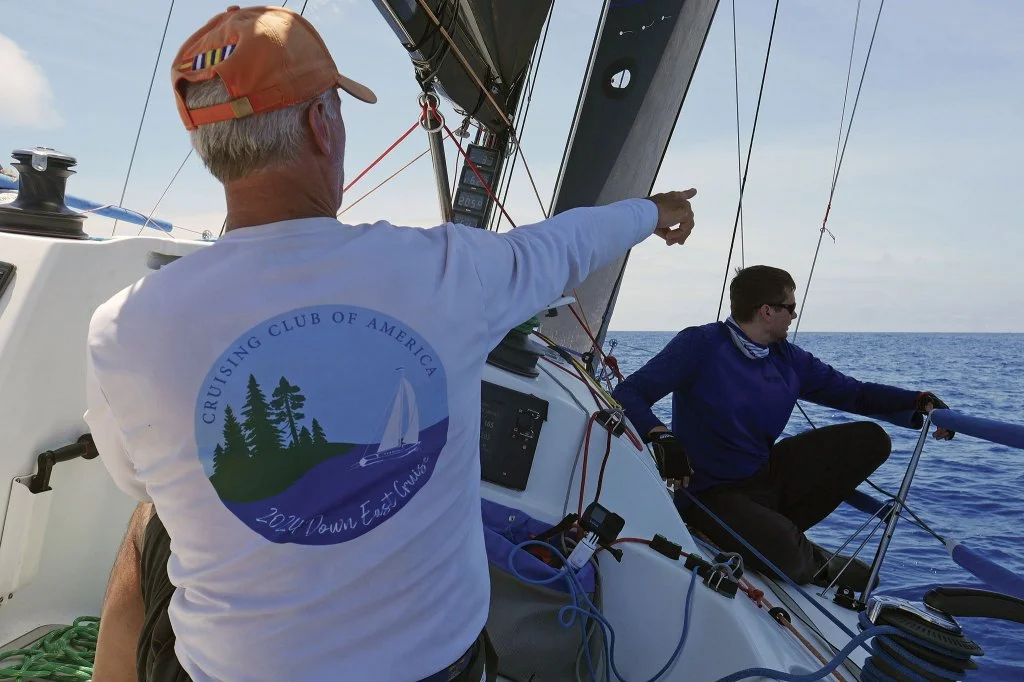
The race began in Narragansett Bay, where the fleet stays packed together before spilling into the Atlantic. The start has been moved farther up the bay in recent years, extending the close-quarters maneuvering and the work of avoiding boats with right of way. We expected to change headsails near the bay’s mouth, where the wind angle should ease. It didn’t happen. That proved to be the first of many sail-change discussions that went nowhere.
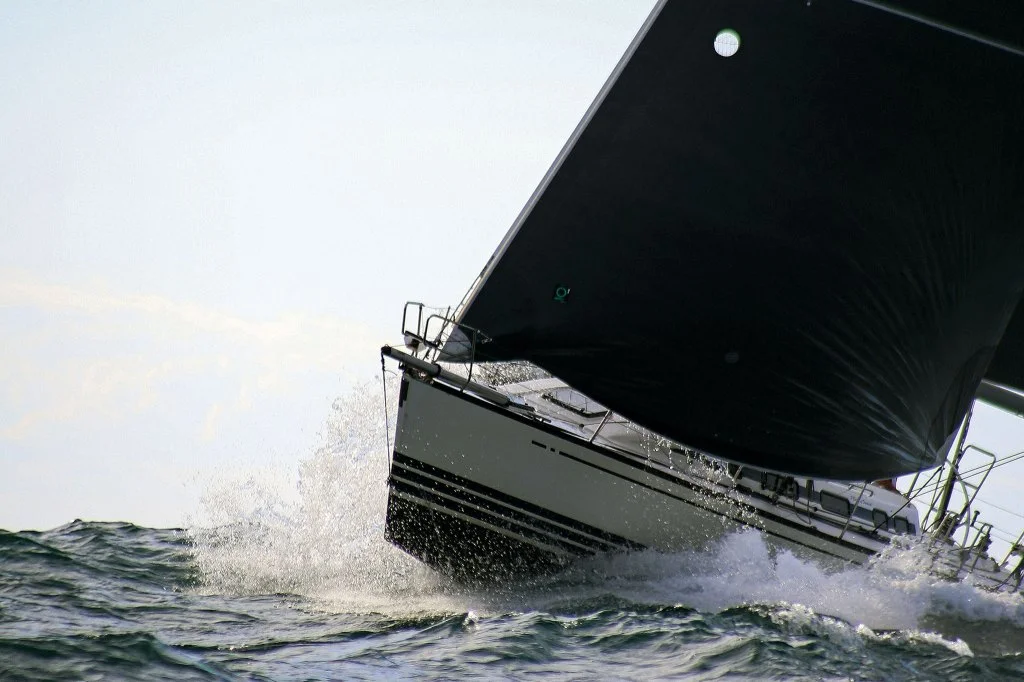
Over the 636 miles, we made fewer headsail changes than a single Wednesday-night race might demand. As bow person, I had little to do. The sea state made sure we stayed busy anyway. Waves burst over the bow and drenched the crew on the rail. Our fixed GoPro lasted about two hours before the pounding destroyed it. Seasickness arrived soon after.
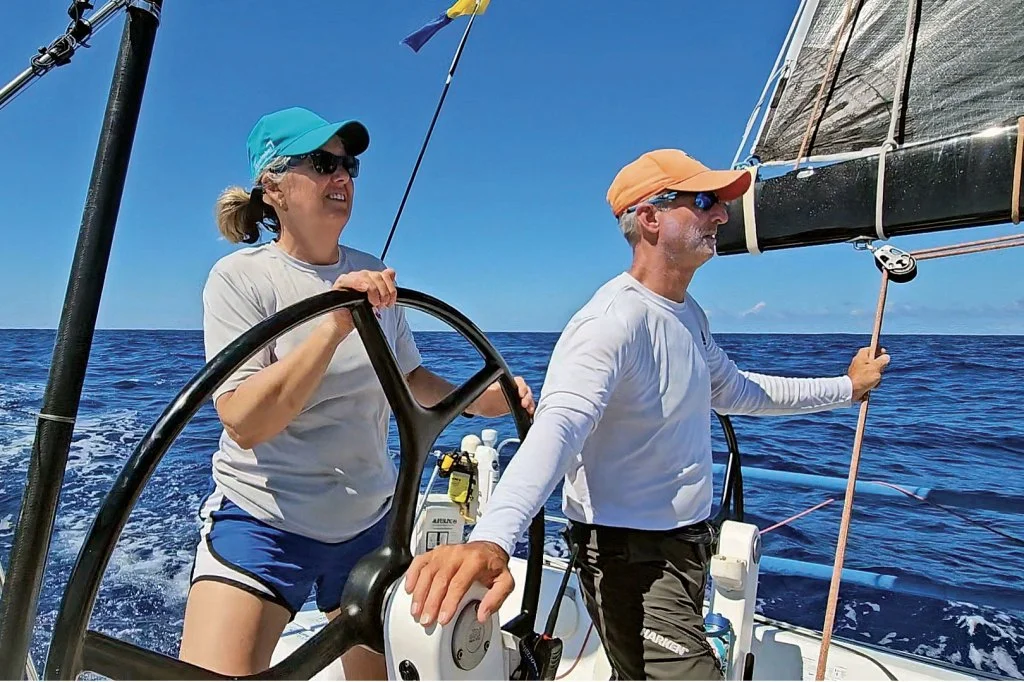
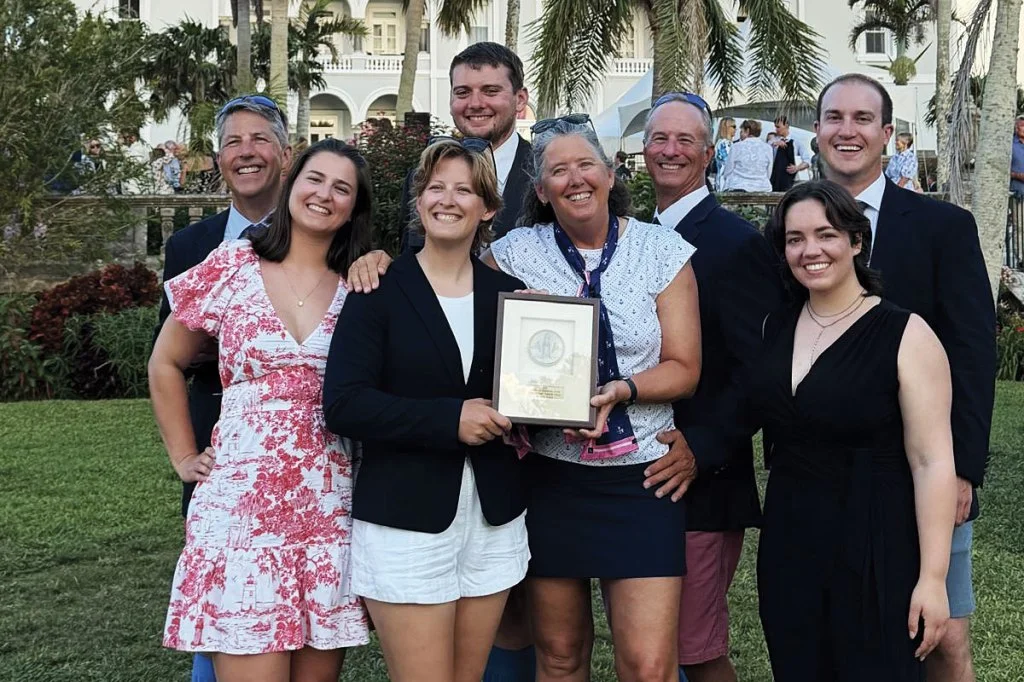
The 2026 crew brought eight people back from Banter: Cap, Tori, Lindsay, Megan, Mackenzie Fraser, Bryan Fulton, Peter Bacon and Jonathan Roussin, who had moved from delivery crew to racing crew since the previous edition. Sam Webster and I joined from Alliance. Banter’s crew is sociable, quick with a joke and practiced at teasing one another. When racing began, that easy familiarity became a steady working routine.
Wind shadows and red lights
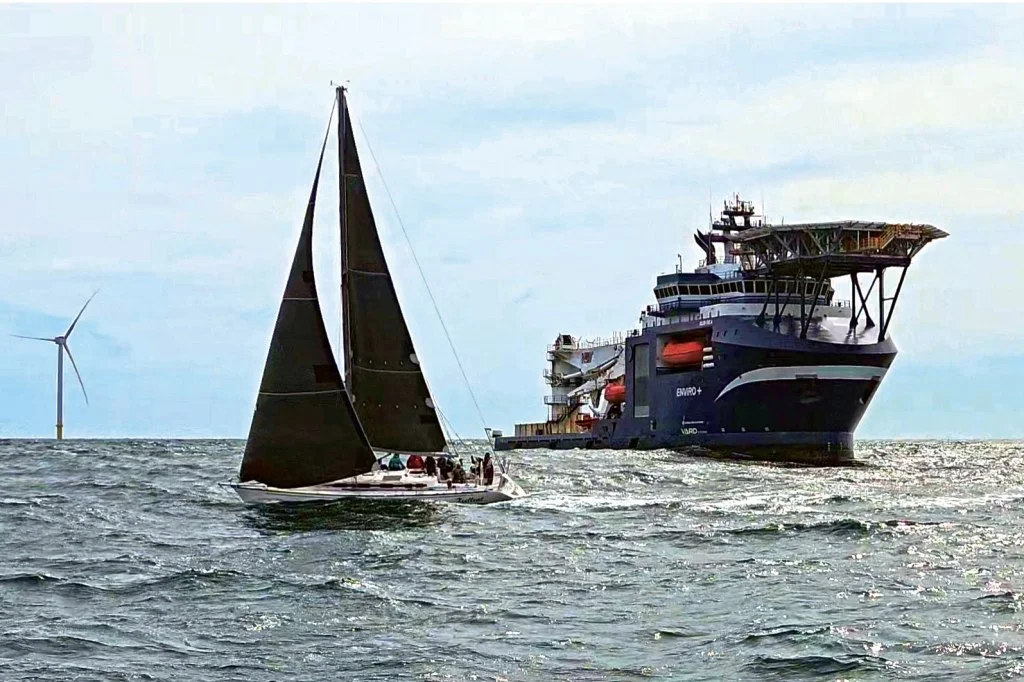
A new wind farm off the coast added a slalom to the early miles. The towers weren’t the only obstacles: construction vessels and wind shadows affected the route, too. We sailed close to an X-Yacht for hours, both boats moving at similar speed through the towers and beyond.
“Let me know what that X is doing,” Lindsay said from the helm. She watched the mast instruments and a small white light near the bow to keep track of the other boat. Twilight had settled in, and the waves were building into an unsettled chop.
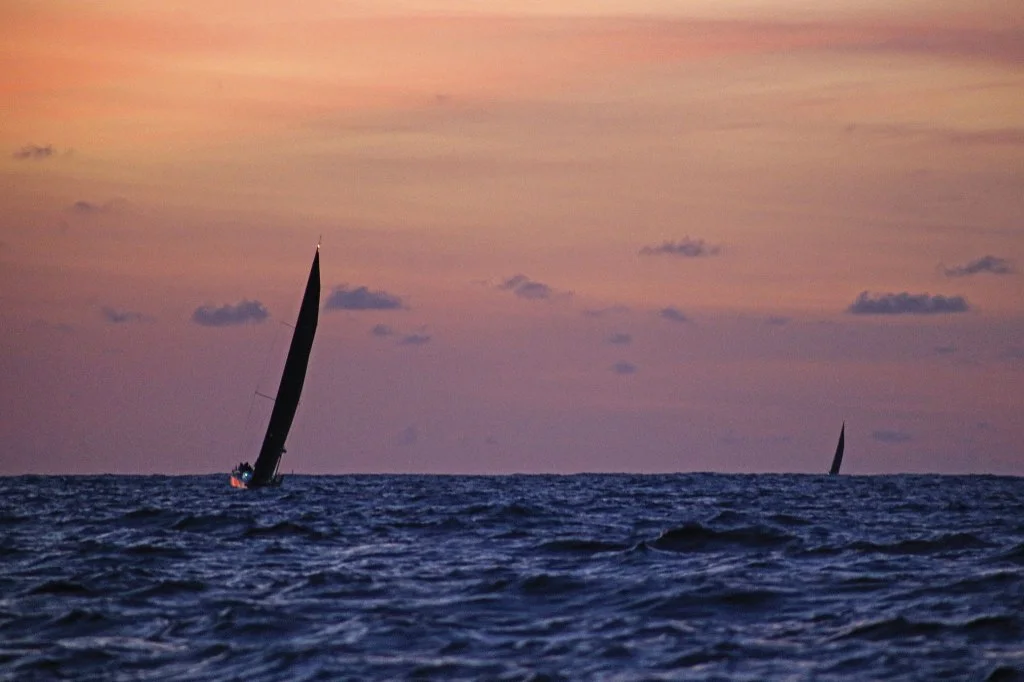
I watched the competitor’s red masthead light. It swung as Banter rolled. I tried to work out whether it was drawing closer, dropping back or moving ahead, but each small change seemed to reverse itself. After nearly six hours just to leeward of the X-Yacht, I had little useful to report. The light shifted by increments that were hard to judge against the dark horizon. Two hours passed before my watch ended at midnight, and I was worn out from trying to read the motion.
I’m often seasick, so I’d counted it as a win that I’d managed the rolling conditions so far. I planned to take another Dramamine before sleeping. Then another crewmate came below, started taking off her foul-weather gear and was hit by nausea.
“Where’s the bucket?” she asked.
“Port berth!” Megan called from on deck.
I reached for what I thought was the right place, then scrambled back to the port settee. I was too late. I dropped my water bottle into the sink to free a hand, and the sink became the nearest substitute for the bucket. My arm went into the mess up to the forearm.
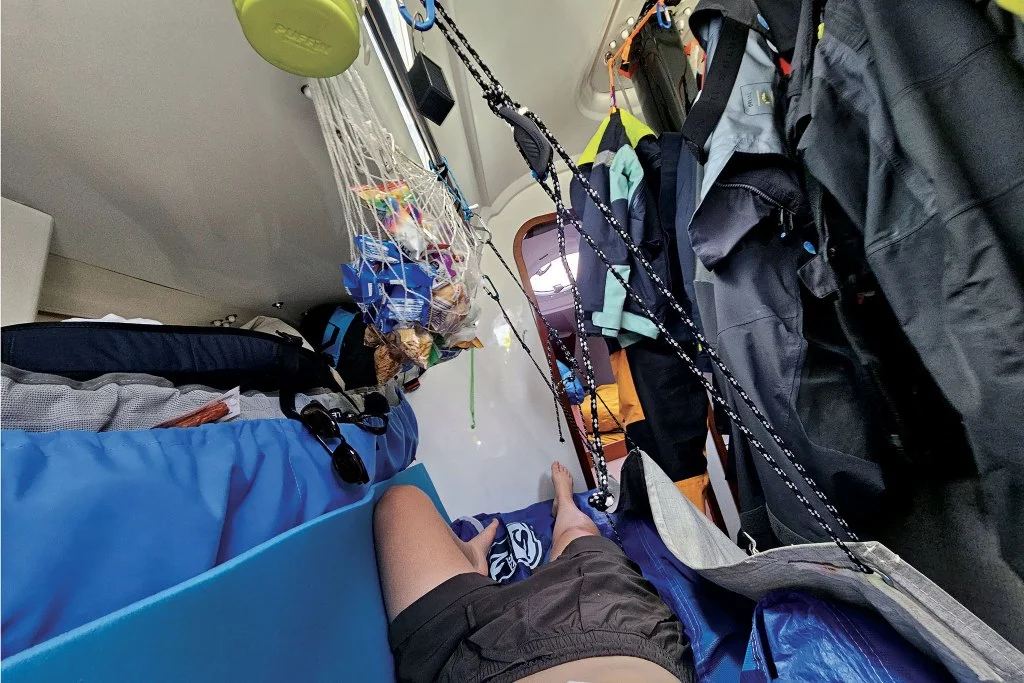
After the first jolt of horror, I found a baby wipe and started cleaning my arm and the nearby surfaces. Megan helped our crewmate. The smell and movement made the Dramamine a lost cause. Still in my foulies, I clipped on, went back on deck and threw up over the low side.
The spray cooled my face. Then I noticed blue-white flecks of phosphorescence spinning through the black water behind us. “Have you guys seen these phosphorescence? So scenic!” I said, my eyes wet and my nose blocked.
“Scenic, she says!” Peter laughed. I laughed, too. The glowing wake was magical, even in the middle of a miserable spell. Soon Bryan joined me over the side. Five of the ten people aboard were sick in the first 24 hours. By day two, most of us were working again, though the boat’s movement and the steady possibility of another bout made the first night a rough one.
Choosing when to handle the sails
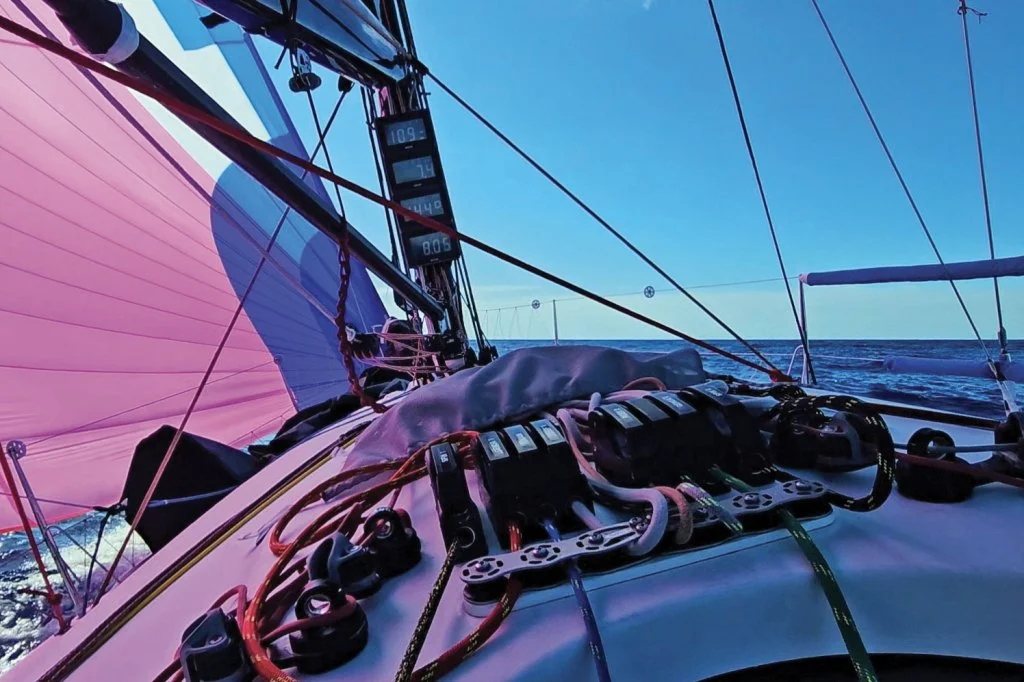
Day two brought a debate over whether to use the Code 0 instead of the jib. In flat water, the Code 0 would have been an easy call. The steep waves made it harder to judge. Another nearby boat hoisted a kite and picked up speed, despite spinning out about every ten minutes in the tight wind angle and rotating seas. Watching it pull away persuaded us to try our own sail.
Lindsay, Megan and I went forward to make the change. Almost as soon as the Code 0 was up, we decided to bring it down. That proved more complicated than raising it. Wind loosened the top of the furled sail before we could recover it. As the jib went back up, the web of my left hand caught in the prefeeder. The pinch stripped skin and left me without a working thumb for the rest of the maneuver. It wasn’t a serious injury, but gloves would have helped.
The mainsail caused a bigger problem overnight, jamming in its track. Banter’s mast had been replaced after a warehouse fire a year and a half earlier, and the new rig was still being adjusted. That spring, the track had needed fitting work, including filing and a prefeeder, and it still wasn’t running smoothly.
With the main stuck, we had to sail with a reef in. Fixing it meant taking the sail down and hoisting it again in the middle of the Gulf Stream. For hours, the crew weighed that job against the conditions. The rolling waves made the work unsafe, while the forecasted calmer water took its time arriving. The boat lost a knot while we waited. When the sea finally eased in the early morning, the on-watch crew tackled the repair. It was as difficult as expected, which confirmed that waiting had been the right call.
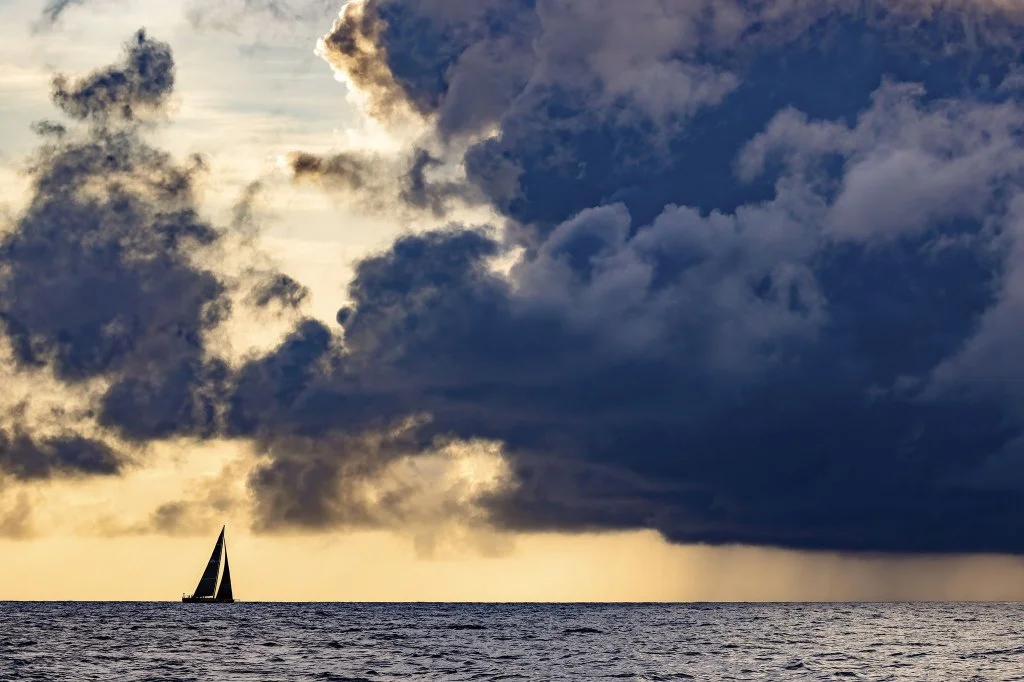
I came on watch at 4 a.m. to find the main raised and Banter’s new raspberry-colored kite flying. The sea had settled, the boat was moving well, and spirits were high. It was the kind of sailing that makes a hard watch feel worthwhile. The reprieve didn’t last.
A fleet adrift
Before dawn the next day, the ocean seemed to disappear. Stars filled the sky and reflected off the glassy water, giving the impression that we were drifting through the Milky Way. As the sun reached the horizon, that illusion lifted. Around 40 boats were visible, their masthead lights doubled in the water. The wind had shut off, leaving the fleet bunched in the same calm patch.
Cap had spent hours at the helm trying to coax the boat toward better drift. Peter joked that we were “serving as characters in the increasing delusion of our skipper” as Cap sent the crew to sit to leeward, as if heel rather than the lack of wind were slowing us down. There was little anyone could do. When the breeze returned that afternoon, some boats had gained and others had lost. We came away a few places ahead and closed the gap to boats in front, but the fleet’s reshuffling continued.
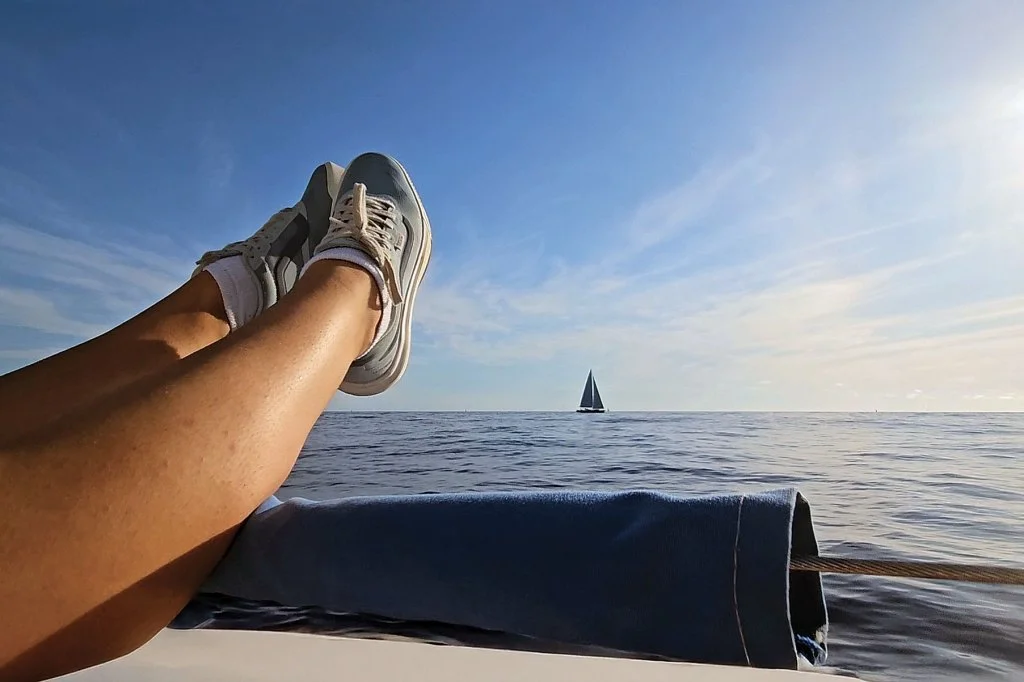
South of the rough Gulf Stream water and the calm patch, conditions were light and unpredictable. Boats within sight could be experiencing different wind at the same time: one was headed, another rained on, another becalmed. A few hundred yards in any direction could look appealing. With little to watch beyond the sea, we spent an hour on the rail naming foods whose first letter matched the last letter of the previous food. Apple, everything bagel, lettuce, endive. After four days, the game was more engaging than staring at the same horizon.
Seeing the debris in daylight
Then something appeared just below my feet: a 50-gallon drum sitting low in the water, passing within a few feet of the hull. Peter used the VHF radio to warn boats behind us on the same line. Other crews had made similar calls that day, including one about an industrial refrigerator, apparently floating with air trapped inside it.
After Alliance’s collision, spotting the drum should have frightened me. Instead, seeing debris in daylight made the earlier accident easier to place in context. We had struck an object that couldn’t be seen in the dark and waves. The encounter hadn’t been caused by a mistake on the part of the crew on deck, though I had carried shame about being at the helm.
Hearing warnings from across the fleet helped me accept that floating debris can threaten any boat offshore, and that crews were taking those calls seriously. That awareness doesn’t make the risk disappear. It does make passing on a sighting an important part of looking out for the boats around you.
By Tuesday morning, Bermuda was in sight. The sun was hot, the wind was dying and finding a suitable approach angle became a struggle. After days at sea, a shower felt close enough to imagine and far enough away to be maddening.
No storybook finish
I wanted the finish to feel like a triumph, a moment of relief and joy that would close the two-year chapter begun when Alliance sank. It didn’t. Pulling down the jib and coiling the loose lines left me empty. Drinks came out and music went up. Then I began crying, hard, without being able to explain why or make it stop.
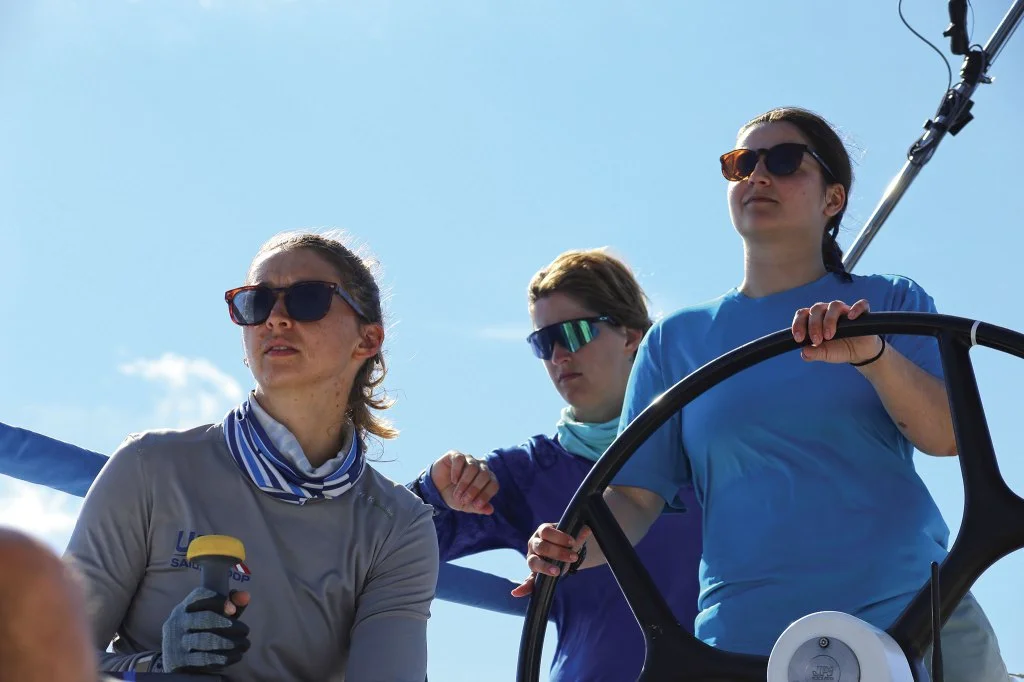
Some part of me had believed that returning, and refusing to give up, would earn me closure. Friends had told me I was doing the right thing. But the finish wasn’t a reward or a resolution. It was simply the end of a demanding regatta, sailed with friends on a complicated ocean course. I had made the trip, and I still felt the weight of what had happened.
There was beauty in the crossing, though it didn’t arrive as a perfect ending. Sometimes it’s the glow of a midnight wake, even while you’re seasick. Sometimes it’s the laughter of friends during a miserable watch, or a crew waiting for the sea to settle before tackling a difficult sail repair. Going back didn’t erase the wreck. It gave me new moments to carry alongside it.
This article was originally published in the October 2026 issue.