Seawind 1160XL Sea Trial: A 38-Foot Catamaran in 30-Knot Winds
The 1160XL handled steep seas and a 19-knot surf during a demanding test sail, while its revised bows and practical cabin layout stood out.
The Seawind 1160XL showed its strengths in a sea trial that pushed the boat hard: winds reached 30 knots, waves topped 10 feet, and one surf down a wave registered 19 knots of boat speed. The test also exposed a sail-handling detail worth considering when specifying the boat. In those conditions, the catamaran stayed controllable, but the crew later agreed that a second reef would have been prudent.
The sail began in Newport, where a nor’easter was approaching and the Block Island Ferry had been canceled for the foreseeable future. After raising sail in Narragansett Bay, the crew put in one reef. A second was discussed as they headed into open water, then set aside. The breeze was already in the high 20s, with gusts in the low 30s; near Block Island, sustained wind had reached 30 knots.
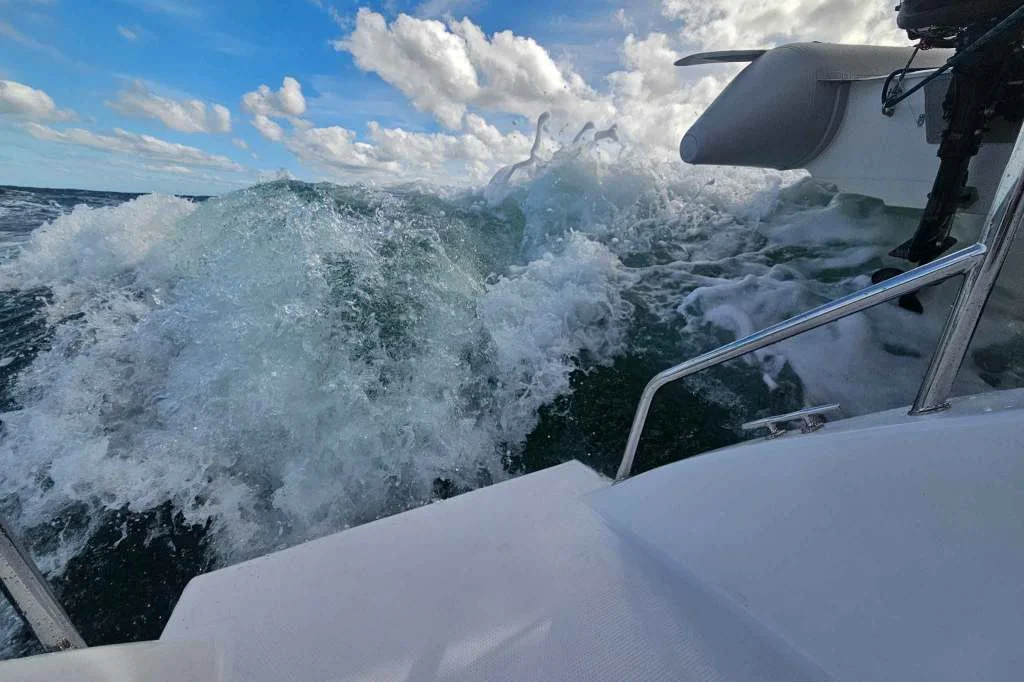
With the boat pressed by gusts and confused seas, the helm felt heavy at times. The test crew attributed that response more to the reefing decision than to the boat’s normal handling. Waves arrived on the beam and quarter from shifting directions, yet the rudders held their grip even when the catamaran was overpowered. The helms gave useful feedback, a meaningful trait on a multihull, which can’t heel to signal that it’s carrying too much sail.
More buoyancy forward
The 1160XL updates Seawind’s popular 2004 1160, with changes to the hull form aimed at performance and life aboard. The earlier boat’s bows sloped down toward the front, following the idea that a low profile would part the water. The XL instead has reverse bows and relatively flat side decks. That shape carries buoyancy farther forward, helping the bows stay up, and makes it easier to walk around the decks.
The redesign mattered in the test conditions. Surfing down a large wave, the crew saw green water rise to deck level just short of breaking over the bows. The 1160XL rode through the wave and lifted clear rather than burying its forward sections. The helm reported a peak of 19 knots of boat speed during that ride. In those moments, the forward buoyancy was more than a styling change: it helped the boat recover as it came off the wave.
Helms and sail handling
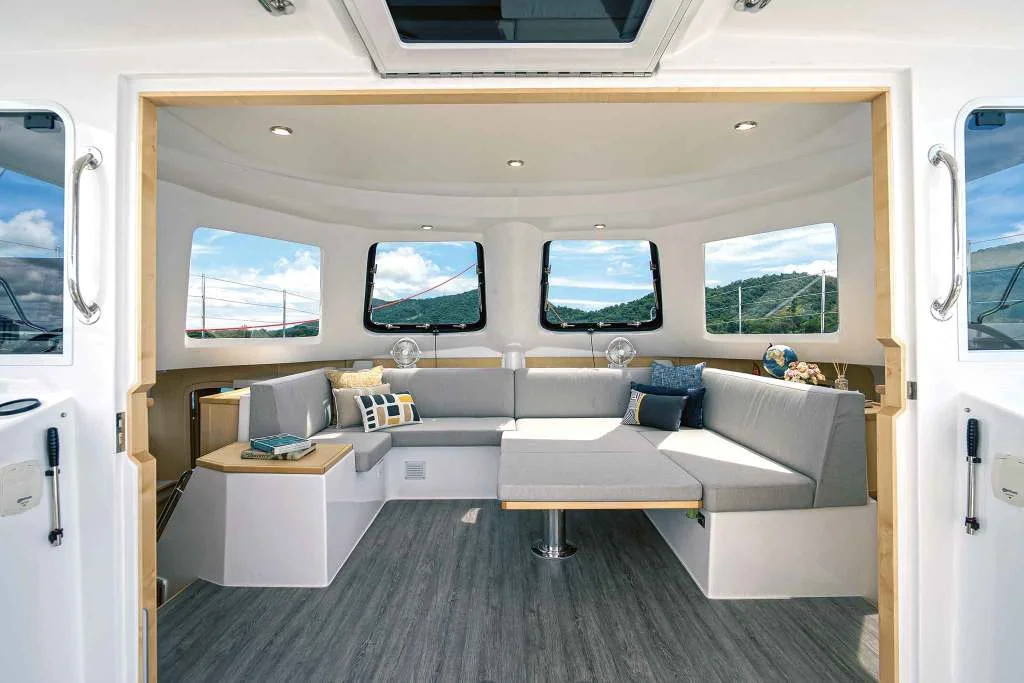
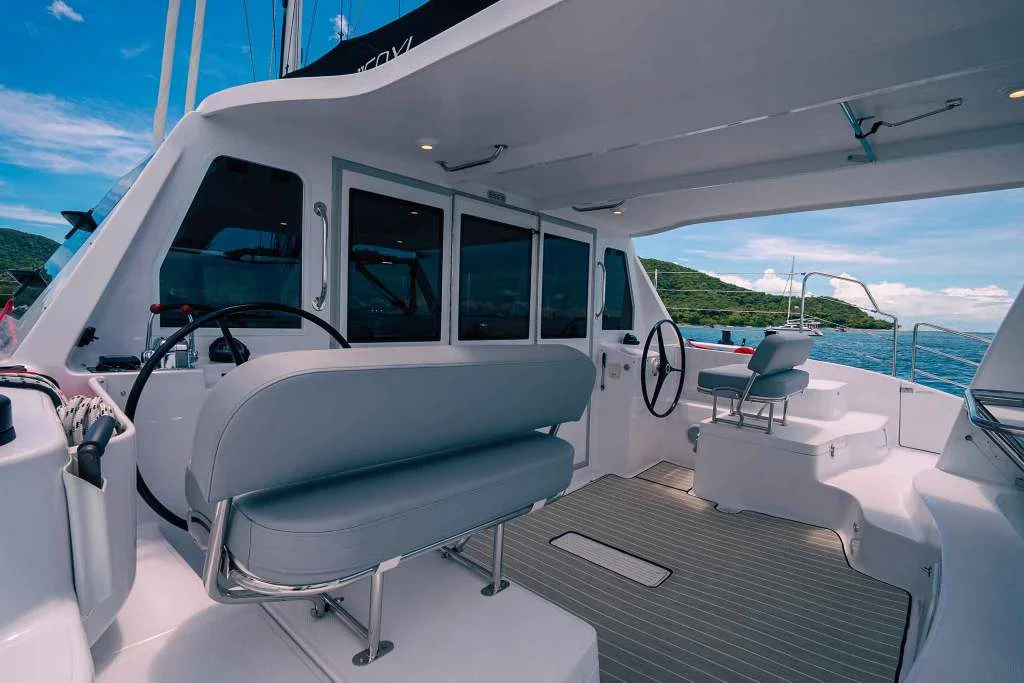
The cabin windows have a different angle from those on the earlier model. Although the revised shape is slightly less aerodynamic, it brings more headroom for people seated in the salon and improves airflow. The main helm sits at deck level on the port side, giving the driver weather protection and avoiding a climb to a raised steering position. Keeping the driver close to the deck also limits the sensation of motion, which grows higher up on the boat.
Visibility from the port helm was good for a test sailor listed as 5 feet 2 inches tall. Sitting on the bench improved the view, and a foot brace helped provide a secure position. A step built into the hull outboard offers a standing perch when a higher sightline is needed.
There’s a second helm to starboard, though the two stations aren’t symmetrical; port is the primary driving position. Lines lead to clutch banks on both sides, a layout that can make sailing with a small crew simpler. On the test boat, the jib sheet and furling line were both led to starboard, where there was only one winch. Furling in the strong breeze meant taking the sheet off the winch and hand-tailing it. The self-tacking jib was small enough for the crew to manage, but adding a second starboard winch or changing the line routing would address the pinch point.
Room to live aboard
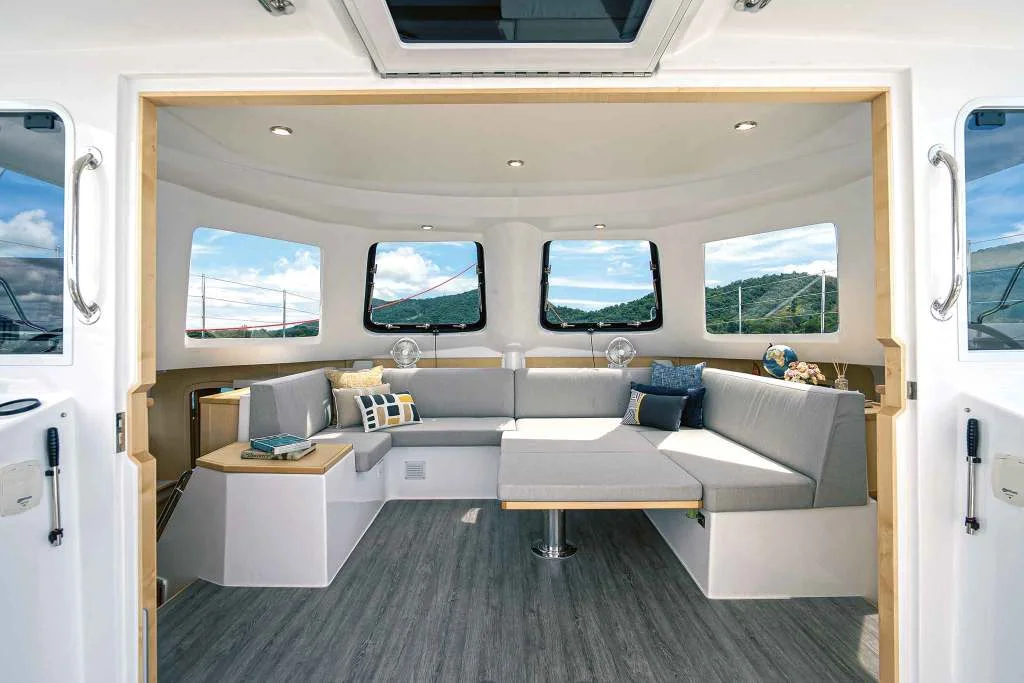
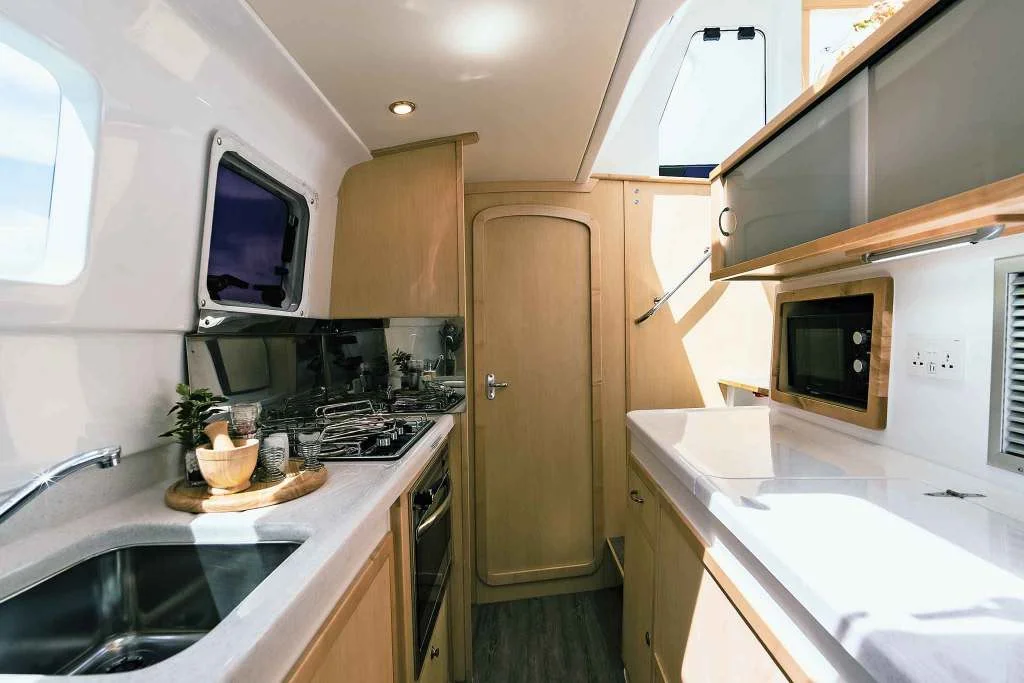
Seawind’s familiar interior arrangement opens the hulls to the salon and places the galley in the starboard hull, freeing space on the main level. The galley includes a refrigerator, freezer, storage, a microwave and generous counter space for a boat under 40 feet. An offset rectangular table in the salon rotates to support different seating and reclining arrangements.
The starboard hull has a forward cabin with an en suite head and a smaller aft cabin. To port, a large cabin sits forward, with a day head and shower aft. The bows have two watertight bulkheads in each hull to meet Cat A offshore certification; the spaces between the bulkheads are used for storage.
A signature Seawind trifold door lifts into the aft cockpit roof when it’s open. During the sail, the open doorway let air flow through the cabin. Lowered at the mooring, it closes the salon into a sheltered space. Side doors make boarding from a side-to berth easier, including when bringing aboard supplies or helping less steady passengers.
Three propulsion choices
The 1160XL is offered with standard diesel, hybrid electric or outboard propulsion. The outboards can free up space inside each hull, tilt clear of the water to limit propeller growth and drag while sailing, and may be easier to service in remote areas. Seawind CEO Richard Ward said around 60% of owners choose outboards. The listed power options are twin 25 hp Yamaha outboards or twin 29 hp Yamaha inboard diesels.
The crew reached Block Island around midday, with whitecaps still visible across The Great Salt Pond. With the ferry canceled and a storm expected that weekend, they faced limited travel options. Conditions appeared stable for roughly the next 24 hours, making a return sail the following day a possibility. For prospective owners, the test offered a clear lesson: the 1160XL has reassuring reserve in rough water, but sail reduction deserves careful judgment as the breeze builds.
Seawind 1160XL specifications
Length overall is 38 feet 11 inches, beam is 21 feet 6 inches, draft is 3 feet 8 inches, and displacement is 17,196 pounds. Sail area is 936 square feet. The original article appeared in the November 2026 issue.
===