RV Furnace Maintenance: Seasonal Checks, Cleaning and Annual Service
Test the furnace before cold-weather trips, clear vents and airflow paths, and leave burner and combustion checks to a qualified RV technician.

Reliable RV heat starts with two habits: check the furnace before the heating season and have a qualified RV technician inspect it at least once a year. Dust, debris and animal or insect nests can build up while a coach sits in storage, affecting airflow and furnace operation. A few careful owner checks can catch problems early; work on the burner, combustion chamber and propane system belongs with a technician.
Set a maintenance schedule
Arrange a professional inspection every year, or more often if you use the furnace heavily. Full-time RVers and people who camp through winter may need more frequent service. Schedule the visit before cold weather arrives, when service departments are more likely to be busy.
Before each heating season, inspect and test the furnace as part of your dewinterizing routine. While the furnace is in use, check its exterior vent monthly for soot or blockages, and keep the return-air vent and floor registers clear.
Run the furnace every few months, even when you don’t need it for heat. Long stretches without use can contribute to problems, and a test gives you a chance to notice unusual sounds, smells or weak airflow before relying on the system for a trip.
Test the furnace before relying on it
First, press the test button on your LP/CO detector to confirm it works. Review the information on RV safety equipment for detector operation and replacement timing. If you need a refresher on operating the furnace, see how to turn on an RV furnace. Learn what normal furnace operation looks like before assessing its performance.
A typical startup sequence begins with the fan, followed by the igniter and burner, then warm air from the vents. Let the furnace run for several minutes and pay attention to how it sounds and smells. A brief dusty odor the first time it runs in a season can come from dust or debris burning off in the furnace or ductwork; it should fade within a few minutes. A smell that persists needs attention. If you smell propane, turn off the furnace immediately and seek furnace troubleshooting assistance.
- Listen: High-pitched, grinding or rattling noises may indicate a problem.
- Check airflow: Feel for warm air at every register. A weak or cold vent may point to a blocked or crushed duct, including one obstructed by a nest.
- Confirm shutoff: Turn down the thermostat. The burner should stop, while the fan may continue briefly to cool the furnace.
Clean accessible areas safely
Owners can clean the exterior vent and the area around the furnace. Turn off the furnace and let it cool before starting. Close the valves on top of the propane containers. Never work on a running furnace, and don’t block, alter or cover its vents.
Inspect the exterior vent
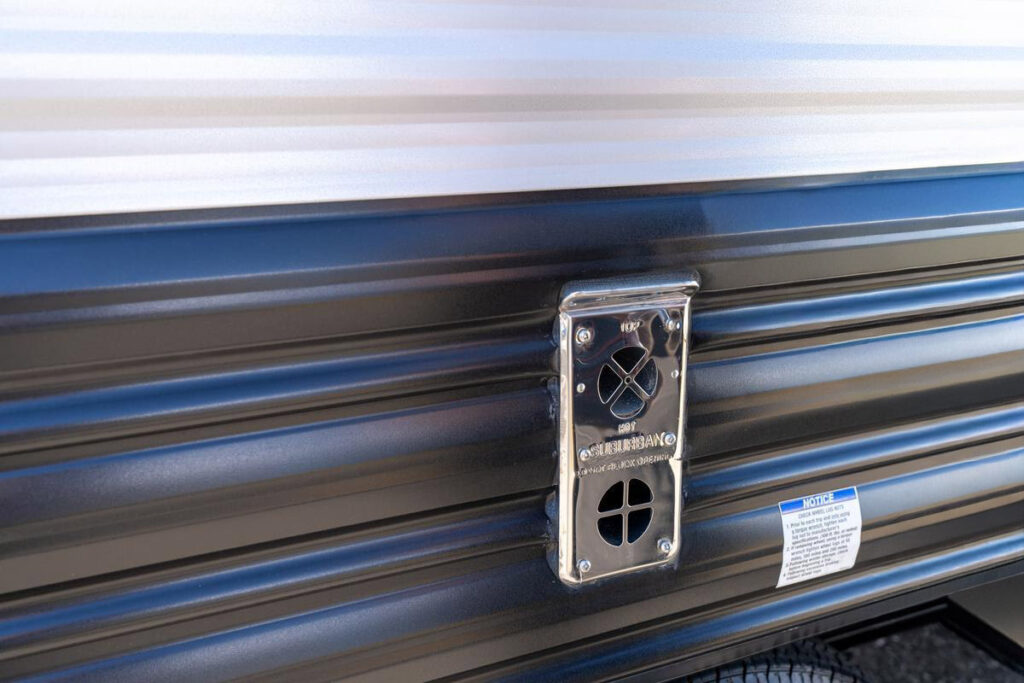
Storage can give insects and small animals time to nest inside the furnace vent. Debris there restricts the air needed for clean combustion. With the furnace off and propane supply closed, remove the screws holding the vent cover. Use a flashlight or headlamp to check inside for nesting material, debris or soot.
Remove loose debris and wipe the vent with a damp cloth if needed; don’t spray water into it. A compressor can clear loose particles farther back, but keep the pressure at or below 30 PSI. Reinstall the cover when finished.
Soot around the vent calls for a technician. It can signal that the burner isn’t getting enough air to burn cleanly. Don’t run the furnace until it has been inspected.
Keep the furnace and airflow paths clear
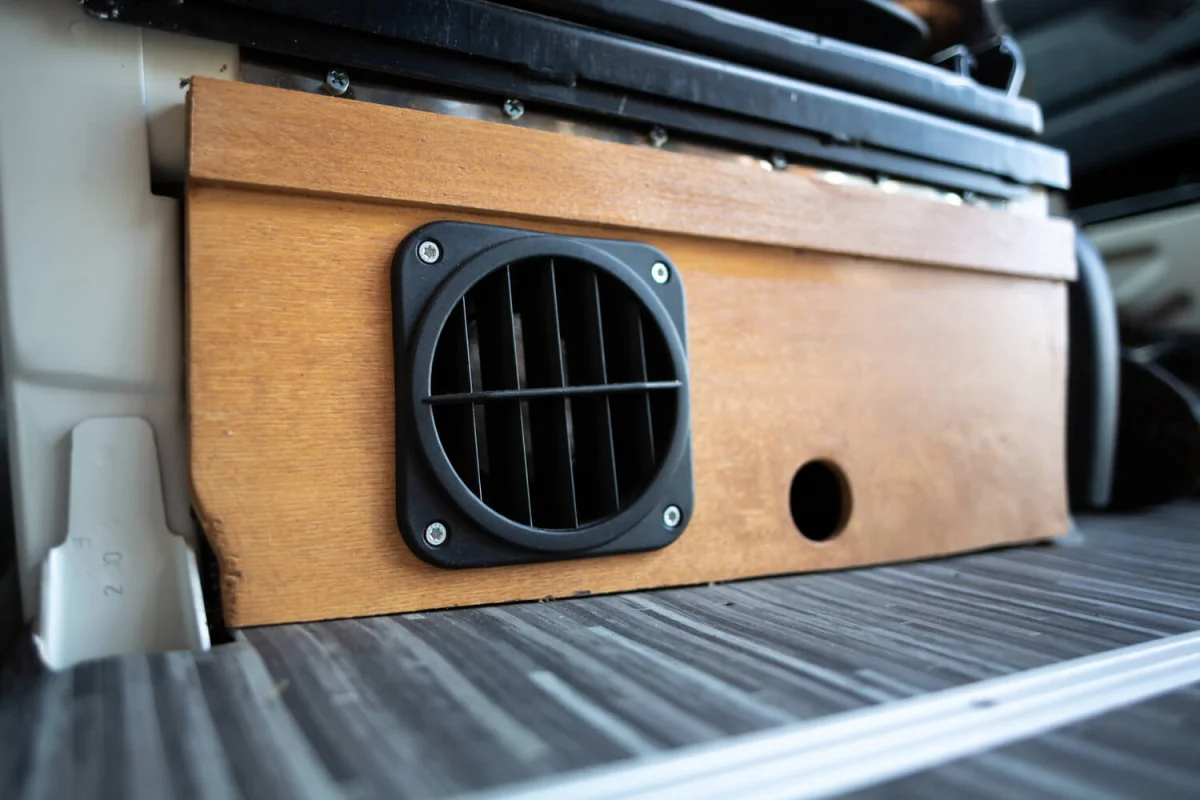
Vacuum debris around the furnace body and return-air vent a few times a year, and more often if you travel with pets. Access varies by coach: the furnace may be reached from inside by removing a return-air cover or opening a faux drawer or cabinet, or from outside behind a panel. Wipe remaining dust with a damp cloth. Avoid excess water and don’t spray cleaning products onto furnace parts.
Keep the furnace compartment free of stored items. Rugs, blankets and gear can restrict airflow when they cover floor registers or the return-air vent. Avoid ammonia-based cleaners near copper or brass gas fittings. Choose a mild cleaner without ammonia or chloride, then rinse and dry the area thoroughly.
Don’t clean the burner or combustion chamber yourself. Those tasks, along with gas-pressure checks, involve sealed components that carry propane and should be handled by a certified RV technician.
What an annual inspection covers
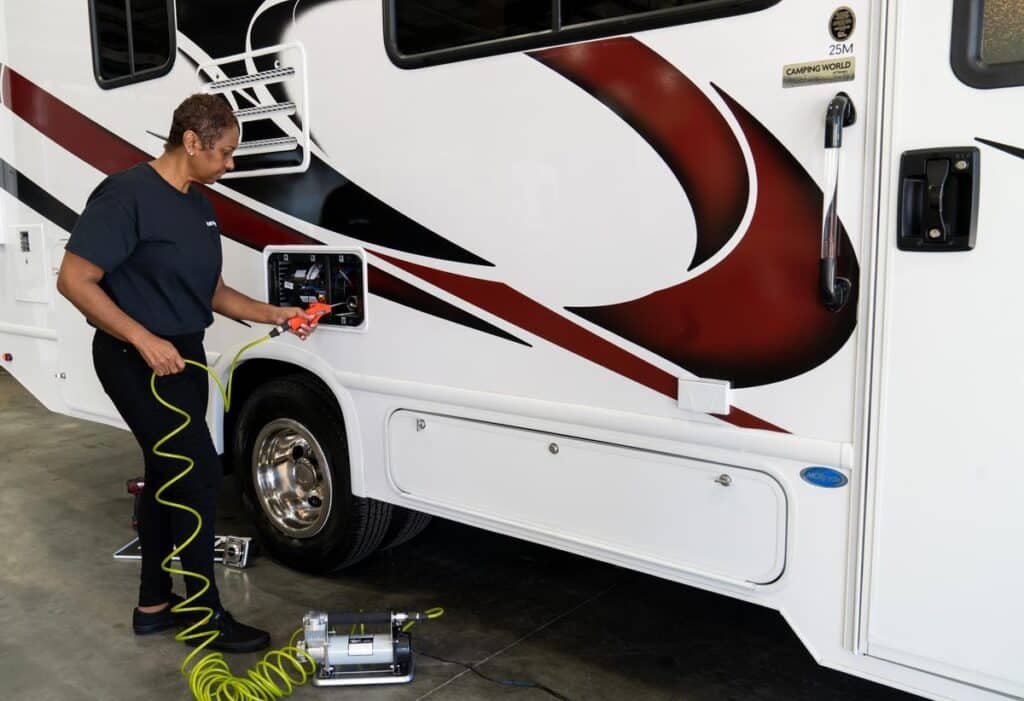
A professional inspection covers components and systems owners can’t safely assess on their own. A typical visit includes checks of:
- Voltage at the furnace and electrical connections
- Propane pressure and leaks
- The burner and igniter, including burner cleaning
- The combustion chamber for cracks, holes or obstructions such as nests
- The blower motor and air wheels
- Exhaust venting and the vent cover
- Ductwork and return-air paths
- Wiring connections and gaskets
- Carbon monoxide and propane detector operation
The combustion chamber deserves particular attention: a crack or hole can’t be repaired in the field, and owners can’t inspect it themselves. Routine maintenance isn’t covered by manufacturer warranties, so include it in your RV upkeep budget. Prices vary by location; contact a nearby service center for a quote or schedule RV furnace service.
Quick maintenance checklist

Before each heating season: Test the furnace and LP/CO detector, check the detector’s manufacture date, clean the exterior vent, vacuum the furnace and return-air area, and clear stored items away from the furnace, registers and return-air vent. Remove the propane cylinder cover, look for pest nests, and lightly dust debris from the regulator and tanks before replacing the cover.
Monthly while using the furnace: Check the exterior vent for soot or blockages and keep registers and return-air vents clear.
At least once a year, with a technician: Arrange a full furnace inspection and burner cleaning, a propane leak check and a propane container inspection. Use the broader RV maintenance checklist to plan other service needs.
Common questions
Does an RV furnace have a filter? No. Forced-air RV furnaces are designed to operate without one. Adding a filter restricts airflow and may affect the warranty and safe operation.
Can you spray WD-40 on the blower? No. The blower motor is lubricated and sealed at the factory. If it squeals, grinds or runs slowly, have a technician inspect it.
Can an RV furnace run through winter? It’s designed to cycle on and off as the thermostat calls for heat. How long it can operate depends on the available propane and battery supply. The guide to how an RV furnace works includes a propane consumption calculator.
If the furnace isn’t working, consult the guide to RV furnace troubleshooting. A little cleaning and testing can help reveal trouble early, while annual service checks the parts that need a trained hand.